
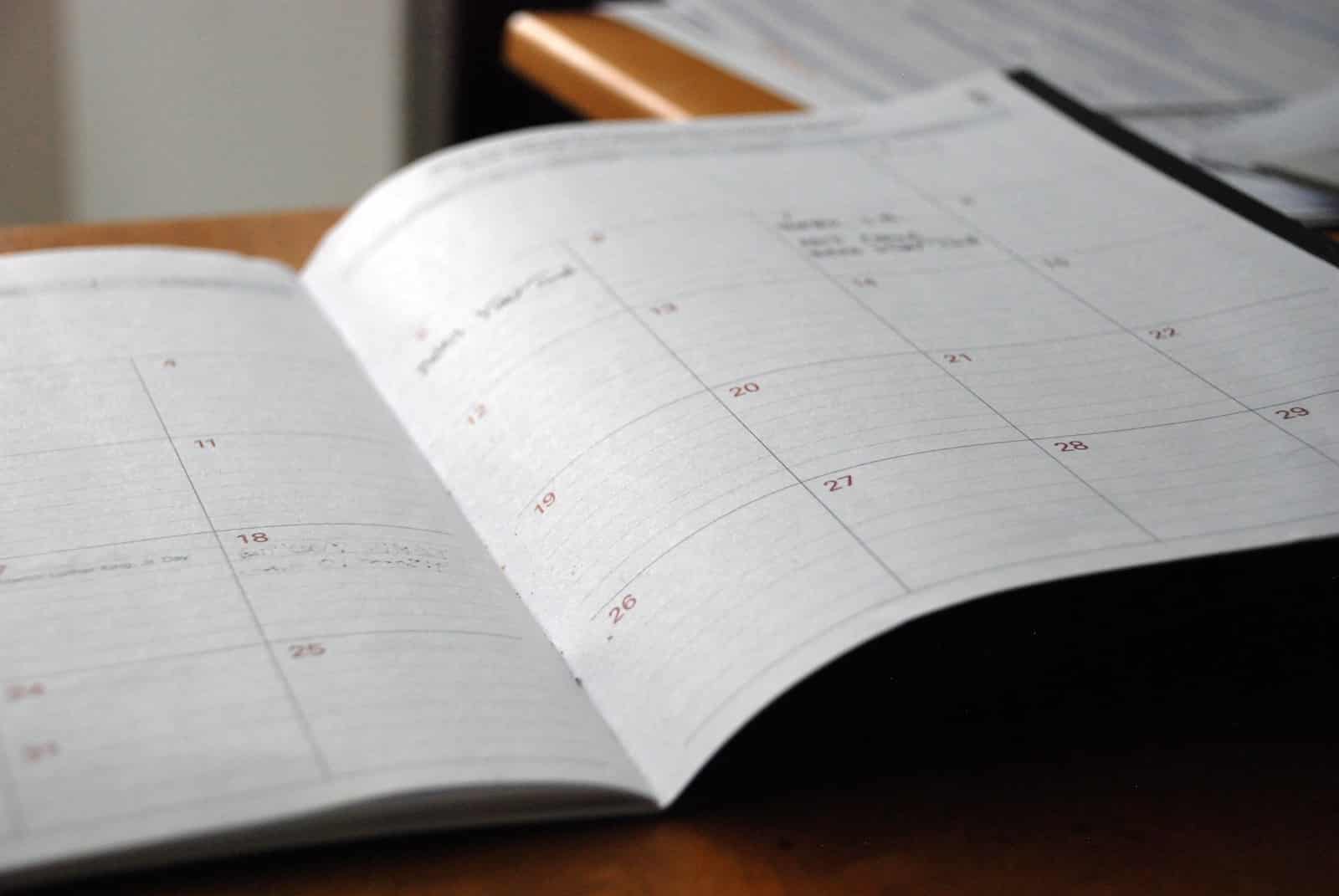
You know the moment. You’re standing in a checkout line, half-reading a text from your kid’s school, when it hits you: the dentist was yesterday. Or is it tomorrow. Or was it “sometime next week” and you swore you’d put it in your calendar the second you got home, right after you did the 47 other things that were also “the second you got home.”
Forgetting appointments usually isn’t a character flaw. It’s a capture flaw. The calendar might be fine. The part that breaks is the tiny handoff between “I heard a date” and “it’s safely stored somewhere my brain doesn’t have to babysit.”
A calendar capture habit fixes that handoff with one simple promise: every date goes to one place, right away, in under two minutes.

Why appointments slip your mind (even when you “use a calendar”)
Most missed appointments aren’t caused by laziness. They’re caused by timing.
Dates show up in the wild, in messy forms: a coworker says “Let’s meet next Thursday,” the mechanic leaves a voicemail, the doctor’s office hands you a card while you’re juggling your keys. Your brain treats these like loose receipts. You plan to file them later. Then later disappears.
A few common traps make this worse:
- You trust short-term memory for “just a minute.” Short-term memory is more like a leaky cup than a vault. It holds less than you think, and stress pokes holes in it.
- You have too many entry points. A work calendar, a personal calendar, a paper planner, text threads, email confirmations. When there’s no single “home,” each date becomes a small debate.
- You wait for the perfect details. If you don’t know the exact time, you don’t enter anything. If you don’t have the address, you postpone it. Perfection becomes procrastination in a nicer outfit.
- ADHD and forgetfulness raise the stakes. If your attention jumps tracks easily, “I’ll do it in five minutes” can feel sincere and still fail. The goal isn’t more willpower. It’s fewer steps between hearing and saving.
The fix is not a fancier app or a stricter personality. It’s a tiny, repeatable move that happens the same way every time. That’s what makes the calendar capture habit work: it removes decision-making from the moment.
Set up “one place to park every date” (your calendar’s inbox)
If every appointment has to be sorted perfectly on the spot, capture won’t happen. Sorting takes time. Sorting invites second-guessing. Capture should feel more like tossing your keys into a bowl by the door.
So give yourself a bowl.
Create a dedicated “parking spot” inside your calendar: a separate calendar called something obvious like INBOX, HOLD, or CAPTURE. Make it a loud color. This becomes the one place where every new date goes first, no matter what it is.
Why this helps: you’re not deciding where it belongs, you’re just making sure it exists.
A good parking spot has three rules:
- It’s always available. Phone, laptop, tablet, work computer, whatever you touch daily.
- It’s fast. Two taps to open, quick add works, voice entry works.
- It’s trustworthy. You don’t “also” put dates in texts or sticky notes. Those can support the calendar, but they don’t replace it.
When you park a date, keep it “minimum viable.” You can polish later. Capture only needs enough to protect future you.
Minimum viable event checklist (keep it simple):
- A title you’ll recognize (Doctor, parent-teacher conference, “Call Sam about lease”)
- A date and time (or a placeholder time if unknown)
- One reminder alert (even a basic one is better than none)
If details are missing, don’t freeze. Park it anyway with a clue in the title, like “Vet visit (confirm time)” or “Lunch with Maya (pick place).” The goal is to stop relying on memory as a storage unit.
The 2-minute calendar capture habit that actually sticks
A habit has to fit real life, not ideal life. The strongest version of this habit is tied to moments that already happen, not moments you keep promising yourself you’ll create.
Think of calendar capture as brushing your teeth for your schedule. Short, slightly boring, and wildly effective.
Here’s the routine. It’s the same whether the date comes from a call, an email, a hallway chat, or a paper card.
- Capture immediately: The moment a date is agreed on, pause and enter it into your INBOX calendar. If you’re talking to someone, it’s fine to say, “Give me ten seconds, I’m adding this now.” Most people find it reassuring. The ones who don’t can wait ten seconds anyway.
- Add one protective reminder: Pick a default reminder you can live with, like 1 hour before for local errands, 1 day before for appointments that require prep. If you often forget travel time, set the reminder earlier than feels necessary. Your calendar isn’t trying to impress anyone.
- Do a 2-minute daily sweep: Once a day, take two minutes to review the INBOX calendar and clean it up. Move items to their right calendar, add locations, add video links, adjust reminder times. Two minutes means you stop when the timer ends. You’re not “getting organized,” you’re just finishing yesterday’s capture.
A few small tweaks make this even easier:
Use a “good enough” placeholder time. If someone says “Friday afternoon,” pick 3:00 PM and add “time TBD” to the title. Then set a reminder for Thursday to confirm.
Turn confirmations into capture triggers. When an email says “Your appointment is scheduled,” don’t treat it like information. Treat it like a cue. Open the calendar and park it, even if you think you already did.
Keep your calendar app one tap away. Put it on your home screen. Add a widget if you like them. Reduce friction until it feels almost silly not to enter the date.
Expect repeat offenders. If you always forget school early releases, project check-ins, or prescription refills, create repeating events. Your brain shouldn’t have to re-learn predictable time.
The habit isn’t “be a person who never forgets.” It’s “be a person who captures dates before they evaporate.”
When you do this for a week, something shifts. Your head gets quieter. You stop doing mental roll calls at random times. You start trusting that if it matters, it’s parked in the one place you always check.
For the next seven days, commit to one rule: if you hear a date, you don’t hold it. You park it. Then let the calendar do the remembering, because it never gets distracted by a snack drawer or a group chat.
If you’re tired of the “How did I miss that?” spiral, start with two minutes tonight and protect tomorrow-you.


