
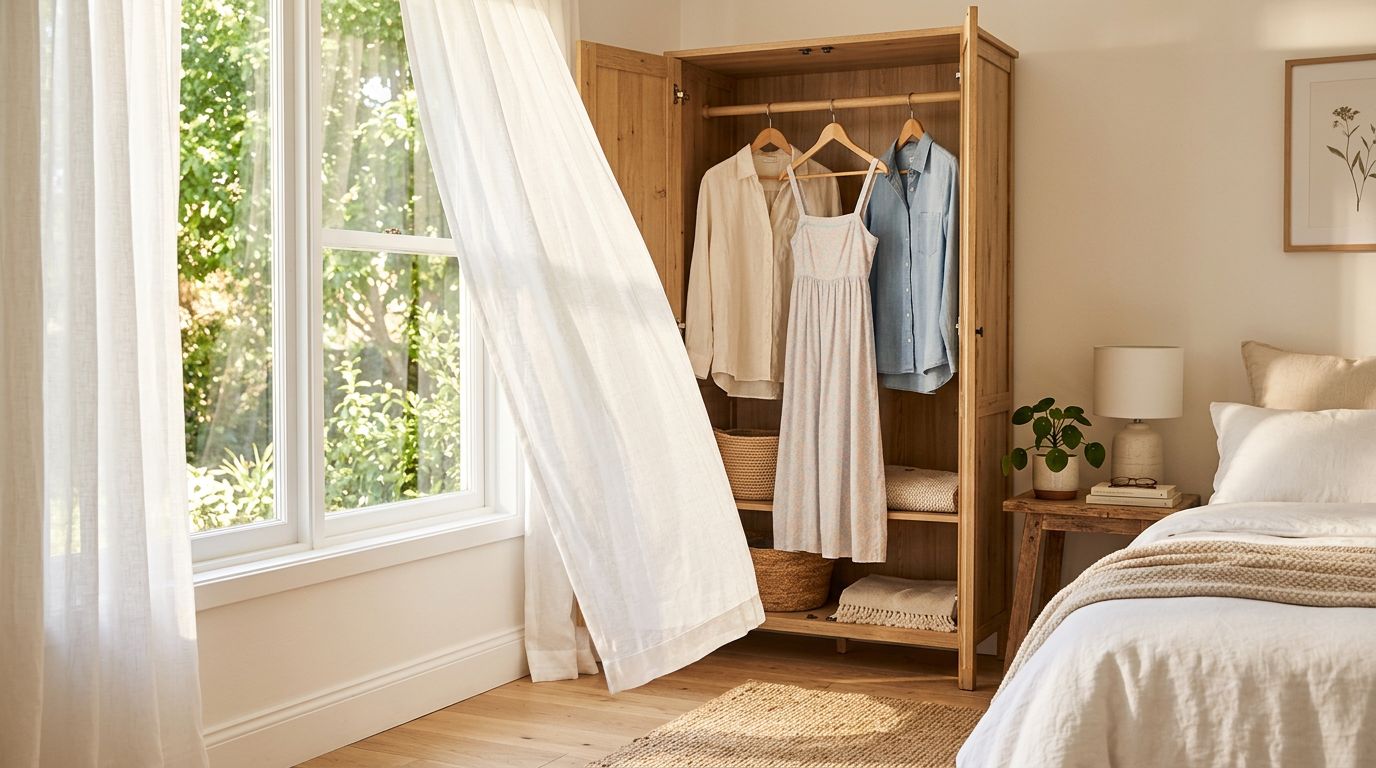
Summer style sounds easy until you’re standing in front of the closet, wondering why everything feels either dull or a bit too “beach bar at noon.” A summery look is not about piling on straw hats and tropical prints. It’s about making your clothes feel light, open, and a little sun-touched.
That usually comes down to three things: fabric, color, and shape. Get those right, and even a simple outfit starts to feel like July.
Start with fabric, because summer is a physical feeling
If clothes don’t breathe, nothing else matters. You can wear the prettiest dress in the world, but if it traps heat like a parked car, the mood is gone.
The easiest way to make an outfit feel summery is to change the fabric before you change anything else. Linen is the obvious favorite, and for good reason. It wrinkles, yes, but that wrinkle is part of the charm. It says you sat down, moved around, lived a little. Cotton poplin, gauze, light chambray, and soft knits also do the job well.
A heavy fabric can make a pale outfit feel wrong for the season. A light fabric can make even a dark piece feel workable. That is the trick people often miss. Summer dressing is less about the label on the tag and more about the way the garment moves when there’s air in the room.

Think about the difference between a stiff blazer and an unstructured linen shirt. Both can look polished. Only one lets you breathe on a humid afternoon without becoming annoyed at your own sleeve.
That doesn’t mean everything has to be loose and floaty. A fitted tank in ribbed cotton can feel just as summery as a wide dress. The point is comfort with a bit of ease. If the outfit looks like it wants shade and cold water, it’s probably not the right one.
A good test is simple. Ask whether the fabric belongs near sun, skin, and movement. If the answer is yes, you’re on the right track.
Let color suggest summer, not shout it
Color can do a lot of work, but it shouldn’t have to carry the whole outfit on its back. When people try too hard to dress for the season, color is often where things go sideways. Suddenly everything is neon, citrus, or covered in giant flowers, and the outfit starts arguing with itself.
A more relaxed approach works better. Summery colors tend to look a little washed by light. White, cream, soft blue, butter yellow, faded green, pale coral, and sandy beige all feel natural because they echo things we already connect with warm weather. Sky. Shells. Lemon flesh. Old patio walls. You get the idea.

That said, “summery” doesn’t mean pastel only. Bright red can feel perfect in summer. So can black, if the cut is easy and the fabric is light. The goal isn’t to dress like a scoop of sorbet unless that genuinely suits you. The goal is to let one or two colors bring in warmth and freshness.
If you’re not sure where to start, go neutral first. Build the outfit in white, tan, navy, or light denim. Then add one sunny note. Maybe it’s a pale yellow shirt. Maybe it’s green earrings. Maybe it’s orange sandals that make you oddly happy. Small moves count.
If the fabric sets the temperature, color sets the mood.
That balance matters. Too many sweet shades at once can tip into costume. One clear summer color, grounded by something plain, usually looks smarter.
Keep the shape easy, then stop before it gets fussy
A summery outfit should look like you can walk, sit, eat, and change plans in it. That sounds obvious, but a lot of “seasonal” styling ends up stiff. Too many accessories. Too much theme. Too much effort showing.
The strongest summer silhouettes have some space in them. A midi dress that skims instead of squeezes. Wide-leg trousers with a fitted tank. Shorts with a crisp shirt left a little open at the collar. A simple skirt with flat sandals and a basket bag, if you like that sort of thing. Not because you need all the cliches, but because each piece leaves room for air and motion.
Proportion matters here. If one part is loose, let another part stay clean and close to the body. That contrast keeps the outfit from looking sleepy. A big linen shirt works better with tailored shorts than with billowy pants. A soft full skirt likes a simple top. You want ease, not drift.
Accessories should support the feeling, not hijack it. Leather sandals, woven textures, light jewelry, sunglasses with a bit of character, all fine. Ten bangles, shell earrings, an anklet, a giant hat, and a printed scarf, maybe save that for a themed dinner party.
This is also where context steps in. A summery office outfit is not the same as a beach-town lunch outfit. In a city, the answer may be a pale button-up, cropped trousers, and sleek sandals. For a weekend, maybe it’s a cotton dress and a tote. Same idea, different volume.
The best outfits usually have one clear seasonal signal, not six. That’s why they feel convincing.
Conclusion
Dressing in a more summery way is not a mystery, and it doesn’t require a whole new wardrobe. Start with breathable fabric, add color with a light hand, and keep the shape easy enough to live in.
If an outfit feels cool, looks relaxed, and doesn’t seem desperate to prove it’s summer, you’ve probably nailed it. That is the sweet spot, and it’s much easier to wear than a costume.


