
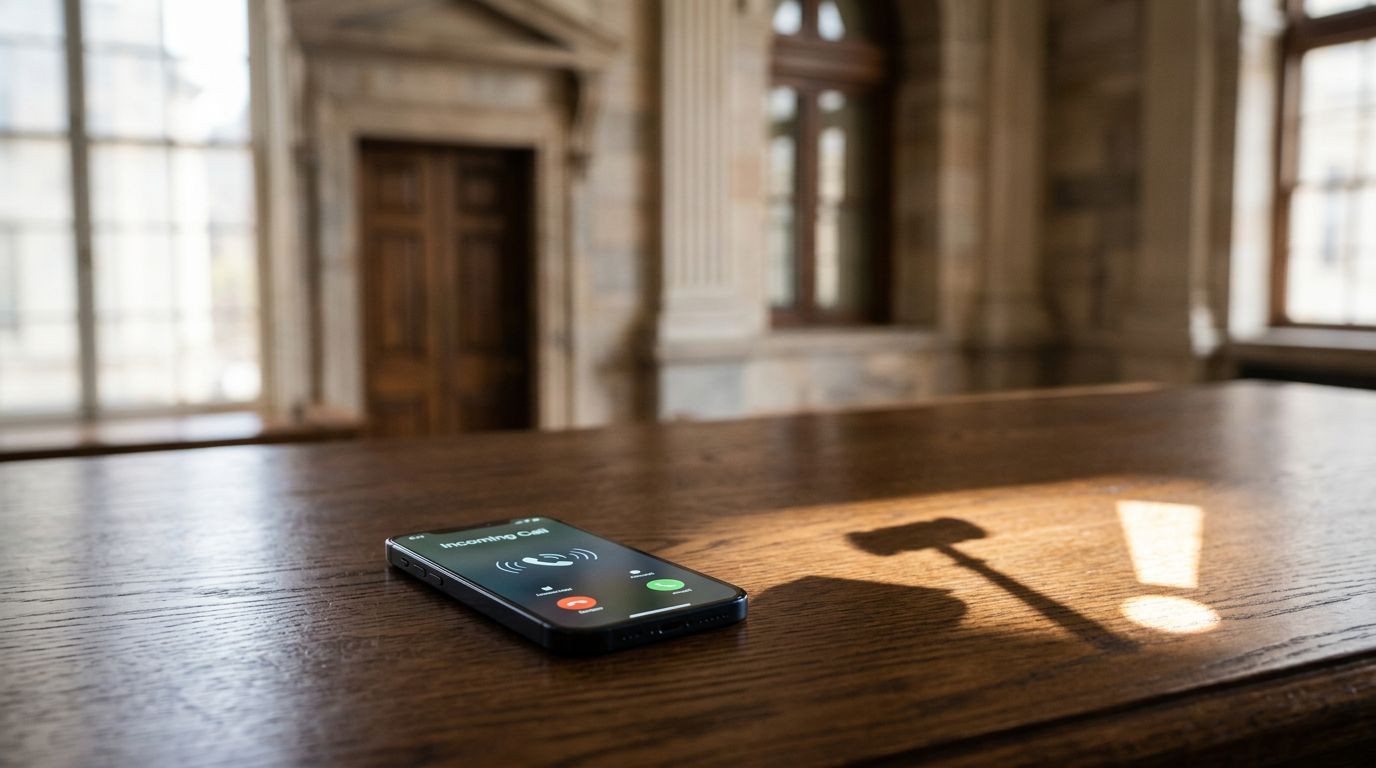
The scariest phone call is usually the one that sounds polite. A calm voice says you missed jury duty, a warrant is coming, and you can fix it right now if you cooperate.
That works because it hits two nerves at once: the fear of legal trouble regarding your missed jury duty and the fear of making a bad situation worse. If you know the usual warning signs of a jury duty scam, you can stop the whole thing before money leaves your account.
A scammer wants you scared first and careful second.
Key Takeaways
- Official courts never demand payment: Real legal institutions will never call you to demand immediate payment via gift cards, wire transfers, or prepaid debit cards to resolve a warrant or a missed jury duty notice.
- Recognize the pressure tactics: Scammers use fear, urgency, and threats of immediate arrest to prevent you from thinking clearly or performing independent verification.
- Verify independently: Always hang up on suspicious callers and contact the court directly using a phone number you have sourced from an official government website or your original jury summons.
- Identity protection: Never provide sensitive information like your Social Security number or date of birth over the phone to someone who contacted you unexpectedly, even if they claim to be a court official.
Why a jury duty scam can fool smart people
A good scam does not sound cartoonish. It sounds official enough that your stomach drops before your brain has time to argue.
That is why smart, cautious people still get caught. The caller may use a fake Caller ID, know your name, your county, and the name of your local courthouse. They may claim to be a deputy, clerk, or other court officials. Some even give badge numbers or case numbers, because a made-up detail can feel like proof when you are rattled.
The story also has a built-in pressure point. Most people do not know exactly how missed jury service is handled, so they fill in the gaps with worry. A scammer loves that blank space. They step right into it and start talking fast.
The pattern is so common that the U.S. courts warning on juror scams says these callers often threaten fines or jail time while pretending to speak for the legal system. The whole point is to make you feel cornered.
Timing helps them too. Some calls come in the evening, after the courthouse is closed, which the North Carolina Judicial Branch warning flags as a common red flag. You cannot easily verify anything at that hour, and the scammer knows it.
Recent warnings show the scheme has grown a second costume. The caller may send you to a convincing website, hoping a polished page will finish the job. That extra layer matters because people often trust what looks official, even when the first contact was wrong from the start.
The warning signs that should stop you cold
The first and biggest warning sign is simple: they want money now. If someone claims you can avoid arrest, clear a warrant, or pay a fine by transferring funds during the call, stop right there. Scammers often demand that you send money via a pre-paid debit card or a gift card, insisting that these methods are necessary to resolve your legal status immediately.
Real courts do not call and demand immediate payment to make a warrant disappear.
Threats are another giveaway. Scammers like hard deadlines, raised stakes, and phrases that shut down thought. Pay in the next few minutes. Stay on the line. Do not hang up. An officer is on the way. That kind of language is meant to keep you obedient, not informed. A real court can be strict, but it does not need to bully you into instant payment over the phone.
Another common tell is the request for sensitive information. If the caller asks for your Social Security number, full date of birth, or other private details to confirm your file, you are looking at trouble. Federal courts do not ask for that kind of information by phone or email to resolve jury issues, and they do not collect money that way either.
Then there is the strange mix of authority and panic. The caller may impersonate someone from the local sheriff’s office to sound formal, but the script is all urgency. They may say you missed service even though you never received a notice. They may insist their records prove it and keep talking so you cannot pause, look anything up, or call the court yourself. That is not professionalism. That is crowd control, with an audience of one.
Watch for fake confidence, too. Badge numbers, case numbers, a judge’s name, or a courthouse address do not make the call real. Scammers borrow true details the way a bad actor borrows a uniform. It still does not make them a police officer. When money demands, threats, and personal data requests show up in the same conversation, the answer is already clear.
How to verify a jury summons without walking into the trap
The safest move is boring, and that is why it works. Hang up.
Do not argue. Do not keep them talking to see where this goes. Do not use the callback number they give you. Every extra minute inside the call is a minute spent in the world they built for you.
Instead, find the court on your own. Use the official court website you locate yourself, or use contact information from a paper jury summons you already have. Real courts almost always initiate service via first class mail, not with a threatening phone call, text, or email. If the first contact you receive is a demand for payment, that is a major red flag. If a court truly needs to contact you regarding a missed date, you will receive an official Failure to Appear Notice sent through official mail.
Once you have the court’s real number, call the clerk of court and ask whether there is any record connected to your name. Keep the question plain. You do not need to repeat the scammer’s whole speech. Ask whether you were summoned, whether you missed anything, and what the court’s actual process is. A real clerk of court can answer that. A scammer cannot.
Be careful with links too. The FTC warning about fake jury duty websites describes a newer version of the scheme, where callers send people to lookalike sites to make the lie feel official. If a caller sends a URL, treat it as part of the scam until proven otherwise.
You also do not need to solve the problem in one sitting. Courts have procedures. Scammers have countdown clocks. That difference tells you a lot.
If you are ever unsure, pause and verify through a number you found yourself. The scam almost always falls apart there. A person from a real court may not love being questioned, but they will survive it. A scammer will usually push back hard, because independent verification ruins the whole performance.
What to do if you already shared information or paid
First, do not let embarrassment talk you into silence. These calls are designed to hit fast and sound official. Shame is part of the scam’s cleanup crew, and it does not deserve the job.
If money was sent, contact your bank or card issuer right away. Tell them you believe you were targeted in a jury duty scam and ask what can still be blocked, disputed, or reviewed. Time matters here, so make that call before you replay the whole thing in your head for the tenth time.
If you shared personal information, take it seriously even if no money changed hands. Watch your accounts, review recent activity, and take precautions against identity theft that fit what you gave away. A phone number alone is one thing, but sharing a Social Security number is a serious risk that can lead to identity fraud.
Save what you have. Keep the phone number, voicemail, text messages, screenshots, email, or fake case details. Then, report the incident to the court that was impersonated, your local law enforcement agency, your state Attorney General, and the Federal Trade Commission. Courts around the country keep warning pages because this keeps happening, including the Oregon Judicial Department scam alerts.
One more thing matters, and it is easy to miss. If the caller tried to keep you on the phone or rushed you away from checking facts, write that down too. That pressure is part of the fraud, and documenting it helps explain the situation clearly when you report it.
Frequently Asked Questions
Can I really get a warrant for missing jury duty?
While it is theoretically possible for a court to issue a bench warrant for failing to appear for jury service, it is a formal legal process that is never initiated by a threatening, high-pressure phone call. Courts typically communicate via official, trackable mail, and they will not call you to offer an immediate “pay-to-clear” option for a warrant.
Why do scammers know my name and address?
Scammers often use public records and data leaked in various security breaches to build a profile that makes their calls sound legitimate. Having your name, address, or even the name of your local courthouse does not make the caller an authentic employee of the justice system.
What should I do if the caller knows my personal details?
If the caller mentions your personal information, remain calm and do not let it validate their story. Treat the call as a red flag regardless of the information they hold, as fraudsters frequently use data harvested from the internet to add a veneer of credibility to their scripts.
Will the police call me if I missed jury duty?
No, law enforcement officers will not call you to discuss a bench warrant or demand payment over the phone. If a court truly needs to address a missed appearance, they will handle the matter through official documentation delivered by mail or direct outreach from the court clerk’s office, not via a phone call demanding immediate funds.
The safest move is the simplest one
The official tone adopted by a caller is merely a costume. The true indicator of fraudulent communication is what happens next: mounting pressure, threats, and a demand for immediate payment before you have a moment to think. Scammers often use the threat of a warrant for an alleged failure to appear as leverage to force compliance.
A legitimate court may cause an inconvenience, but it does not require your panic. When you receive scam phone calls regarding a supposed jury duty problem that include urgent payment instructions, pause, hang up, and verify the court through a phone number you found yourself from an official source.
That small pause is often the difference between a minor scare and a significant financial loss.


