
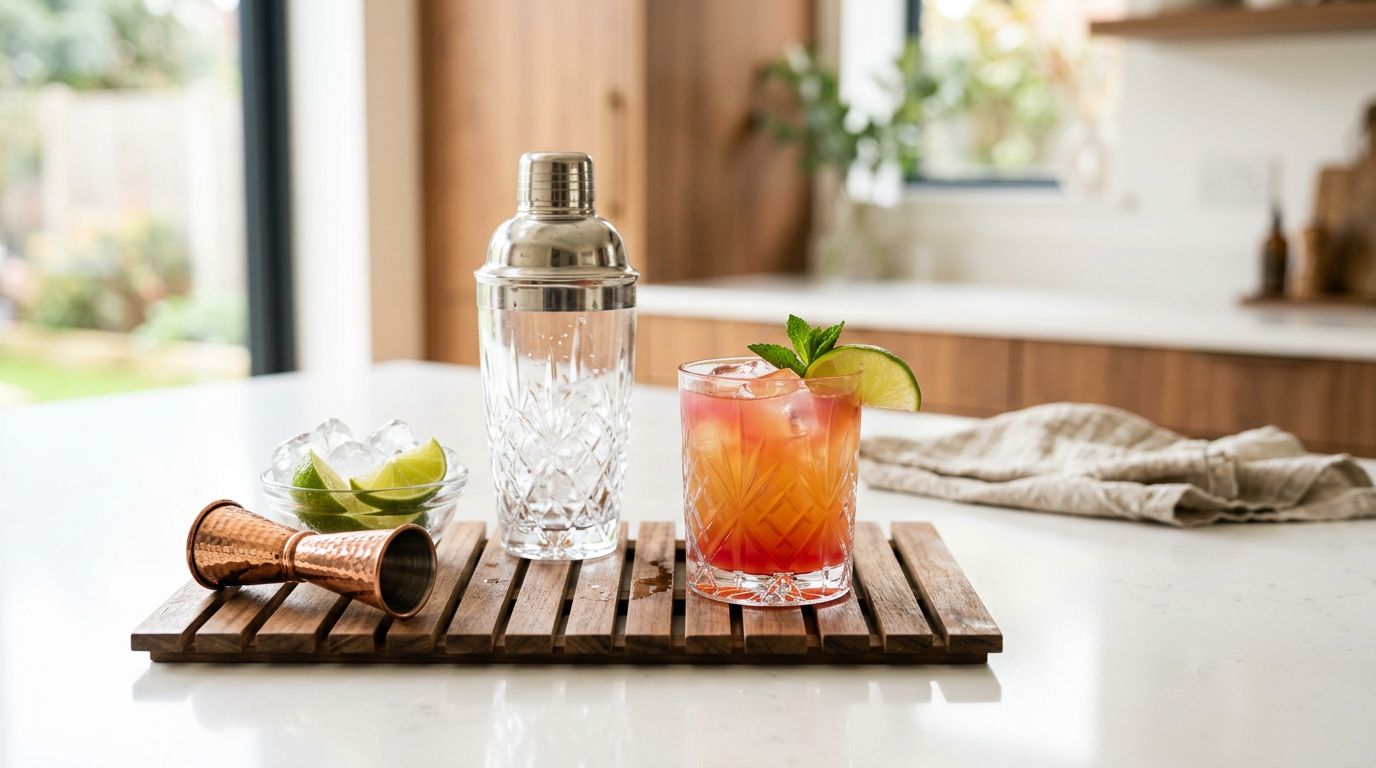
Why does one homemade drink taste sharp and messy, while another feels like a small event in a glass? A cocktail isn’t magic. It’s a set of small choices that either work together or start fighting.
That matters if you’re standing in your kitchen with a lime in one hand and mild panic in the other. The good news is that most good cocktail recipes aren’t mysterious at all. Once you understand balance, the whole thing gets friendlier.
A good cocktail is mostly about balance
The best cocktail recipes don’t begin with rare bottles or theatrical garnish. They begin with a question: what is this drink supposed to feel like? Crisp, rich, bright, bitter, cooling, slow? When the answer is clear, the build gets simpler.
Most cocktails are a conversation between strong, sweet, sour, bitter, and water. Yes, water. Dilution sounds unromantic, but it is the difference between a harsh drink and one that settles into itself. Ice is not an afterthought. It’s part of the recipe.
A beginner often adds too much of the thing they like most. More sugar for comfort. More citrus for drama. More booze for proof of seriousness. That’s how a drink turns into an argument. A balanced cocktail lets each ingredient speak, then tells one of them to lower its voice.
A drink doesn’t need many ingredients to feel complete. It needs the right tension between them.
This is why classic drinks still matter. A Daiquiri is rum, lime, and sugar, but when the ratio is right it tastes polished, not plain. A Martini is stripped down to the bone, yet every small choice shows. These recipes teach restraint, and restraint is where a lot of home bartending gets better.
Your home bar doesn’t need to look expensive
People get stuck before they pour the first ounce. They assume cocktails require fifteen bottles, six syrups, smoked glassware, and the confidence of someone wearing suspenders. They don’t. A small setup goes a long way.

A shaker, a jigger, a strainer, and a spoon cover most of what you need. Add fresh citrus, decent ice, and one sweetener, usually simple syrup. That’s enough to start making drinks that taste intentional. You don’t need a museum of spirits. You need a few bottles you understand.
Quality matters, but not in a snobbish way. Cheap liquor doesn’t always ruin a drink, though it often leaves a rough edge you end up trying to hide. Fresh lime or lemon juice matters more than many people expect. Bottled juice has the personality of wet cardboard. Fresh citrus tastes alive, and cocktails notice.
Keep your first shelf simple. A whiskey, a gin, a rum, a tequila, bitters, vermouth, and orange liqueur can carry you through a surprising number of classic and modern drinks. That is where many reliable cocktail recipes live, in a modest lineup used well.
Learn one classic drink, then learn why it works
A single well-made classic teaches more than ten random internet drinks with candy rims and six kinds of juice. Pick one. Make it more than once. Taste it slowly. Ask what changed when you used more ice, less sugar, a different spirit, or a colder glass.

The Old Fashioned is a strong teacher because it leaves nowhere to hide. It’s whiskey, sugar, bitters, and dilution. Start with 2 ounces of bourbon or rye, a small amount of simple syrup, and a couple dashes of bitters. Stir with ice until it softens and chills, then add an orange peel. If it tastes hot, it may need more dilution. If it tastes flat, it may need less sweetness or a more expressive whiskey.
That same lesson shows up everywhere. Once you know how sweetness rounds bitterness, or how citrus lifts a base spirit, cocktail recipes stop reading like secret codes. They start looking like families. The Margarita, the Sidecar, and the Daiquiri are not identical, but they rhyme. When you hear the rhyme, you stop memorizing and start understanding.
Bright drinks make it easier to trust your palate
Spirit-forward drinks teach precision. Citrus drinks teach adjustment. That’s why so many beginners click with a Margarita. It gives quick feedback. Too much lime, and you wince. Too much syrup or liqueur, and the whole thing slumps.

A clean Margarita is usually tequila, lime juice, and orange liqueur, shaken hard with ice. The salt rim is optional, despite the way some menus act like it is legally required. What matters most is tasting before you declare the drink finished. If the lime is especially sharp, the balance may shift. If the tequila is soft and floral, the drink may want less sweetness. That tiny pause, taste, think, adjust, is what separates mixing from guessing.
This is where home bartenders improve fast. They stop treating recipes as commandments carved into stone. They treat them as starting points. Not loose suggestions, not chaos, but frameworks. If a drink feels muddy, simplify it. If it feels dull, check acid, bitterness, or temperature before reaching for another syrup. Most problems are smaller than they seem.
And yes, garnish matters, though not because it looks fancy on your phone. A citrus peel changes aroma. Mint changes the first impression before the sip even lands. A cocktail is tasted with the nose first, then the mouth, then the aftertaste. That sounds dramatic, but it’s also practical. Smell tells you what the drink is trying to be.
Final thoughts
The difference between a forgettable drink and one you want again is usually balance, not complexity. Good cocktails reward attention, but they don’t require a performance.
Start small, use fresh ingredients, and repeat a few dependable recipes until the patterns become obvious. Once that happens, the shaker stops feeling like a prop and starts feeling like a tool.


