
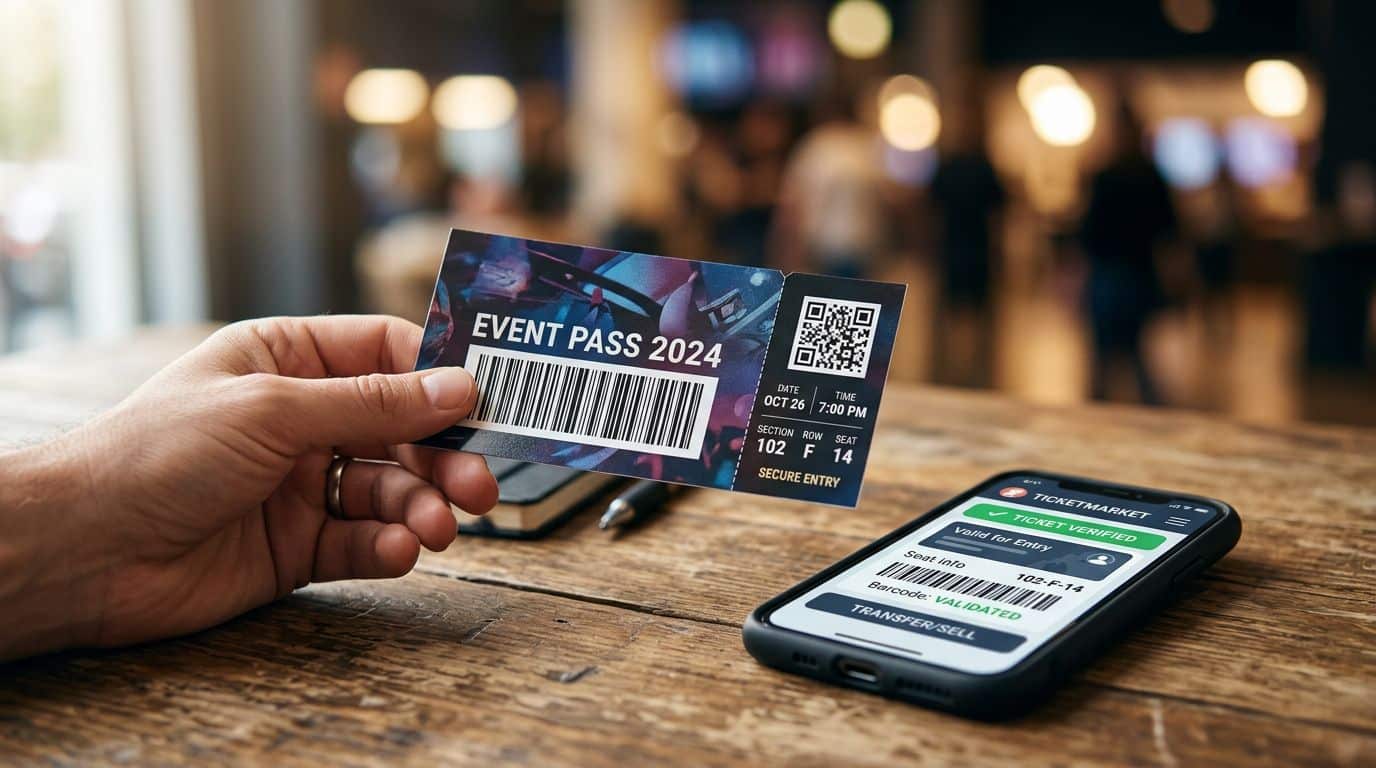
A fake ticket usually looks perfectly fine, right up until the scanner says no. That’s what makes fake event tickets so nasty. They don’t fail when you’re browsing, they fail when you’re outside the gate, hearing the opener start.
Most scams give you warning signs before money changes hands. You only need to know where to look, and when to stop being polite and start being skeptical. That’s where the real protection is.
Start with the seller, not the ticket
When people get scammed, they often stare at the seat number, the barcode, or the price. Fair enough. But the first thing to inspect is the seller.
A real ticket sold through the artist’s site, the venue box office, or an official resale partner starts on solid ground. A random account on social media, a marketplace message, or a “friend of a friend” starts on thin ice. Thin ice can hold, sure. It also cracks fast.
Hot events make this worse. Sold-out concerts, playoff games, major festivals, opening-night theater, those are catnip for scammers. The higher the demand, the easier it is to hide a lie inside a bargain. A floor seat for half the going rate is not a lucky break most of the time. It’s bait.
The website matters too. Scam sites often copy real branding and use a web address that looks almost right. One extra letter. A strange ending. A word shoved into the middle. If you reached the site through an ad, a DM, or a text, slow down. Type the venue or performer website yourself and follow the official ticket link from there.
It’s also smart to check whether the reseller has a clear refund or buyer-protection policy. BBB’s advice on online resellers points out something buyers forget when excitement takes over: a legitimate resale platform should explain how transfers work and what happens if a ticket turns out to be fake.
That matters because scammers love vagueness. They don’t want rules. They want momentum. If the seller can’t explain where the ticket came from, how it will be transferred, and what happens if it fails at the gate, you’re not buying admission. You’re buying suspense.
What the ticket itself should tell you
Once the seller passes the first sniff test, the ticket details need to make sense. Not “sort of.” Not “close enough.” Sense.
Check the event name, venue, date, start time, section, row, and seat. Then compare the seat details with the venue’s seating chart. If Section 214 doesn’t exist, if Row A makes no sense for that level, or if the seller suddenly gets fuzzy when you ask where the seat actually is, stop there.
Ask for proof of purchase too. A real seller should be able to show some form of original confirmation, such as an email receipt or order confirmation. They can blur private details if they want. That’s fine. You’re not asking for their life story. You’re asking for proof that a ticket exists and that they control it.
Paper tickets have their own tells. Blurry print, bad spelling, odd spacing, wrong venue details, or cheap-looking stock can all point to a fake. Still, most scam issues now come from mobile tickets, not paper ones. Which leads to a headache buyers keep underestimating: screenshots.
Another trap is the speculative sale. That’s when the seller takes your money before they actually hold the ticket, hoping they’ll obtain it later. Sometimes they do. Sometimes they don’t. Either way, you’re carrying the risk while they carry your money. If the seller says the ticket will be “available closer to the event,” check whether that delay comes from the official platform’s release schedule, or from the seller making a promise they can’t back up.
This quick comparison helps separate a normal sale from a shaky one.
| Reassuring sign | Red flag |
|---|---|
| The seat matches the venue map | The section or row doesn’t exist |
| The seller shows an order confirmation | The seller dodges proof |
| Transfer happens inside the official app | You only get a screenshot |
| Refund terms are written and clear | “Trust me” is the whole policy |
The pattern matters more than any single detail. One odd thing can be a mistake. Several odd things at once usually aren’t.
Digital tickets need more than a screenshot
A screenshot feels convincing because it looks official. It has a barcode, maybe a seat number, maybe even a moving graphic if the scammer is ambitious. But a screenshot is still a picture. It is not ownership.
If the ticket is mobile-only, ask for transfer through the original ticketing app or official resale platform. That’s the cleanest path. The ticket should move into your account, your wallet, or another verified handoff system tied to the event. If a seller says, “I’ll text you a screenshot,” they’re not transferring the ticket. They’re sending a photo that may already be sitting in five other people’s phones.

Some buyers get tripped up here because modern ticketing can look strange even when it’s legitimate. Certain events hide barcodes until shortly before doors open. Some apps refresh the code. Others require the receiving account to accept a transfer before the ticket becomes usable. That doesn’t make the ticket fake. It means you need to verify the transfer method against the official event rules, not against what “looks normal” in a screenshot.
Get Safe Online’s ticket safety guide makes the same point in plainer terms: use regulated platforms, look for fan protection, and resist the hard sell. That’s not boring advice. That’s the whole ballgame.
Also, protect your account while you’re trying to protect your wallet. Never hand over your login so a stranger can “load the ticket for you.” Never sign in through a link sent in a DM or text because your “ticket account has an issue.” Fake ticket scams often slide into phishing scams the second you show interest.
If all you have is a screenshot, you do not have a secure ticket.
That sentence saves a lot of money.
Payment is where the scam either breaks or lands
The ugliest part of most ticket scams isn’t the fake ticket. It’s the payment method the seller pushes once you’re emotionally hooked.
A scammer will often start out sounding flexible. Then, right before you pay, the rules change. Suddenly they want cash, a wire transfer, a gift card, crypto, or a person-to-person payment with little or no buyer protection. The reason is always convenient. Their account is “acting up.” The platform is “holding funds.” They can “give you a better deal off-site.” No. That’s the trap closing.
A credit card is usually the safest way to pay because you have a dispute path if the ticket never arrives or fails. Protected, on-platform checkout is also far better than sending money directly to a stranger. Once a seller pressures you to leave the official platform, you’ve lost the safety net that made the purchase reasonable in the first place.
Urgency is another tell. “I need payment in five minutes.” “Someone else is ready.” “I’ve got ten messages already.” Fine. Let the next person have the imaginary ticket. Real sellers may move quickly, but they can still answer basic questions. Scammers hate slow buyers because slow buyers notice things.
BBB’s warning on big-event tickets also points out a simple habit that saves people grief: don’t click straight from ads or emails when you’re trying to buy high-demand seats. Go to the trusted source yourself. A fake checkout page only needs a few rushed minutes to win.
If you’ve already paid and something feels off, move fast. Contact your card issuer or bank the same day if possible. Save the listing, the messages, the seller profile, receipts, screenshots, and any transfer emails. Report the problem to the platform. If money was stolen, file a fraud report with the right local authority. Waiting in the hope that things will sort themselves out is comforting, but it helps the scammer, not you.
The safest ticket is the one you can verify
The gate scanner won’t care that the seller seemed nice, or that the deal felt lucky. What matters is whether the ticket came from a real source, moved through a real transfer system, and was paid for in a way that gives you some backup if things go wrong.
That’s the useful rule to keep in your pocket: verify the seller, verify the transfer, protect the payment. If one of those pieces is missing, keep your money.
Missing a show is annoying. Paying for a seat that never existed is worse.


