
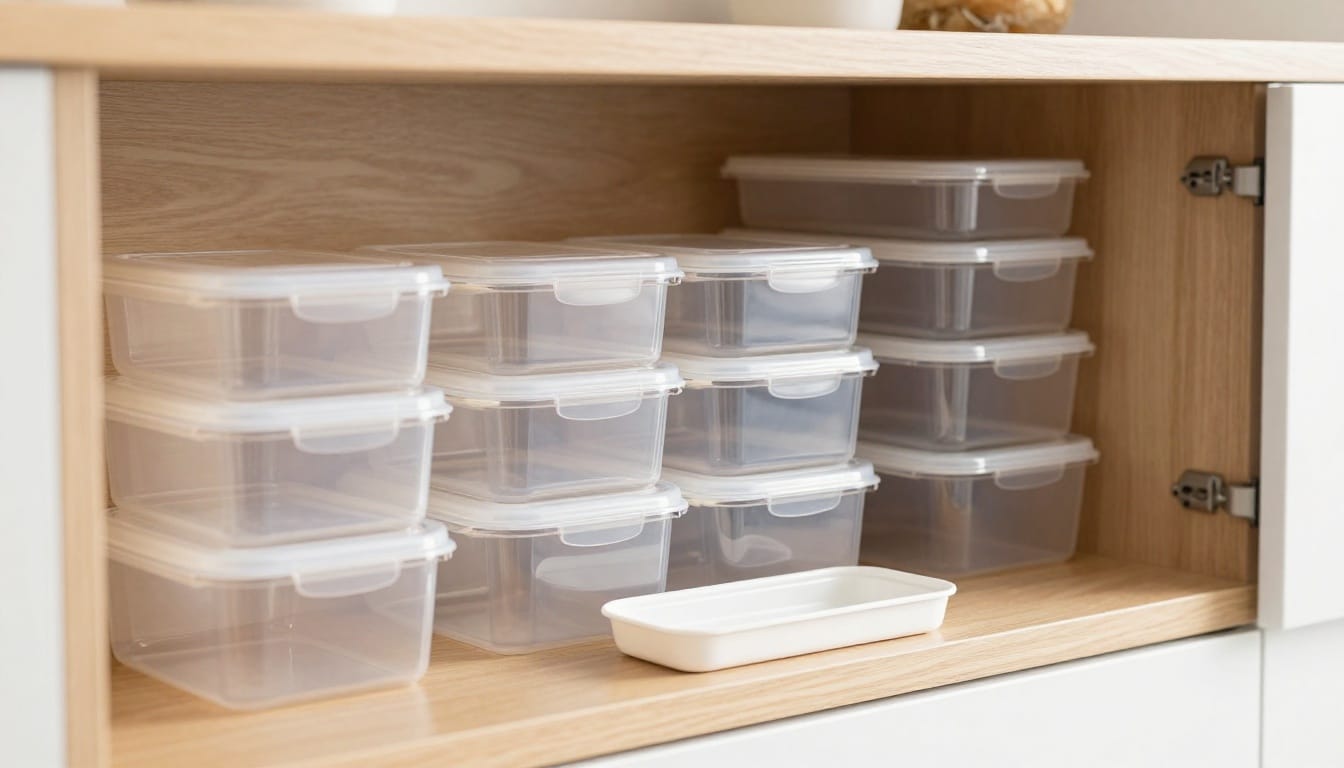
A cabinet full of containers can turn simple cleanup into a scavenger hunt. One minute you have leftovers, the next you’re kneeling on the floor with six lids and no match.
Good food storage container organization has less to do with buying organizers and more to do with reducing confusion. When you cut the clutter and give lids one job, the whole cabinet gets calmer. The fix starts with what you keep.
Start by shrinking the container family
Lost lids usually aren’t lost. They’re buried under too many brands, shapes, and sizes. If every base needs its own rare top, the cabinet turns into a bad blind date, lots of hope, no match.
Start by emptying the whole space. Put every base and lid on a counter or table, then make pairs. Keep complete sets that still seal well. Let go of cracked, stained, warped, or mystery pieces. Also, be honest about what you use. That tiny dip container may be cute, but if it never leaves the shelf, it’s taking up rent-free space.
Next, standardize where you can. Most kitchens work better with one main material and one or two shapes. Rectangles often stack better in fridges. Rounds work well for soups and sauces. Pick the styles you reach for every week, then thin the rest. This matters even more in small apartments, because one awkward set can throw off a whole cabinet.
Then nest the bases by size, with lids stored separately. Keep small with small, medium with medium, and large with large. Give each group a clear job, lunches, leftovers, snacks, or batch cooking. When a size has a purpose, you stop grabbing random tubs because they’re nearby. Above all, leave a little empty space. A cabinet packed to the brim almost invites lost lids.
Give lids one clear home, and keep them visible
Bases can stack. Lids rarely behave. That’s why so many container systems fail at the same point. People build neat towers of bowls, then toss the lids in a flat pile and hope for the best.
Store lids upright, not flat. A shallow bin, a dish rack, a file sorter, or even two tension rods can hold them like folders. That way, you can scan the whole group in seconds. You also stop lifting ten lids to find the one on the bottom. If your kitchen has one stubborn drawer that fits nothing else, this is its moment.

Photo by alleksana
If lids stand up, they stay visible. If they lie flat, they vanish into the pile.
Keep the lids as close to the bases as possible. Same shelf is best. Same cabinet is fine. Across the kitchen is where matches go missing. If you have kids helping unload dishes, make the setup obvious. Group lids by shape first, then by size. Round stays with round. Rectangle stays with rectangle. In other words, don’t make anyone solve a puzzle before lunch.
A label can help, but the layout matters more. Put daily-use containers at eye level. Store holiday baking tubs or picnic pieces higher up. If you use a lunchbox set with tiny sauce cups, give those parts their own small bin. Also, resist storing every container with the lid snapped on. It looks tidy for a minute, but it wastes space fast. One or two assembled travel containers are fine. The rest do better open, stacked, and easy to scan.
Build a five-minute reset so the system lasts
Even a smart setup drifts. A late dinner, a rushed school morning, or one tired dishwasher unload can undo the order. So give the cabinet a short reset once or twice a week. Five minutes is enough if the system is simple.
During that reset, pair stray lids, restack the bases, and pull out anything that doesn’t belong. Keep a small orphan bin for loose pieces. Not a giant box, because that becomes a museum of false hope. Use a small bin, wait a week or two, then toss or recycle what still has no partner. Otherwise, single lids multiply like socks.
Your dishwashing routine matters, too. Dry lids and bases together when you can. Put away full sets in one trip instead of dropping parts wherever they fit. Also, stop cramming containers into the cabinet while they’re still damp. Wet lids slide, stick, and slump into messy piles. A few extra minutes on the drying rack can save a lot of cabinet chaos later.
Shared kitchens need plain rules. One shelf for bases. One holder for lids. One small spot for lunchbox extras. That’s it. Fancy systems fail when no one else can follow them. So keep it boring, clear, and easy to repeat. Also, wait before buying more organizers. Live with the new setup for two weeks first. If you still have a problem spot, then buy one tool for that exact issue.
A calmer cabinet comes from fewer choices
The answer isn’t a bigger kitchen. It’s fewer mismatched pieces, one visible lid zone, and a short reset that keeps the system alive. Once every container has a home, cleanup gets faster and leftovers stop feeling like a treasure hunt.
Open the cabinet tonight and make five matches. Small fixes build a lasting routine, and that routine is what keeps lids from disappearing again.


