
Cardiopulmonary resuscitation (CPR) is a life-saving technique used in emergency situations when someone’s heart has stopped beating or they are not breathing adequately. Administering CPR promptly and effectively can significantly improve the chances of survival for a person experiencing cardiac arrest. In this article, we will explore the steps involved in administering CPR effectively, highlighting its importance and providing valuable guidance.
Administering Cardiopulmonary Resuscitation (CPR) Effectively
Step 1: Assess the Situation
Before initiating CPR, it is crucial to assess the situation to ensure your safety and the safety of the victim. Determine if the person is responsive and if there are any potential hazards in the vicinity that may need to be addressed.
Step 2: Check for Responsiveness
Gently tap the person and ask loudly, “Are you okay?” If they do not respond and are unresponsive, proceed to the next step.
Step 3: Activate Emergency Medical Services
If there are bystanders nearby, ask someone to call emergency medical services (EMS) or do it yourself if you are alone. Provide clear and specific details about the situation and the need for immediate medical assistance.
Step 4: Open the Airway
To open the person’s airway, gently tilt their head back and lift the chin. This helps to ensure a clear passage for air to enter and exit the lungs.
Step 5: Check for Breathing
Place your ear close to the person’s mouth while looking at their chest for any signs of breathing. Do this for no more than 10 seconds. If the person is not breathing or only gasping, proceed to the next step.
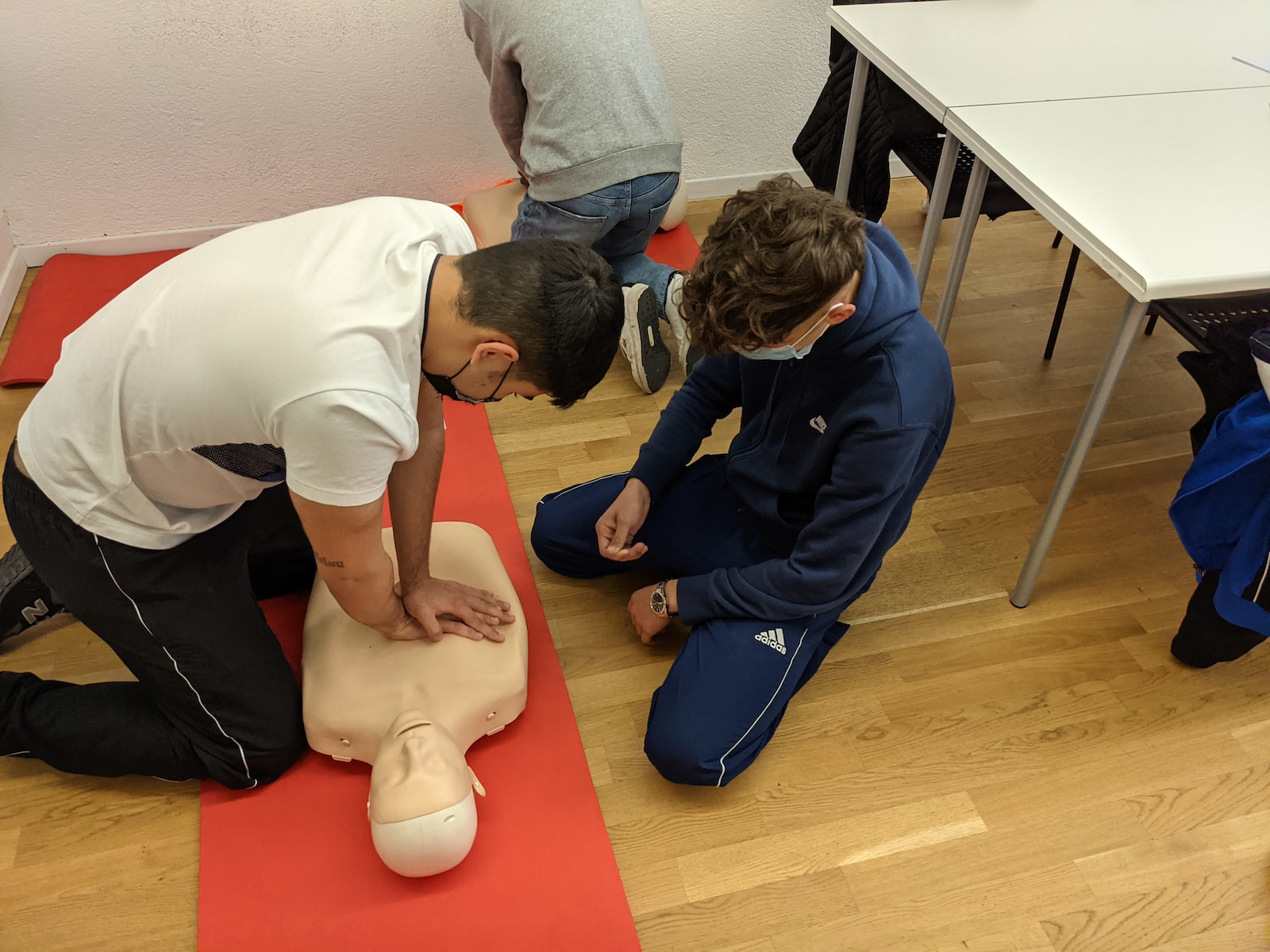
Step 6: Perform Chest Compressions
Position your hands on the center of the person’s chest, one on top of the other. Lock your elbows and use your upper body weight to deliver chest compressions. Push hard and fast, aiming for a depth of at least two inches and a rate of 100 to 120 compressions per minute.
Step 7: Perform Rescue Breaths
After every 30 compressions, provide two rescue breaths. Pinch the person’s nose closed, create a seal over their mouth with yours, and deliver two full breaths. Each breath should last about one second and make the person’s chest rise.
Step 8: Continue CPR
Continue cycles of 30 chest compressions followed by two rescue breaths until professional medical help arrives or the person shows signs of life.
Additional Considerations for Effective CPR
- Proper hand placement: Position your hands correctly on the lower half of the sternum to maximize the effectiveness of chest compressions.
- Compression depth and rate: Ensure adequate compression depth and rate to facilitate blood circulation and oxygen delivery.
- Minimize interruptions: Avoid unnecessary interruptions during CPR to maintain the continuity of chest compressions and rescue breaths.
- Rotate compressors: If there are multiple people available, rotate compressors every two minutes to prevent fatigue and maintain the quality of CPR.
- Use an automated external defibrillator (AED): If an AED is available, follow its instructions for attaching the device and delivering shocks when advised.
Conclusion
Administering CPR effectively can be a life-saving intervention in emergency situations. By following the appropriate steps, including assessing the situation, opening the airway, delivering chest compressions and rescue breaths, and ensuring minimal interruptions, you can significantly increase the chances of survival for someone experiencing cardiac arrest. Remember to activate EMS, use an AED if available, and continue CPR until professional help arrives. Proper training and regular refreshers in CPR techniques are essential for maintaining readiness and confidence in responding to emergencies.


