
Sufism, the mystical branch of Islam, has had a profound impact on the arts and culture of the Middle East. Through its teachings and practices, Sufism has inspired a rich visual language that is expressed in various art forms. In this article, we will delve into the influence of Sufism on Middle Eastern visual arts, exploring the spiritual and mystical expressions that have emerged as a result.
Exploring the Influence of Sufism on Middle Eastern Visual Arts: Unveiling the Spiritual and Mystical Expressions
Sufism: The Path of Mystical Union
Sufism is a spiritual path that emphasizes the inner journey of the individual towards divine union. It seeks to attain a direct experience of the Divine through contemplation, meditation, and the purification of the heart. The teachings of Sufism revolve around love, devotion, and the quest for spiritual enlightenment. These core principles have deeply influenced the artistic expressions of the Middle East, giving rise to a distinct visual vocabulary that reflects the mystical aspects of Sufi beliefs.
Calligraphy: Sacred Words in Visual Form
Calligraphy, the art of beautiful writing, is one of the most prominent forms of artistic expression in Middle Eastern visual arts. In the realm of Sufism, calligraphy holds a special significance as it serves as a visual representation of sacred words and verses from the Quran, poetry, and Sufi texts. Sufi calligraphers use their skills to transform the written word into a visual form that embodies the divine presence. The flowing lines, intricate compositions, and repetition of sacred phrases in calligraphic artworks invite viewers into a contemplative space, evoking a sense of spiritual transcendence.
Whirling Dervishes: Spiritual Dance in Motion
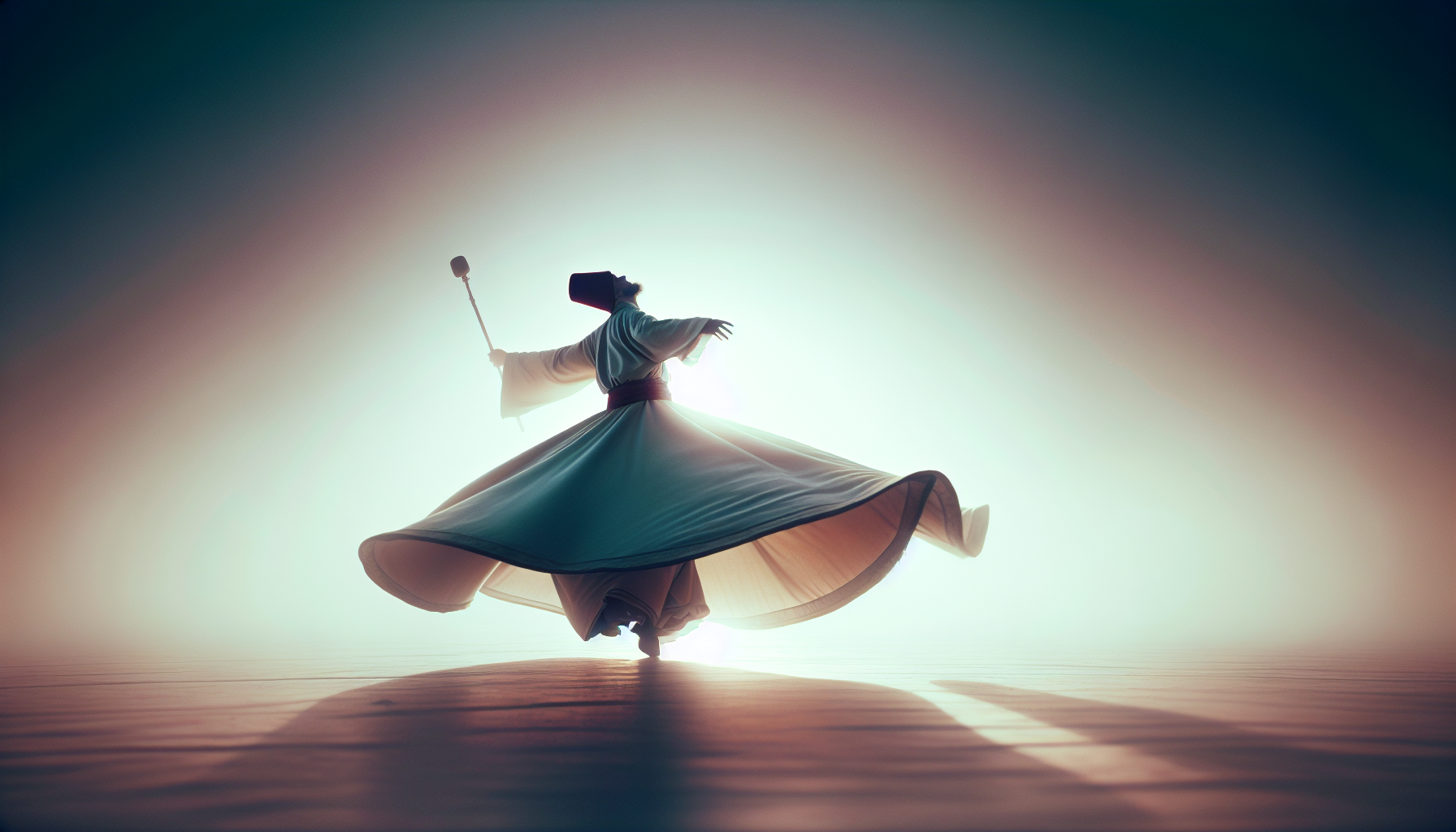
The iconic image of the whirling dervishes is synonymous with Sufism and its visual representation in Middle Eastern arts. The whirling dance, known as Sama, is a form of spiritual practice performed by Sufi practitioners as a means of attaining spiritual ecstasy and unity with the Divine. This mesmerizing dance form has been depicted in paintings, sculptures, and other visual artworks, capturing the sense of mystical movement and spiritual transcendence. The swirling patterns and vibrant colors in these representations evoke a sense of divine energy and spiritual union.
Mystical Symbolism: Veils, Keys, and Metaphors
Sufi visual arts often employ symbolic imagery to convey mystical concepts and experiences. Veils, keys, doors, and other metaphorical symbols are used to represent the journey of the soul towards spiritual awakening and enlightenment. These symbols invite viewers to contemplate the hidden meanings and metaphorical interpretations embedded within the artworks. By exploring the layers of symbolism, one can gain insights into the Sufi teachings and the mystical experiences that lie beyond the surface of the visual representation.
Colors and Symbolic Meanings
Colors play a significant role in Middle Eastern visual arts influenced by Sufism. Each color carries symbolic meanings that resonate with the Sufi tradition. For example, green represents spiritual growth and renewal, while white symbolizes purity and transcendence. By understanding the symbolism of colors in Sufi-inspired artworks, one can unravel the deeper spiritual messages and connections to the Sufi path.
Unity and Universal Love
Sufism places great emphasis on the concepts of unity and universal love. This theme is often reflected in Middle Eastern visual arts inspired by Sufism. Artworks depict scenes of unity, harmony, and the interconnectedness of all beings. The symbolism of intertwining patterns, circles, and mandalas represents the oneness of creation and the interconnectedness of humanity with the Divine. These visual representations serve as a reminder of the universal love that lies at the heart of Sufi teachings.
Conclusion
The influence of Sufism on Middle Eastern visual arts is evident in the spiritual and mystical expressions that emerge from this tradition. Through calligraphy, dance, symbolic imagery, colors, and themes of unity and love, Sufi-inspired artworks offer a profound visual language that invites viewers to embark on their own inner journey of contemplation and spiritual awakening. Exploring the influence of Sufism on Middle Eastern visual arts provides a glimpse into the rich tapestry of spiritual and artistic expressions that continue to captivate audiences worldwide.


