
Your desk is set, your to‑do list is open, and yet your feet keep walking that short hallway to the fridge. It can feel like you work in an office where your co‑worker is a talking bag of chips that will not shut up.
If you are trying to stop mindless snacking while working just steps from the kitchen, you are not broken or weak. You are a human with a brain that loves patterns, comfort, and easy rewards. The good news is that you can keep your home office and your snacks, without feeling pulled toward them all day.
Why You Keep Raiding the Kitchen
Working at home changes how you eat, often in quiet ways. There is no commute, no office kitchen, no fixed lunch break. Your fridge is the break room and vending machine in one, and it is always open.
Mindless snacking often comes from three places that blend together. Habit, when your body has learned that every break means food. Emotion, when stress, boredom, or loneliness push you toward something that feels soothing. And real hunger, when your meals are too small or too late.
Nutrition experts who study eating during remote work point out that boredom and anxiety are common triggers for constant nibbling. The University of Georgia offers simple tips to avoid overeating while working from home, and many of them start with this same idea. The problem is not only what is in your pantry, it is also what is happening in your day.
Once you see that your “ten steps to the kitchen” are part of a loop, things feel less mysterious. Your brain got used to pairing a tiny pause in work with a food reward. To stop mindless snacking, you do not need perfect discipline, you need a new loop.
Redesigning the Path Between Desk and Fridge
If the kitchen is ten steps away, your environment is doing half the snacking for you. You can flip that around so the easy choice helps you instead of hijacking your focus.
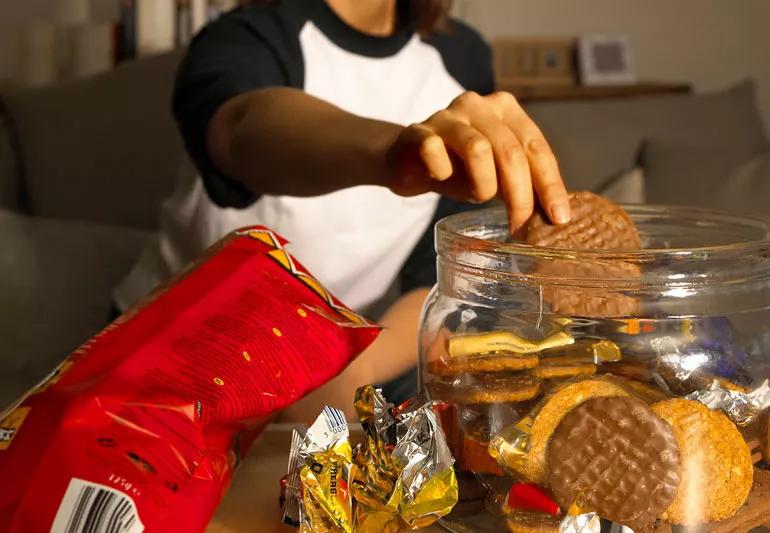
Start with what you see. Open counters, clear jars of cookies, and chips in plain view are silent invitations. If you store treats in opaque containers or higher cupboards, you add a small pause. That pause gives your thinking brain time to catch up and ask if you are actually hungry.
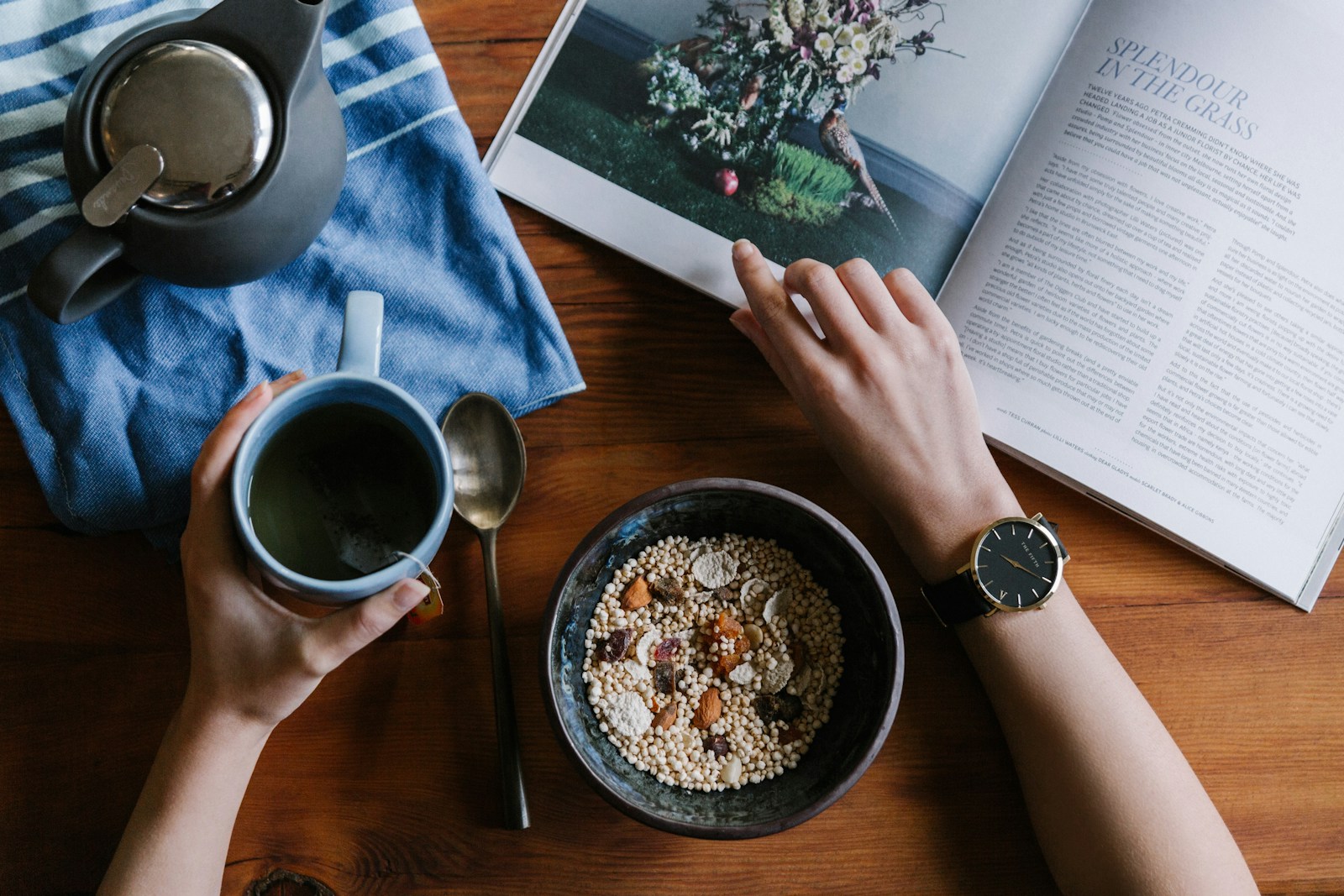
Then, make your desk a place that can meet some of the same needs without food. A big water bottle, herbal tea, or sugar‑free mints handle the urge to reach for something. Short stretch breaks or a walk to the balcony give your body a change in state that is not linked to eating.
When a snack wave hits, slowing down for even one minute can help. The Cleveland Clinic shares simple mindful eating exercises that teach you to pause, notice your body, and eat on purpose instead of on autopilot. You can borrow that same pause before you even open the pantry.
Building a Real Eating Routine For Your Workday
Many people who snack all day are not eating enough at actual meals. Then they call it a “willpower issue” when their body is simply trying to catch up.
A simple structure helps. Three solid meals at roughly the same time, with one or two planned snacks, give your body a rhythm. When your brain starts planning a pantry trip, you can say, “Next snack is at 3 p.m., I am already taken care of.” That small script can feel surprisingly steady.
What you eat also matters. Meals with protein, some fat, and fiber keep you full longer than a few crackers grabbed between calls. A bowl with eggs and toast, yogurt with nuts and fruit, or leftovers with beans and veggies will beat a handful of cereal every time.
If snacks are staying, make them do some work for you. The dietitian‑approved ideas in these tips for smart snacking when working from home show how things like nuts, fruit, hummus, or popcorn can fit into a sane plan. When snacks are chosen on purpose and eaten away from your keyboard, they stop feeling like a sneaky habit and start feeling like part of your routine.
Spotting Emotional And Boredom Eating
Remote work often means more time alone with your thoughts. A stressful email, a long stretch of tedious data entry, or a noisy house can all push you toward the kitchen for comfort.
Learning to ask “What do I actually need right now?” can feel awkward at first. If the answer is “I am angry” or “I am tired of this project,” food will not fix that for long. A two‑minute walk, three deep breaths at an open window, or a quick message to a friend might land better.
Sometimes the pattern is deeper. If snacking all day comes with guilt, shame, or a long history of dieting, it may help to talk with a professional. The team at BetterHelp breaks down how to stop snacking throughout the day in a way that also respects mental health and disordered eating. You deserve support that looks at the whole picture, not just the pantry.
Emotional eating is a clever coping skill that has simply grown too big. You do not have to throw it out. You just need more tools in the box so food is not the only one you reach for.
Tiny Rules That Keep You Out Of Trouble
Harsh food rules tend to backfire, especially at home. Gentle rules that are clear and easy often work better than “no snacks ever again”.
You might try simple, almost boring rules such as:
- No eating straight from the bag
Put a portion on a plate or in a small bowl, then close the package. This breaks the link between idle scrolling and bottomless crunching. - No food on the work surface
If you want to eat, you stand up and go to a different chair or corner. Your brain starts to link your desk with focus and another spot with meals. - One check‑in before every snack
You pause and ask, “Is this hunger, habit, or feeling?” There is no wrong answer, but the question keeps you awake to your choice.
These tiny rules act like guardrails, not handcuffs. You can always change them. You can also give yourself “practice days” where the only goal is to notice what happens, not to get it perfect.
If you want more ideas on turning grazing into planned snacking, Mayo Clinic’s piece on mindlessly munching or sensibly snacking explains how structure and awareness can work together.
Conclusion: Turning Ten Steps Into A Choice, Not A Siren Song
When you work ten steps from the kitchen, food will always be close. The shift comes when those ten steps are a choice, not a reflex you only notice once the bag is empty.
Understanding your triggers, setting a loose meal rhythm, and adding a few kind rules can help you stop mindless snacking without turning eating into a battlefield. You do not need to fix everything at once. Pick one thing, such as plating your snacks or drinking water before you open the fridge, and see how the day feels.
Over time, those small choices stack up. The kitchen stays where it is, your workday stays in your control, and the snacks finally go back to being background characters instead of the star of the show.


