
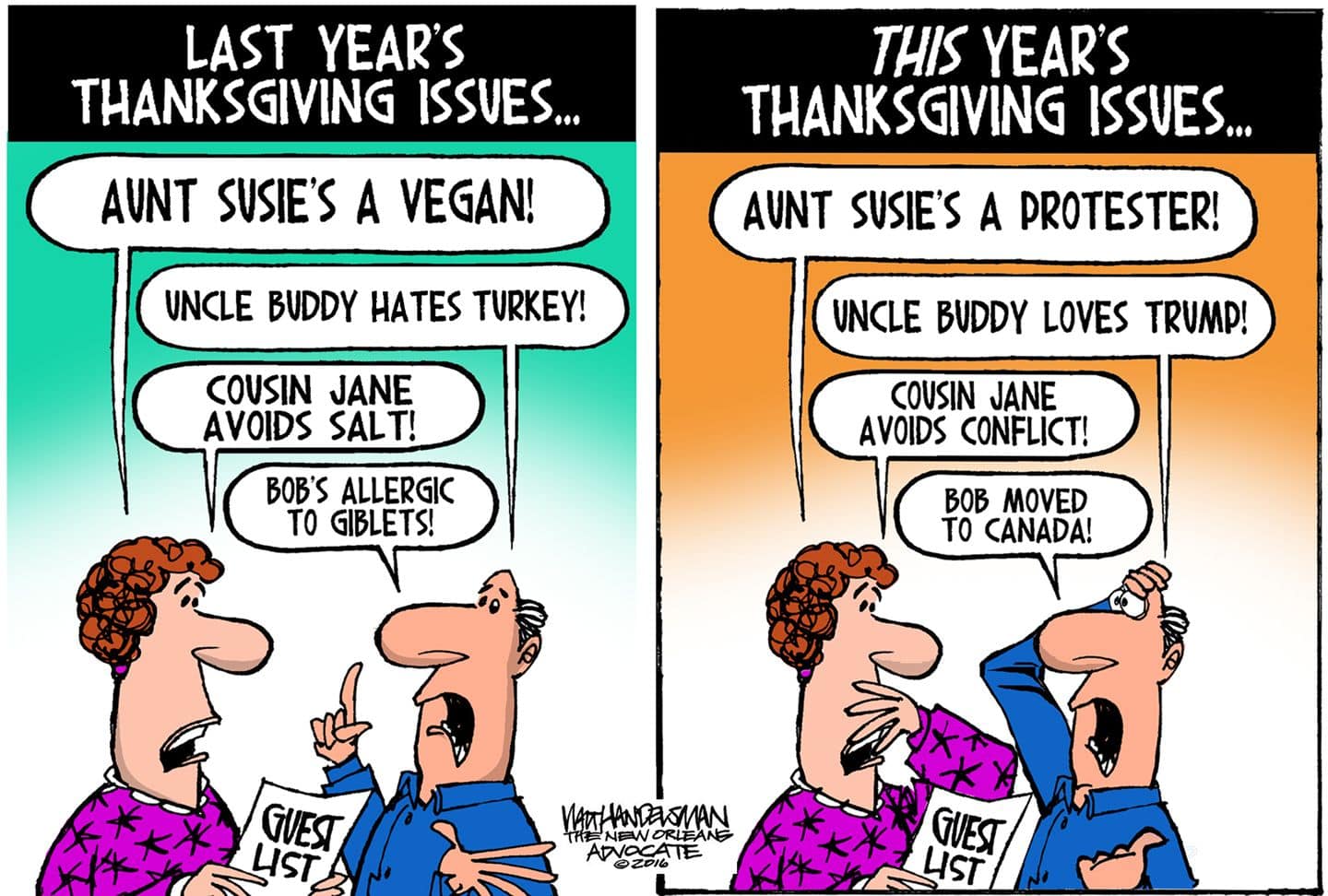
Holiday tables have a special magic. They can make a grown adult tear up over mashed potatoes, and they can make a harmless bread roll feel like it’s about to become a projectile.
If you’re bracing for holiday dinner political comments, you’re not being dramatic. You’re being realistic. Many families have mixed views, long memories, and one relative who treats “So, how’s work?” as a warm-up lap.
Peace does not mean you have to pretend you agree. It means you pick a path that protects the meal, the relationship, and your own nervous system. (If you want a thoughtful read on talking with people you deeply disagree with, NPR’s guidance is solid: How to approach the holidays with people you deeply disagree with.)

Decide what “success” looks like before you sit down
A political comment at dinner can feel like someone kicked over a candle and now the tablecloth is on fire. The first move is deciding what you’re trying to save.
For some people, success is “no yelling.” For others, it’s “I don’t dissociate into the cranberry sauce.” For others, it’s “I stand up for my partner, and I stay kind.”
Pick one clear aim. Then keep it in your pocket. When a comment lands like a dropped plate, you can reach for your aim instead of your temper.
Also, give yourself permission to be strategic. Dinner is not a debate stage. It’s a room full of feelings, history, and sharp knives.
Identify what kind of political comment just happened
Not every political remark is the same, even if your shoulders tense up like they are.
Some comments are “bait,” meant to start a fight or claim attention. Some are “venting,” where the person wants relief more than an argument. Some are “values statements,” where someone is saying who they are, and they want to be seen.
A quick, quiet check helps:
- Is this person looking for connection, or control?
- Are they speaking to you, or performing for the table?
- Is anyone at the table unsafe or targeted by what was said?
That last point matters most. Keeping dinner calm is nice. Keeping people treated like full humans is non-negotiable. If the comment crosses into cruelty, you can still stay measured, but you should get firmer.
For more on finding common ground when politics pop up at family gatherings, PBS has a helpful segment: Tips for navigating political divisions to find common ground at holiday gatherings.
Use responses that slow the room down (without sounding like a robot)
There’s a big difference between “shutting it down” and “settling it down.” The goal is to lower the heat, not win a point. Here are reliable moves that work in real houses with real relatives.
- Name the moment without naming the villain: Try, “This topic gets intense fast,” or “I can feel the table tensing up.” It’s harder to argue with a weather report than with an accusation.
- Ask for a personal story, not a slogan: If you choose to engage, steer away from talking points. “What made you feel strongly about that?” or “Was there something you saw that changed your mind?” Stories invite softer voices.
- Offer a time-and-place boundary: “I’m not up for politics during dinner, but I can talk later when we’re not all trying to eat.” This gives the person dignity while protecting the table.
- Agree on a value, not the policy: You can say, “We both want people to be safe,” or “I care about fairness too,” even if you disagree on methods. This doesn’t mean you caved. It means you chose a calmer door.
- Use humor like salt, not like a fire extinguisher: A light line can release pressure, but sarcasm can humiliate. Think gentle, not sharp. If you’re unsure, skip it.
If you want a practical, expert-backed take on handling political talks at holiday gatherings, Washington University in St. Louis has a clear overview here: WashU Expert: Navigating political discussions at holiday gatherings.
When you need a boundary, make it plain and boring
A good boundary is short. It’s not a speech. It’s a fence.
Try a calm tone and a simple line:
“I’m not discussing that tonight.” “I’m here to be with family, not debate.” “I’m going to step away if we keep going.”
Then do the part that makes it a boundary: follow through. Excuse yourself to refill water, help in the kitchen, check on the kids, take a quick outside breath, anything.
If someone follows you or pushes, repeat yourself with the same wording. Repetition is underrated. It keeps you from getting dragged into a new argument shape every 20 seconds.
And if alcohol is involved, lower your expectations. Tipsy brains love big statements and hate gentle listening. If you notice the volume rising with the wine level, it’s a good time to switch to a task. Plates need clearing in every universe.
How to protect someone who just got targeted
Sometimes a political comment isn’t “just politics.” It lands on immigration, religion, race, gender, disability, war, or someone’s basic right to exist without being mocked. When that happens, silence can feel like agreement to the person who is hurt.
You can intervene without turning dinner into a public trial.
Speak to the impact, not the person’s soul. “That’s not something we say at this table,” or “I’m not okay with jokes about that.” If you can, shift your body toward the targeted person, check in with your eyes, and offer them a way out. “Want to help me grab dessert plates?”
If the targeted person is your partner or your child, it’s okay to be even clearer. Calm does not mean passive.
If you’re hosting, you get to set the temperature
Hosting is like holding the remote. You can’t control what’s on every channel, but you can control the volume.
Before dinner, a quick, upbeat expectation helps: “I want tonight to feel easy, so we’re taking politics off the menu.” Say it like you’re announcing where the extra napkins are. Friendly, normal, final.
If someone starts anyway, you can redirect without making it a showdown: “We’re not doing that tonight. Tell me about your trip,” or “Save it for another day, who wants more potatoes?”
If a guest won’t stop, you don’t have to out-argue them. You just have to out-host them. Change seats, start a game, bring out dessert early, pull them into the kitchen for a private reset. Dinner has many escape hatches.
If it went badly, do a small repair after the plates are cleared
Even with skill, a political comment can hit a nerve. If you snapped, you can still clean it up.
A repair is not a confession that you were wrong about your beliefs. It’s a statement about the relationship. “I didn’t like how I spoke to you,” or “I’m sorry dinner got tense, I care about us.” Keep it short.
If someone else was hurt, check on them the next day. A simple text can matter: “I noticed that got uncomfortable. You okay?” It tells them they weren’t alone in the room.
Conclusion
A holiday table is a small country with its own laws, old grudges, and beloved traditions. When holiday dinner political comments show up, you don’t have to match their volume or accept their terms. You can slow the moment down, set a plain boundary, and choose kindness without surrendering your spine. If you’re walking into the next gathering soon, decide your “success” ahead of time, then protect it like the last slice of pie.


