
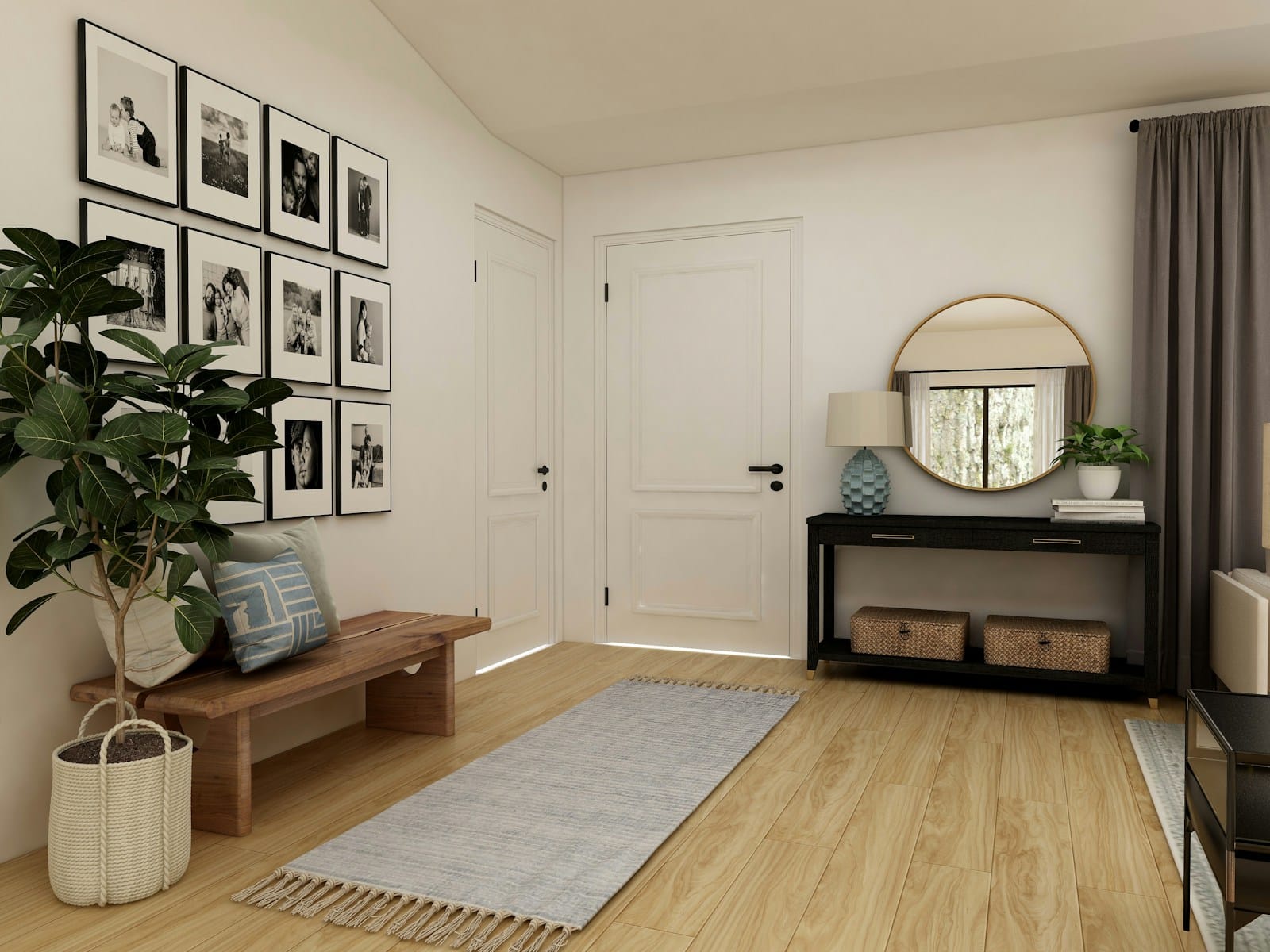
The front door is where good intentions go to die. You walk in with a bag on one shoulder, mail in one hand, keys in the other, and somehow your shoes are already in the middle of the floor like they pay rent.
A small entryway drop zone fixes that, not by making you a “neater person,” but by giving your stuff a clear landing spot the second you step inside. Think of it like an airport gate for daily clutter. If it has a place to park, it stops roaming the house.

Start by deciding what your drop zone must catch (and what it can’t)
In a tight entryway, the goal isn’t to store everything you own. The goal is to stop the daily pileup. That means your drop zone needs to handle the items that come and go the most, and it needs to do it without stealing your walking path.
Stand at your door and do a quick “pocket and hands” check. What do you carry in on a normal day? Keys, wallet, sunglasses, work badge, tote bag, backpack, gym shoes, dog leash, kids’ coats, lunch bag, packages. Now, be honest about what ends up on the nearest flat surface. That list is the job description.
A good entryway drop zone has three basic jobs: hang, drop, and park shoes. If it tries to do ten jobs, it’ll fail at the three you actually need.
- Keys and small stuff: Plan for a tiny “always here” spot. A bowl works, a tray works, a wall hook works. The win is that your keys stop going on a tour of your home.
- Bags and outer layers: Give each regular person in the home one hook, one peg, or one hanger spot. Not three. Extra hooks invite extra clutter.
- Shoes: Decide your house rule up front. Are you a “shoes off at the door” place, or a “shoes wander freely” place? Your storage has to match the rule, or it’ll turn into shoe theater.
Before buying anything, measure the space you actually have. In many apartments, you’re working with a strip of wall, a corner, or the back of the door. Note the swing of the door and the walkway. If the setup forces you to sidestep like you’re sneaking past a sleeping cat, it’s too bulky.
Build a small-space entryway drop zone with vertical storage and clear boundaries
When floor space is scarce, the wall becomes your best friend. A small entryway drop zone works best when it’s shallow, obvious, and fast to use. If you have to open a cabinet, lift a lid, and move three items to put one item away, you’ll stop doing it by day three.
Start with a simple vertical stack:
A hook zone at shoulder height, a small shelf or ledge above or beside it, and a shoe boundary below. This gives you a “top to bottom” flow that matches how you unload your hands.
Hooks: Choose hooks that match real life, not fantasy. A tiny knob hook is fine for keys, but bags need a sturdier hook with a deeper curve. If you’re renting, you can use removable wall hooks rated for the weight of your bag, or an over-the-door hook rack. If you share the space, assign hooks like assigned seats. It avoids the daily “whose bag is this?” debate.
A landing ledge: A slim shelf (4 to 6 inches deep) is enough for a tray, wallet, and mail. If you can’t mount a shelf, use a narrow console table only if it doesn’t block the path. Another option is a wall-mounted key holder with a small top ledge. The ledge is where you put the little things that love to vanish.
Shoes, contained: Shoes need a border. A boot tray, a low shoe mat, or a slim rack gives shoes a “fenced-in” area. Without that fence, shoes spread like they’re trying to colonize your hallway. If you have kids, make the boundary extra obvious. A mat is simple and hard to argue with.
If you want one piece of furniture, consider a narrow bench with shoe space under it. It gives you a place to sit, and it makes “shoes go here” feel automatic. Just keep it small enough that it doesn’t become a dumping ground.
Make the entryway drop zone stick with a simple routine (not willpower)
The best entryway drop zone is the one you’ll use when you’re tired, late, or carrying groceries while trying to not drop your phone. That means the system has to be forgiving. It also has to recover quickly after a messy day.
Think in habits, not perfection. The drop zone is a reset button you press every time you walk in.
- The one-touch landing: Put items where they belong the first time. Keys go to the hook or tray, shoes go to the mat, bag goes to the hook. Not “for now.” “For now” is how clutter gets tenure.
- A 2-minute evening sweep: Once a day, return strays to the drop zone and clear what doesn’t belong. This is where you toss junk mail, recycle flyers, and put yesterday’s coffee punch card back in reality.
- A mail rule that fits your life: If you sort mail at the door, you need a bin or folder labeled “To deal with.” If you hate sorting at the door, that’s fine, but then the drop zone should only hold mail temporarily. The rule is what matters, not the moral value of sorting.
- Seasonal swaps: Your entryway can’t hold winter boots, summer sandals, and every scarf you’ve ever loved. Every few months, swap what’s in the drop zone. Store off-season items in a closet bin, under-bed box, or a top shelf.
If the system keeps failing, don’t blame yourself first. Blame friction. Is the hook too high? Is the tray too small? Is the shoe area too far from where shoes come off? Adjust the setup so the easiest option is also the right option.
For households, especially with kids or roommates, make the system visible. Labels can help, but clear “zones” help more. People follow what’s obvious. A single tray, a row of hooks, and a shoe mat silently explain the rules without starting a meeting about it.
Conclusion: let the clutter stop at the door, on purpose
A small space doesn’t need a big makeover, it needs a clear “home base” for daily stuff. When your entryway drop zone is easy to use, keys stop disappearing, shoes stop migrating, and bags stop camping on chairs.
Pick one wall, one tray, and one shoe boundary, then set it up today. Tomorrow, when you walk in, give your things a landing spot on purpose. Your future self, the one running late and looking for keys, will be quietly grateful.


