
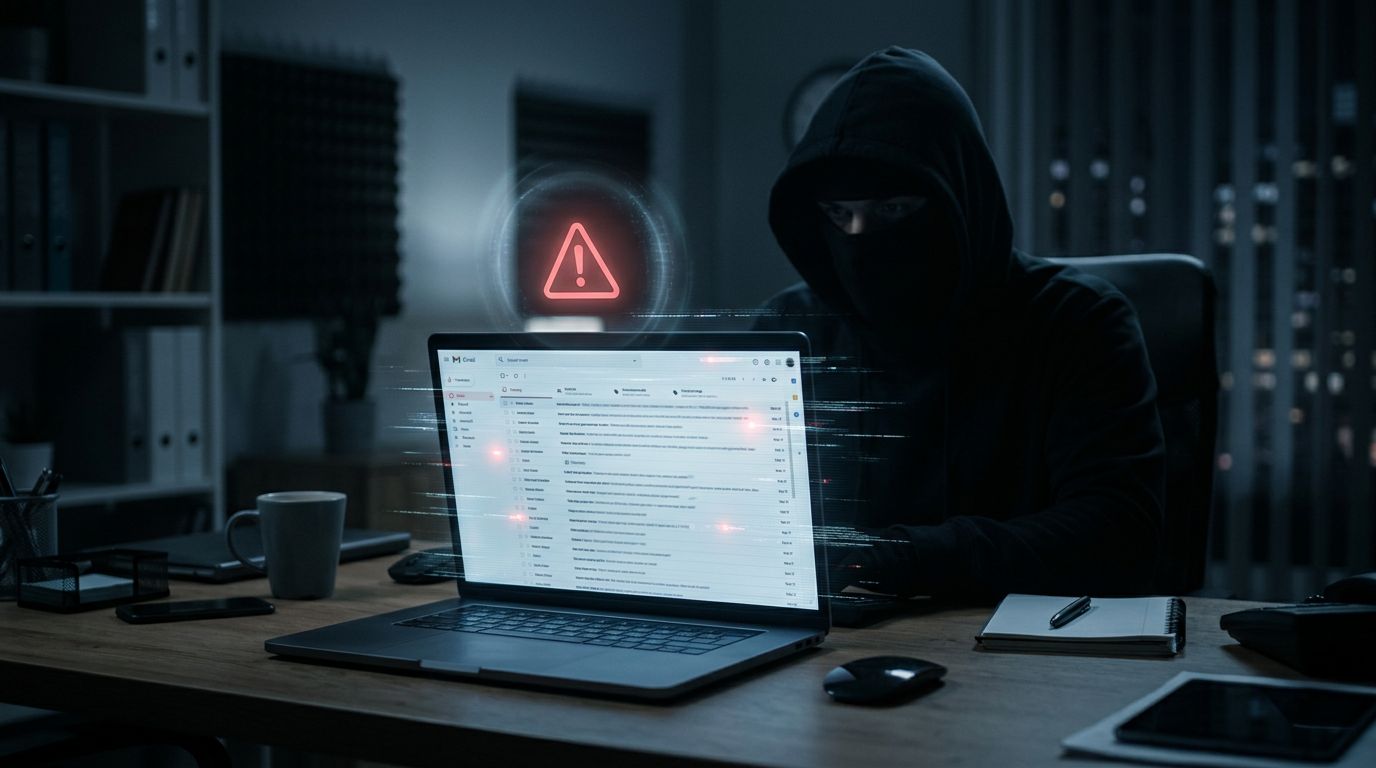
A sextortion email scam is built to make you panic first and think later. That is the whole trick.
You open a message, read a threat, maybe see an old password, and your stomach drops. The good news is that these emails usually give themselves away once you slow the scene down and look at what is actually there, not what the sender wants you to imagine.
Why these emails hit so hard
A fake sextortion message works because it borrows two powerful things, shame and urgency. The sender claims they watched you through your webcam, hacked your device, or recorded something sexual. Then they demand money, often in Bitcoin, and give you a short deadline.
The scam is emotional before it’s technical. It wants your mind racing ahead to worst-case pictures. What if they really did record something? What if they send it to your family, your boss, your contacts? A frightened brain fills in blanks fast, and the email depends on that.

Most versions are broad, recycled scripts. As Netsafe’s explanation of fake sextortion email scams points out, the message often claims the sender installed malware, captured video, and will expose you unless you pay. The details sound dramatic, but they are usually generic enough to fit thousands of inboxes at once.
A common twist makes the scam feel personal. The email may appear to come from your own address, or it may include a password you used years ago. That feels eerie. It is not the same as proof. Email sender lines can be spoofed, and old passwords often show up in data breaches long after people forgot them.
Some versions also arrive as a PDF or image attachment rather than plain email text. That is not sophistication. It is camouflage. The sender wants the threat to slip past filters and land in front of your face with as little friction as possible.
The tells are usually plain once you slow down
When you read the message like a frightened target, it seems huge. When you read it like an editor with a red pen, it starts to look thin.
This quick comparison helps separate scary claims from likely reality:
| What the email says | What it usually means |
|---|---|
| I hacked your device and recorded you | The sender is bluffing and hoping fear does the rest |
| I sent this from your own account | The sender line was likely spoofed |
| Here is your password | The password is often old and leaked in a past breach |
| Pay in Bitcoin within 24 or 48 hours | Crypto is hard to reverse, and urgency blocks thinking |
| I will send this to all your contacts | The sender usually has no evidence they know your contacts |
The first red flag is vagueness. The scam says it has video, photos, browsing history, or control of your webcam, but it rarely gives a concrete detail you can check. No file name. No screenshot. No recent password. No mention of the actual contact names it claims to have. Just a lot of chest-thumping.
The second red flag is pressure. A real security alert does not say, in effect, “send untraceable money right now and maybe I will be nice.” That is extortion language. It is meant to narrow your focus until the payment demand feels like the only exit.
The third red flag is spoofing. If the message appears to come from your own address, that can look chilling. The FBI’s page on spoofing and phishing explains that sender information can be faked. Seeing your own email in the “from” field is not the same as seeing proof that your account was taken over.
Grammar can be sloppy, but not always. Some scam emails are clumsy. Others are clean and polished. Bad writing is a clue when it is there, but smooth writing does not make the threat real. The more reliable signs are the same old trio, fear, vagueness, and a demand for quick crypto payment.
Proof is the part scammers can’t fake well
This is the hinge point. A scary claim is not the same as evidence.
If someone had real, current access to your device, the easiest way to convince you would be to show something current and undeniable. They would not need five paragraphs of theater. They would send one hard detail that you could not shrug off.
If the message offers terror but no checkable detail, treat it like theater, not evidence.
Most sextortion email scams avoid that test because they cannot pass it. They speak in fog. “I know everything.” “I recorded you.” “I will ruin your life.” Fine. Show one concrete thing. They usually cannot.
That old password in the email often causes the most panic. It feels like the sender reached into your pocket. In many cases, the truth is less cinematic. The password came from an old breach dump, got copied around the internet, and was dropped into a mass-mail script to make the message feel intimate. You are not the star of a secret operation. You are one address on a long list.
If you want to see how repetitive these scripts can be, this phishing forum thread shows people comparing nearly identical messages. That pattern matters. Personalized blackmail does not usually read like a form letter.
There is one more thing scammers avoid, conversation. A real extortionist with actual material may try to prove possession or keep contact going. A bulk sextortion scam usually wants a clean hit, fear, payment, gone. That is why replying is rarely useful. You are not dealing with a reasonable person, and you are not in a negotiation worth having.
What to do the moment one lands in your inbox
Start by refusing the tempo
The email wants speed. Your first job is to break that rhythm. Do not pay. Do not reply. Do not click anything in the message, and do not open odd attachments out of curiosity. Curiosity is how panic puts on a tie and calls itself logic.
Take a breath and read the message once, slowly. Look for what it actually proves. In most cases, the answer is almost nothing. If you need to report it to your email provider, workplace IT team, or a local fraud reporting channel, keep a copy or screenshot first. After that, mark it as spam or phishing.
Treat an old password as a security warning, not blackmail proof
If the email includes a password you recognize, ask one blunt question: is it current? If it is old, that points to a breach somewhere in your past, not fresh webcam surveillance. Change it anywhere you still use it, and change similar passwords too.
If the password is still active on an email, banking, shopping, or social account, update it at once. Pick a new, unique password. Turn on two-factor authentication where you can. That step matters far more than arguing with a scammer in your inbox.
Secure the account and move on
Check your sent folder and login alerts if you are worried about your email account itself. If nothing looks off, that is reassuring. If you do see strange activity, lock the account down, change the password, sign out of other sessions, and review recovery options.
Run a trusted antivirus or security scan if the message rattled you into thinking your device may be infected. That is reasonable. Paying a stranger in Bitcoin is not. If the message came to a work address or mentions company systems, tell your IT team. They would rather hear about a false alarm than a hidden problem.
If the threat includes actual intimate images, names, or details that are current and real, the situation has moved beyond the usual mass sextortion email scam. Still, the answer is not to pay. Save evidence, stop contact, and report it to the platform involved and to law enforcement.
The Email Wants Panic, Not Thought
The most useful question is not “What if this is true?” It is “What proof do they really have?” Most sextortion scam emails collapse right there.
A spoofed sender line, an old password, and a loud threat can feel personal. They still do not amount to evidence. Slow down, secure your accounts, and let the email lose the power it was counting on.


