
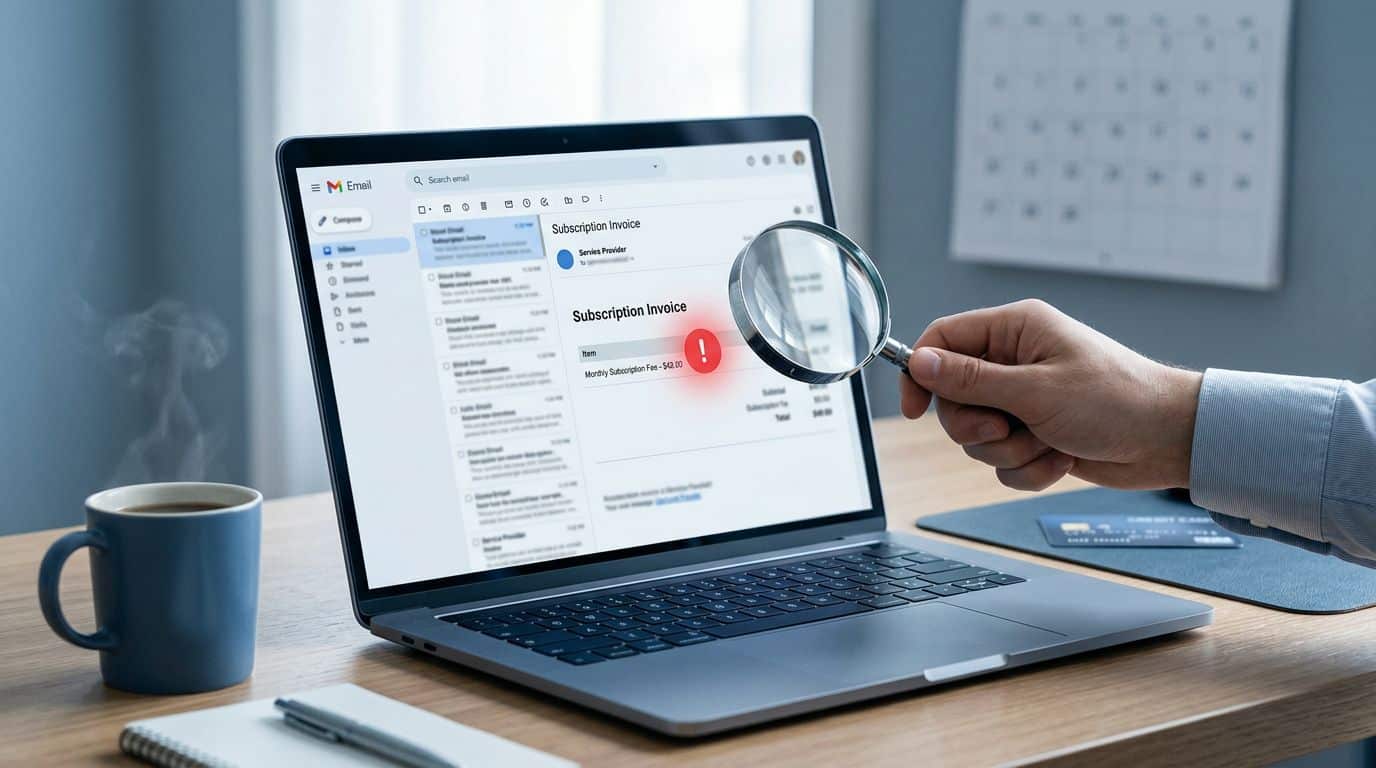
A fake renewal notice can ruin your morning in under ten seconds. You open an email, see a charge you don’t recognize, and your brain jumps straight to damage control.
That jump is the whole scam. A subscription renewal scam works because it borrows the look of a routine bill, then adds panic, speed, and a handy button or phone number.
The good news is that these scams often give themselves away once you stop treating the message like an emergency and start treating it like evidence.
Why these fake renewal notices feel so convincing
Most people picture scams as sloppy messages full of odd spelling and loud promises. Some still are. But a subscription scam often looks calmer than that. It may mention antivirus software, a cloud storage plan, a streaming service, or a business tool you could plausibly use.
That is the trick. The scam doesn’t need your full trust. It only needs a few seconds of confusion.
A message might say your card will be charged $399 today unless you call now. Another might claim your annual plan already renewed and give you a number to dispute it. Some texts use short links. Some pop-ups imitate security warnings. The details change, but the pressure stays the same.
Scammers know how modern life works. Busy professionals see automatic renewals all week. Older adults may have several long-running subscriptions and no reason to remember every billing date. Small business users often handle software, web tools, and vendor invoices at the same time. A fake notice blends into that noise.
The Identity Theft Resource Center’s warning points out a common pattern: the message often pushes you to call a number to stop a charge. That matters. Once you call, the scammer has your attention, your fear, and sometimes your trust.

A real company wants you to manage your account through normal channels. A scammer wants you off-balance and moving fast.
Start with the small facts, because scams hate small facts
When a renewal notice lands in your inbox or on your phone, resist the urge to solve it inside the message. Look at the simple details first.
Do you even have an account with that company? That sounds obvious, but panic makes obvious things slippery. If you’ve never used the service, the notice is finished right there. Delete it, report it, and move on.
If you do recognize the company name, keep going. Check the sender address, not the display name. Scammers often hide behind a friendly label while the real email address is off by a letter, a country code, or an extra word. Text messages can do something similar with short links that tell you nothing about where they lead.
Then look at the tone. Fraudulent notices often sound like somebody has grabbed your sleeve in a crowded station. “Call immediately.” “Cancel now.” “Your account will be charged today.” That urgency is the point. A normal renewal reminder may mention a date, price, and account area. It usually doesn’t sound like a hostage note written by a billing department.
A real renewal gives you time to check. A scam tries to steal that time.
The amount matters too. Scammers like large, memorable numbers because fear loves round figures. A sudden $299, $399, or $499 charge is meant to jolt you into action. So is a generic greeting like “Dear Customer,” especially if the message never shows your account details in a believable way.
One more clue shows up often in 2026: the notice tells you to call support to cancel, then the caller tries to talk you into sharing codes, payment details, or remote access to your device. Once the conversation turns technical, the scam is no longer about the subscription. It’s about getting inside your accounts.
Verify the renewal without touching the message
The safest check is boring, and that is why it works. Open a fresh browser window or use the official app. Type the company’s website yourself, or open the service the way you normally do. Don’t use the link in the email. Don’t call the number in the text. Don’t trust the pop-up that claims to be helping.
Now sign in and look for your billing page. If there is no pending renewal, no invoice, and no charge, the message was bait. If there is a real renewal coming up, you can deal with it inside your account, where the company controls the process instead of the scammer.
Next, check your payment method. Look at your credit card or bank activity from the official app or website. Pending charges and posted charges matter more than whatever the email claims. Many fake notices mention a charge that never happened.
It also helps to search your email for older receipts from the real company. Legitimate subscription businesses tend to send order confirmations, tax invoices, or past renewal reminders from consistent domains. A fake one usually appears out of nowhere.
The Allstate guide to renewal scams describes this same pattern well: the safest move is to verify through your own account path, not the contact details inside the message. That one habit catches a huge share of fraud.
For a small business, make this a house rule. No software invoice gets paid from a link inside an unexpected message. Somebody checks the vendor portal first. It takes an extra minute. It also saves ugly afternoons.
What the red flags look like in email, texts, calls, and pop-ups
Email usually tries to look official
Email is the classic route because it can mimic invoices, receipts, and renewal notices with little effort. Watch for mismatched sender domains, generic greetings, odd formatting, and a charge notice for a product you never bought.
Some fake emails lean into cancellation. That is a tell. If the most prominent thing in the message is a giant warning about how to stop the charge, the sender is trying to start a panic cycle, not manage a subscription.
If you want a plain-language example of how people spot these messages at a glance, this community thread on fake renewal emails shows the pattern clearly.
Text messages shrink the details on purpose
A scam text often says less, not more. It might mention a renewal, a payment failure, or a final warning, then push you toward a short link. That lack of detail is useful for the scammer. The less context you get, the more your imagination fills in the gap.
Treat texts with extra suspicion if they have no account detail, no full company domain, or language that sounds oddly clipped. Real companies do send texts, but they rarely ask for passwords, verification codes, or immediate payment through a mystery link.
Phone calls and pop-ups go after your nerves
A phone scam can begin with an email that tells you to call, or with an incoming call that claims your plan renewed by mistake. Once you’re on the line, the pressure can rise fast. The caller may insist the refund window is closing. They may ask you to confirm card details. They may try to move the conversation onto your computer.
Pop-ups work the same way. They throw a warning onto the screen, often with a phone number or a demand to renew now. Close the window. Better yet, close the browser. A real subscription company doesn’t need to trap you in a flashing panic box to collect a normal renewal.
If you clicked, called, or almost paid, slow things down
People freeze up after a close call because they feel foolish. Skip that part. These scams are built to catch ordinary people on ordinary days.
If you clicked a link but didn’t enter anything, close the page and run a security scan on your device. If you called and shared personal details, contact your bank or card issuer right away, change the password for the account involved, and turn on multi-factor authentication if it isn’t already active.
If you gave a scammer remote access, treat it as a bigger problem. Disconnect the device from the internet, end the remote session, and get help cleaning the machine before using it for banking or work. For a business device, report it internally at once. Waiting only gives the problem room to grow.
There is no prize for handling fraud quietly. Fast reporting beats private embarrassment every time.
Conclusion
The moment before payment is where you still have the upper hand. A scam notice wants speed, noise, and a small burst of fear. What beats it is pause.
Check the account from your side, not theirs. Check the card from the bank’s side, not the email’s side. If a renewal is real, it will still be there when you verify it properly. If it vanishes under scrutiny, it was never a bill, only bait.


