
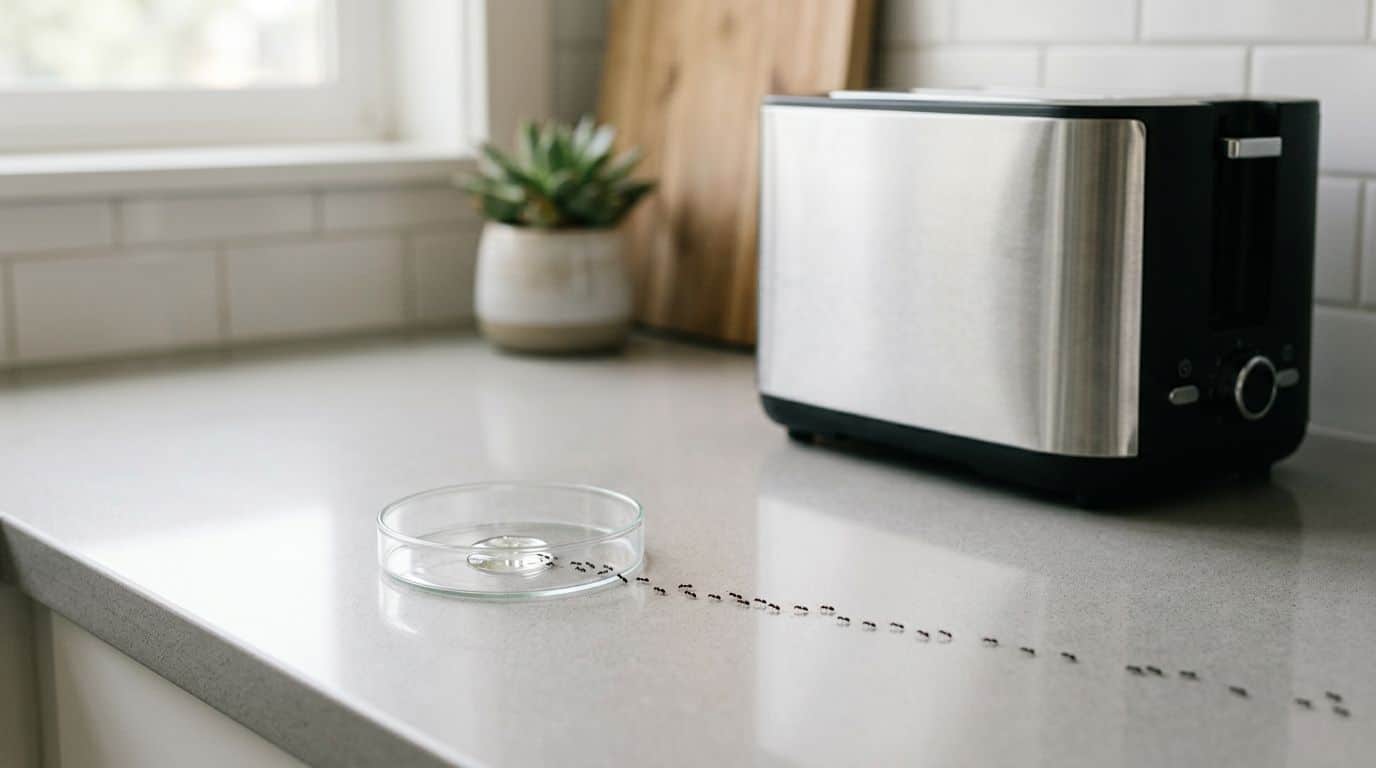
Ants don’t show up because your home is “dirty.” They show up because they’re good at their job. Give them one dependable snack, and they’ll file the address away like tiny accountants.
The two-zone food rule is a simple way to stop ants indoors without turning your kitchen into a chemical test site. You remove every random bite they can steal, then offer one controlled “food spot” that works in your favor (a bait zone). Less chaos, fewer trails, and a plan you can keep up with.
Why ants keep showing up (and why spraying rarely sticks)
Most indoor ant problems aren’t a mystery. Ants send out scouts, and scouts report back with scent trails. Once a trail works, the line grows fast. That’s why you see the same route across the counter, along a baseboard, or straight into the trash can.
Food is the big reason, but it’s not only dinner crumbs. A single sticky spot under the toaster can feed a trail for days. Pet bowls, recycling drips, ripe fruit, and even a used dish sponge can act like a lunch buffet. Water matters too, especially if you have a slow leak, a damp cabinet, or a plant that gets over-watered.
What about sprays? They can kill the ants you see, which feels satisfying for about ten minutes. However, sprays often fail at the bigger goal: stopping the colony from sending replacements. Some sprays also act like repellents, which can scatter ants into new paths and new rooms. In other words, the traffic moves, but it doesn’t end.
If you want a quick reality check on common household causes, Western Pest’s overview of why ants target kitchens lines up with what most people find once they look closely: easy food, easy water, easy entry.
The two-zone rule works because it treats ants like what they are: persistent foragers. You don’t “out-stink” them. You out-manage them.
Setting up the two-zone food rule in your kitchen
The rule has two parts, and both matter.
Zone one is the no-food zone. It covers counters, floors, and the usual ant highways (baseboards, under appliances, and around the trash). In this zone, you don’t leave snacks out, you don’t leave dishes “to soak overnight,” and you don’t let crumbs hang around like unpaid rent. The goal is boring sameness, day after day.
Zone two is the controlled food zone. This is where you place bait (more on that next). It should be close to the ant trail, but not in the middle of your life. Think “behind the trash can” or “under the sink near the back wall,” not “next to the fruit bowl.”

To make zone one work, you need to break the trail. Ants “read” the route by scent, so a quick wipe with soapy water helps. Vinegar solutions can help too, although the main win is removal and rinse, not the smell. If you want a practical cleaning-first approach, Better Homes and Gardens’ guide to natural ant control is a solid reference for the basics.
A simple way to keep this livable is to pick a few non-negotiables:
- Food stays in a few places: Eat at the table or a single snack spot, not across the whole home. Fewer crumbs travel that way.
- Nightly “crumb sweep” is short: Two minutes with a handheld vac or a damp cloth beats a weekend meltdown clean.
- Storage gets boring: Put sugar, cereal, and treats in sealed containers, and keep fruit in the fridge during a flare-up.
If ants can’t find bonus snacks, they’ll take the one option you leave them. That’s the point.
Baiting the right way: make the bait the best meal
Baits feel slow because they are slow. That’s also why they work. A good bait attracts ants, lets them feed, and sends them back to share. You’re not winning a fistfight, you’re quietly cutting the supply line.
Start by matching the bait to what ants want. Many common house ants go for sweets, especially when they’re foraging. Others want protein or grease. If they’re clustering around syrup, fruit, or coffee drips, start with a sweet bait. If they’re hunting near pet food or cooking grease, a protein-based bait may work better.
Safety matters, especially with kids and pets. Use enclosed bait stations when you can, and place them where little hands and noses don’t roam. If you like reading labels (and you should), the U.S. EPA product label for a borax-based liquid ant bait shows the kind of directions and warnings you’ll see on many widely sold bait products.
Now, the part that tests patience: don’t sabotage the bait.
- Don’t spray near the trail: Repellent sprays can keep ants from reaching the bait, which slows results.
- Don’t wipe the bait path every hour: Clean zone one daily, yes, but let ants access zone two so the bait circulates.
- Don’t panic over “more ants” on day one: A busy bait station often means you finally offered something worth reporting.

Give it a few days. Refresh bait if it dries out, gets dusty, or empties. Meanwhile, keep shrinking the “free food” options in zone one. As a result, the colony has fewer reasons to keep scouting your home.
If ants keep appearing in many rooms, or you suspect carpenter ants (large ants, wood shavings, or activity near damp wood), bring in a pro. The two-zone rule is great for common indoor trails, but wood-damaging pests deserve a closer look.
Conclusion
To stop ants indoors, you don’t need perfect housekeeping, you need a system that leaves ants one sensible choice. Keep zone one boring and food-free, then make zone two the only rewarding stop, with bait placed safely and calmly. Stick with it for a week, because consistency beats intensity here. If you can hold the line on crumbs and keep the bait working, the trails usually fade faster than you’d expect.


