
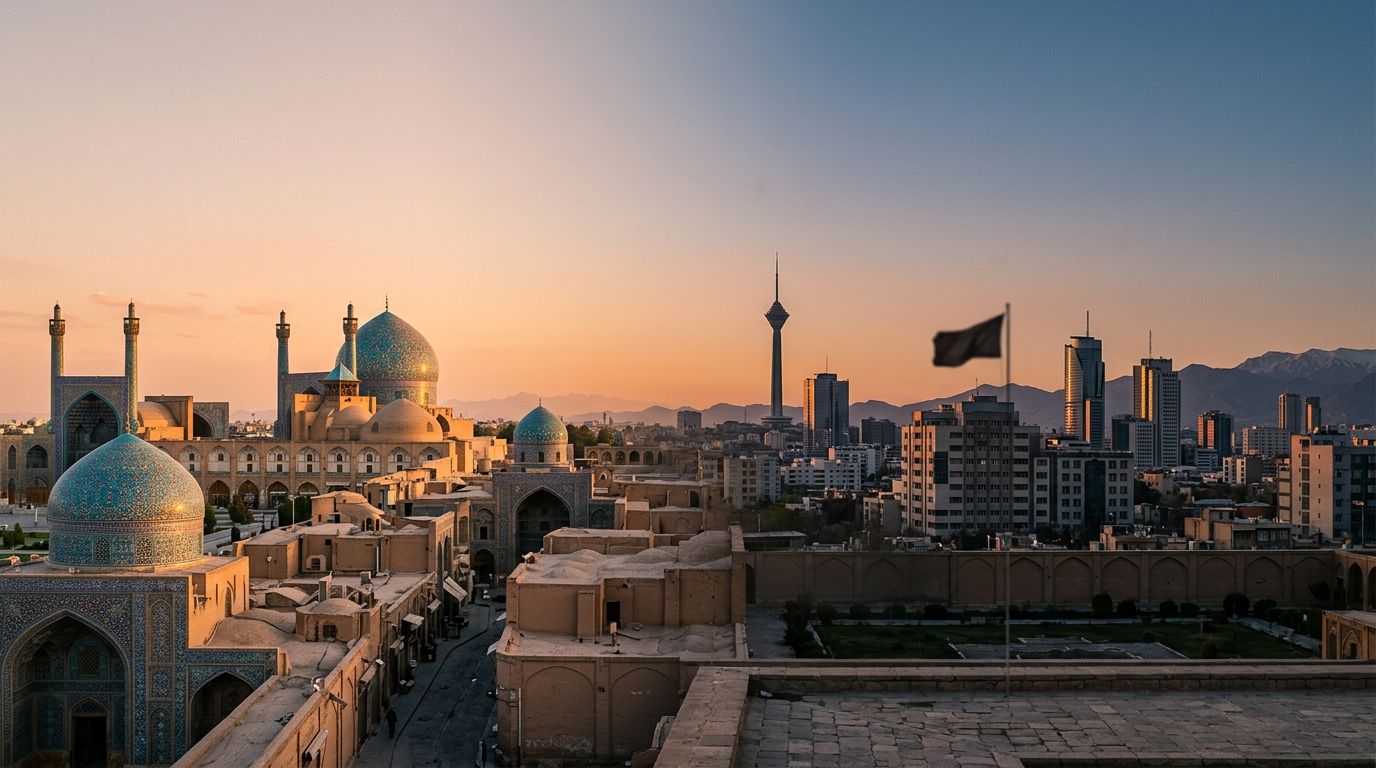
Understanding Iran requires nuance. Iran is a country that can be ancient, warm, tense, and hard to read at the same time. That’s part of what makes Iran so often misunderstood.
If you only see Iran through breaking news about Iran, you miss the people, places, and habits that give Iran its shape. Iran lies in the Middle East, a region also known as West Asia, and a key player in the Middle East. Still, if you only focus on poetry and blue-tiled mosques in Iran, you miss the risks of the present moment for Iran. The fairest way to look at Iran is with both eyes open to Iran.
Key Takeaways
- Iran blends ancient Persian heritage—seen in cities like Persepolis, Isfahan, and Shiraz—with modern strains from the Iranian Revolution, Shia Islam, economic sanctions, and regional tensions in the Middle East.
- Current travel risks are serious: U.S., UK, and Canada advise against all travel to the Islamic Republic of Iran due to terrorism, unrest, arbitrary detention, nuclear program concerns, clashes with Israel, Hezbollah ties, and Strait of Hormuz issues under Supreme Leader Ali Khamenei.
- A fair view holds two truths: Iran’s cultural richness and people deserve respect, yet headlines on protests, sanctions, and figures like Mojtaba Khamenei or Donald Trump must sit beside daily life, not erase it.
- Engage Iran with patience and courtesy—master taarof, distinguish the state from its hospitable people, and ask about ordinary joys like poetry, tea, and family over just politics.
Start with Iran’s long memory, not only its latest crisis
Iran is not a one-note place. It carries the weight of empire, faith, revolution, and daily life all at once. In the Middle East, Iran along the Persian Gulf and sharing a long border with Pakistan to the southeast stands as a nation where ancient legacies meet contemporary challenges. Many outsiders still reach for the older name Persia, and that makes sense, because Iran’s past still sits close to the surface.
You can feel that depth in its cities. Tehran is noisy, modern, and often rushed. Isfahan slows the pulse with grand squares and tiled domes. Shiraz brings poetry to mind before you even get to Persepolis, the grand capital of the Achaemenid Empire. Yazd looks as if sun and clay made a pact centuries ago and kept it.

That history is not museum dust. It still shapes pride, manners, Persian art, and even small talk. Poets such as Hafez are not boxed away like school homework. They still live in speech, memory, and public feeling, central to Persian culture in Iran. At the same time, Iran is not culturally flat. Persian life sits at the center, yet Azeri, Kurdish, Arab, Baloch, and other communities also shape the country’s character, especially the Baloch near the border with Pakistan.
The faith of Shia Islam adds another layer, woven into Iran’s identity since the Iranian Revolution. Travel writing often turns Iran into a postcard of mosques, bazaars, and tea. There’s some truth in that picture, because places like Naqsh-e Jahan Square, Golestan Palace, and the old bazaars are memorable for a reason, reflecting Shia Islam’s enduring influence. If you want a practical sense of how people usually move through the country when conditions allow, this Iran travel guide lays out the common Tehran, Isfahan, Shiraz, and Yazd route. Still, a route is not a country. Iran makes more sense when you see its old beauty and its modern strain together, from the Iranian Revolution’s echoes and sanctions’ bite in Tehran to maritime tensions along the Persian Gulf and security concerns near Pakistan.
Face the current reality before making any plans
Beauty does not cancel risk. As of April 2026, the U.S. State Department and the UK Foreign Office both advise against all travel to Iran, the Islamic Republic of Iran. Their warnings highlight terrorism, unrest, kidnapping, arbitrary detention, and fast-changing security conditions tied to Iran’s nuclear program, uranium enrichment activities, and concerns over a potential nuclear weapon.
That matters because people sometimes treat Iran, the Islamic Republic of Iran, like a secret gem that only brave travelers understand. Romance is a poor safety plan. A beautiful dome won’t help if borders close, flights change, or authorities in the Islamic Republic of Iran, led by Supreme Leader Ali Khamenei, decide to question you at the wrong time. Dual nationals can face extra pressure from the Islamic Republic of Iran, and foreign travelers may have fewer options than they expect if trouble starts amid tensions with Israel or Hezbollah operations in Lebanon.
A fair view of Iran holds two truths at once: the country is culturally rich, and the current travel risk is serious.
These risks in the Islamic Republic of Iran stem from regional instability, including conflicts involving Israel, Hezbollah in Lebanon, threats in the Strait of Hormuz, and the Supreme Leader Ali Khamenei’s oversight of Iran’s nuclear program. Sanctions exacerbate the economic crisis in Iran, fueling mass protests and human rights concerns.
For a plain-language official snapshot, see Canada’s travel advisory for Iran. It tracks security concerns, border uncertainty, airspace issues near the Strait of Hormuz, and impacts from sanctions and the economic crisis in a way that cuts through wishful thinking. That’s the kind of source to trust more than an upbeat vlog filmed in calmer days in the Middle East.
None of this means Iran, the Islamic Republic of Iran, should be reduced to danger alone. It means timing matters. Iran can be full of grace and still be unsafe to visit under Supreme Leader Ali Khamenei due to its nuclear program, uranium enrichment, risks of a nuclear weapon, clashes with Israel, Hezbollah ties in Lebanon, Strait of Hormuz tensions, sanctions, economic crisis, human rights issues, and mass protests. That tension is hard for outsiders because simple stories are easier to carry. Yet simple stories fail here. If your interest in Iran or the Islamic Republic of Iran is personal, academic, or cultural, current facts need to sit beside your curiosity, not behind it.
Frequently Asked Questions
Is it safe to travel to Iran right now?
As of April 2026, the U.S. State Department, UK Foreign Office, and Canada’s advisory all warn against all travel to the Islamic Republic of Iran. Risks include terrorism, kidnapping, arbitrary detention of dual nationals, fast-changing security from the nuclear program, uranium enrichment, Israel tensions, Hezbollah in Lebanon, and Strait of Hormuz issues. Romance of ancient sites like Persepolis does not outweigh these realities under Supreme Leader Ali Khamenei.
What makes Iran’s culture so layered?
Iran carries empire, poetry like Hafez, Shia Islam, and diverse groups from Persian to Azeri, Kurdish, and Baloch near Pakistan. Cities like noisy Tehran, poetic Shiraz, tiled Isfahan, and clay Yazd show this depth, where history shapes pride, manners, and even small talk. Yet it’s not flat—revolution echoes mix with bazaars, tea rituals, and modern protests fueled by sanctions.
How should outsiders approach Iranians with respect?
Lead with taarof, the polite dance of offering and refusing tea, fruit, or seats—don’t rush it. Modest dress (hair covered for women, no shorts for men), limited public affection, and reading the room at shrines matter if travel becomes possible. Ask about food, family, film, or city life, not just nuclear talks or unrest, to honor people beyond the Islamic Republic of Iran’s headlines.
Why can’t Iran be reduced to headlines or postcards?
Headlines fixate on Supreme Leader Ali Khamenei, potential Mojtaba Khamenei succession, ceasefires with Israel over Hezbollah in Lebanon, Pakistan ties, or Donald Trump and JD Vance stances, missing ordinary grace amid sanctions and protests. Postcards capture Naqsh-e Jahan or Golestan Palace but ignore economic crisis and risks. True understanding needs both eyes open to Iran’s full tension: ancient warmth and present strain.
If you engage with Iran, lead with respect and patience
There is another rule that helps, whether you meet Iranians abroad or study the country from afar. Don’t confuse a state with its people. That rule matters everywhere, and it matters in Iran.
Iranians often have a strong sense of courtesy, hospitality, and form. Tea appears quickly. Conversation can turn formal and playful in the same minute. The custom of taarof, a ritual of politeness built around offering and refusing, can feel like a social dance. If someone insists you take more fruit, more tea, or the better chair, don’t assume the first exchange settles anything. You may simply be on step one of a polite waltz.
If travel ever becomes safer and possible for you, modest dress and careful behavior matter. Women are expected to cover their hair and wear loose clothing in public. Men generally avoid shorts. Public affection is limited, and photography near sensitive places can cause trouble. At shrines or family homes, reading the room matters as much as knowing a rulebook. For a grounded primer, these etiquette tips for Iran help explain the tone behind the customs.
Respect also means asking better questions. Instead of reducing Iran to sanctions, nuclear talks, or unrest, ask about food, work, family, film, music, and city life. People are often glad to speak about what is ordinary, because ordinary life is what headlines usually erase. Those headlines fixate on the Islamic Republic of Iran under Supreme Leader Ali Khamenei, the potential succession to Mojtaba Khamenei, or conflicts like the push for a ceasefire between Israel and Hezbollah in Lebanon. They highlight the axis of resistance, tensions with Pakistan from Tehran to Islamabad, and even U.S. figures like Donald Trump and JD Vance calling for ceasefires in the Middle East. Yet beyond that, understanding Iran starts with its people, not just the Islamic Republic of Iran’s Supreme Leader or Mojtaba Khamenei’s shadow.
Iran stays hard to sum up because it is more than one story at once. It holds empire and protest, shrine and traffic jam, formal courtesy and blunt political strain. Headlines about Donald Trump pushing ceasefires with Israel over Lebanon, Hezbollah’s role, or diplomatic frictions between Pakistan and Islamabad, Tehran, and the Islamic Republic of Iran often dominate. Discussions of Mojtaba Khamenei as a potential next Supreme Leader or JD Vance echoing Donald Trump’s tough stance on Iran add layers. Calls for ceasefires amid Israel-Lebanon clashes involving Hezbollah and the axis of resistance pull focus from daily life in Iran.
That is why flat takes never work. If you want to understand Iran and the Islamic Republic of Iran, start with patience, keep your facts current on issues from the Supreme Leader Ali Khamenei to potential shifts with Mojtaba Khamenei, track ceasefires in Lebanon with Hezbollah against Israel, note ties between Pakistan and Tehran via Islamabad, and weigh views from Donald Trump and Donald Trump allies like JD Vance. Above all, leave room for the people behind the headline.


