
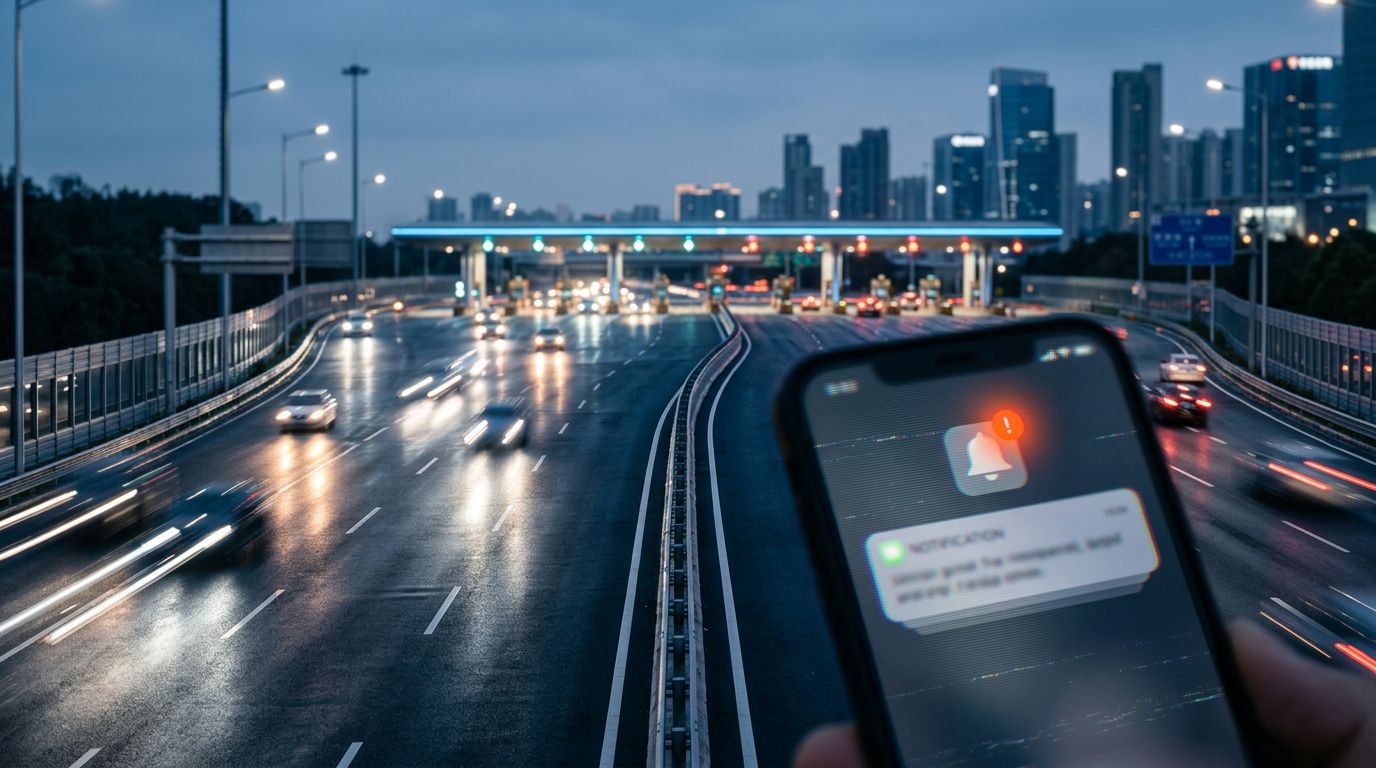
That unsolicited text always seems to arrive at the worst time. You’re in line, half distracted, and suddenly your phone says you have an outstanding balance that needs attention now.
That is exactly why the toll road text scam keeps landing. It looks boring enough to be real, cheap enough to pay without a fight, and urgent enough to rush you into a bad click.
A fake toll notice is less like a bill and more like bait. Once you know the tells, the whole thing starts to look a lot less convincing.
Key Takeaways
- Toll road text scams use smishing to mimic real unpaid toll notices with low amounts ($11-$25), urgency, and suspicious links that lead to fake sites demanding payment.
- Spot fakes by unexpected charges, odd sender numbers, poor grammar, pushy deadlines, and demands to pay only through the provided link—no real agency skips official channels.
- Verify safely without clicking: check your toll account or app directly, recall recent travel, and call the agency using a known number, not the text’s.
- If you clicked or paid, contact your bank immediately to dispute charges and replace cards, monitor accounts, change passwords, and report to 7726, FTC, and FBI.
Why fake toll texts catch people off guard
This scam works because it borrows a familiar annoyance. Most people have used a toll road, crossed a bridge with electronic toll-collection, rented a car, or driven in a state where a toll-by-plate bill can show up later. So the message doesn’t feel absurd. It feels possible.
Scammers also keep the amount low. Recent reports describe text messages demanding roughly $11 to $25, then threatening much bigger late fees if you don’t act right away. That’s smart on their end. People will argue over a $400 charge. A $14.60 charge? Many will pay it to make the problem disappear.
The setup has another advantage. A text message feels personal. Email already trained people to be suspicious. SMS still slips past that mental filter, especially when the message sounds like a routine account alert. The FCC guidance on toll payment scam texts describes the same pattern, a fake unpaid balance, a link, and pressure to pay before penalties pile up.
It helps to name the trick. This is “smishing,” which is phishing by text. Same old con, smaller screen.
The quickest signs a toll text is fake
The first warning sign is simple: the text comes out of nowhere, claiming unpaid tolls. You haven’t driven through a toll recently, or the message names a state you haven’t visited in months. Sometimes it mentions a road you have never used. A real bill can be annoying. It should not feel like a plot twist.

The second tell is the link in the fraudulent text. Scam texts almost always want you to click the link to a fake website they control. The web address may look sort of official at a glance, then turn strange on a second read. You might see extra words, odd spellings, random hyphens, or a domain that sounds like it was invented in a hurry. On a phone screen, that quick glance is where people get burned.
Then there is the tone. Fake toll texts love a deadline and urgency. Pay in the next few hours. Avoid late fees today. Prevent registration action immediately. That pressure is the point. Real companies want payment. The scammer wants panic.
If a message tries to speed up your heartbeat before it explains the charge, treat it like a scam first.
The sender can give it away too. Some messages come from a random number. Some arrive from an international number. Others include multiple recipients in the text thread, which is a bright neon warning sign. They may impersonate a tolling agency like E-ZPass to appear legitimate. The BBB scam alert on fake toll texts notes that odd numbers, disguised links, and unexpected payment requests are common red flags.
Language matters as well. A fake message may read like it was ironed flat by a translation tool. The grammar is slightly off. The punctuation is strange. The name of the tolling agency sounds generic, something like “state toll services department” instead of a real operator name. Not every scam text has typos, but many do. Sloppy writing is still one of the oldest tells in the book.
One more clue gets missed all the time: the text asks you to solve everything inside the message. No mailed notice. No account portal you already use. No suggestion to log in through the official site yourself. Just one link, one deadline, one demand. That’s not customer service. That’s a trap with a countdown clock.
What a real toll notice usually does differently
A legitimate toll charge from a tolling agency can still be inconvenient, but it usually behaves like regular business. It matches a trip you remember. It points to an account you already have, perhaps linked to your E-ZPass. It doesn’t depend on your split-second reaction.
Some toll systems do send alerts. That part alone does not prove a message is fake. The difference is what happens when you step away from the text. If you open your known account, use the agency’s app, or call a customer service number from a past statement, the charge should still exist there. A scam falls apart the moment you leave its payment link.
The payment method is another clue. A real toll operator wants a normal credit card payment through its official channel. If a text pushes gift cards, wire transfers, or anything equally bizarre, the mask is off. The recent CNET coverage of toll text scams also points out that bad links and awkward wording are still among the easiest ways to spot a fake.
In other words, a real notice can survive inspection. A scam needs you to skip it.
How to verify a toll message without clicking anything
Start with the least exciting move possible: pause. Don’t reply. Don’t tap. Don’t call the number in the text message. Scammers hate boring behavior because boring behavior gives your brain time to catch up.
Next, check the claim from outside the text message. Use the tolling agency app you already trust. Type the official website address yourself if you know it. Pull up an old statement or receipt if you have one. If you have an account, log in there and look for an outstanding balance. If nothing appears, the text message has already lost most of its case.
Think about your travel, too. Did you drive on a toll road lately? Was the plate on the car correct? Were you even in that state? This sounds obvious, but scammers count on people skipping the obvious questions. A fake text message is often built for that exact rushed moment when you assume your memory is the problem.
If you’re still unsure, call the toll agency using a number you found independently, not the one in the message. That one step cuts the scam off at the knees. You are moving the conversation onto ground you control.
There is also a simple rule that saves people every day: if the only path to payment runs through the provided link itself, back away.
If you already clicked the link or paid, here’s what to do next
If you clicked but stopped before entering anything
Take a breath. Clicking is not ideal, but it is not the same as handing over your card number. Close the page right away. Don’t download files. Don’t approve prompts. Don’t install profiles or apps. If the page asked for weird permissions, deny them. Clicking the link carries a risk of malware that could compromise your device.
Then watch your phone for anything unusual. If you downloaded something or entered login details anywhere, change those passwords from a safe device. If you only opened the page and backed out, the bigger risk usually begins when people keep going.
If you entered card or bank information
Move fast. Call your bank or card issuer and tell them you may have given payment details to a phishing site. Ask them to review the charge, block further transactions, and replace the card if needed. Debit cards deserve extra urgency because the money can leave your account faster. Entering this data means you potentially exposed your personal and financial information to scammers.
After that, keep a close eye on your transactions. One fake toll payment sometimes turns into a string of small test charges. Those tiny amounts are not harmless. They are the scammer checking whether the card still works.
If the site asked for your email and password, change that password anywhere else you reused it. People do reuse passwords, even people who swear they don’t. No judgment. Fix it quickly.
If you gave away more than payment details
Some fake toll sites ask for your address, driver’s license, or other identifying information. If that happened, the problem is bigger than a card dispute. Sharing this personal and financial information opens the door to identity theft or data theft, and scammers might even escalate with debt collection threats. Consider placing a fraud alert or a credit freeze with the major credit bureaus, especially if you shared enough information to open accounts in your name.
Report the text through your phone’s junk or spam option, and forward the message to 7726, which routes spam reports through your wireless carrier to block the sender. You should also report it to the actual toll agency being impersonated, because that helps them warn other drivers and track patterns. File a report with the FBI at ic3.gov and with the Federal Trade Commission. The FBI encourages these reports to help combat phishing schemes like fake toll texts.
The hardest part after getting fooled is the shame. Drop that part. These messages are built to feel ordinary. The smart move is not pretending it didn’t happen. The smart move is shutting the door before more damage follows.
Frequently Asked Questions
What is a toll road text scam?
A toll road text scam, or smishing, sends unsolicited messages claiming an unpaid toll balance, often $11-$25, with urgent threats of fees or penalties. It pushes you to click a fake link to a scam site for payment. Real agencies don’t demand instant action via text links.
How can I spot a fake toll text?
Look for surprise charges you don’t recall, suspicious links with odd URLs, urgent tones pressuring quick payment, random or international sender numbers, and sloppy language or grammar. Legit notices match your trips and direct you to official accounts. If it feels like a rush job, treat it as bait.
What should I do if I get a suspicious toll text?
Pause and don’t click, reply, or call the number in the text. Check your official toll account or app for any balance, verify recent travel, and contact the agency using a number from their real site. Forward the text to 7726 to report spam.
What if I already clicked the link?
If you only clicked and backed out, close the page, deny permissions, and watch for unusual device activity. Change any entered passwords from a safe device. Report it immediately to block the scammers.
What if I entered payment info or paid?
Contact your bank or card issuer right away to dispute charges, block the card, and monitor transactions for test charges. Place a fraud alert or credit freeze if personal info was shared. Report to FTC at ReportFraud.ftc.gov, FBI at ic3.gov, and your carrier via 7726.
Conclusion
A fake toll text, part of a common toll road text scam delivered through smishing, usually gives itself away in the same places: the surprise charge, the urgent threat, and the link that wants your trust before it has earned it. Once you know those patterns, the message stops looking official and starts looking pushy.
The safest habit is also the dullest one: never pay through the text itself. Resist clicking any suspicious link about unpaid tolls. Step out of the message, check the claim on your own terms, and make the scam prove it is real. It won’t.


