
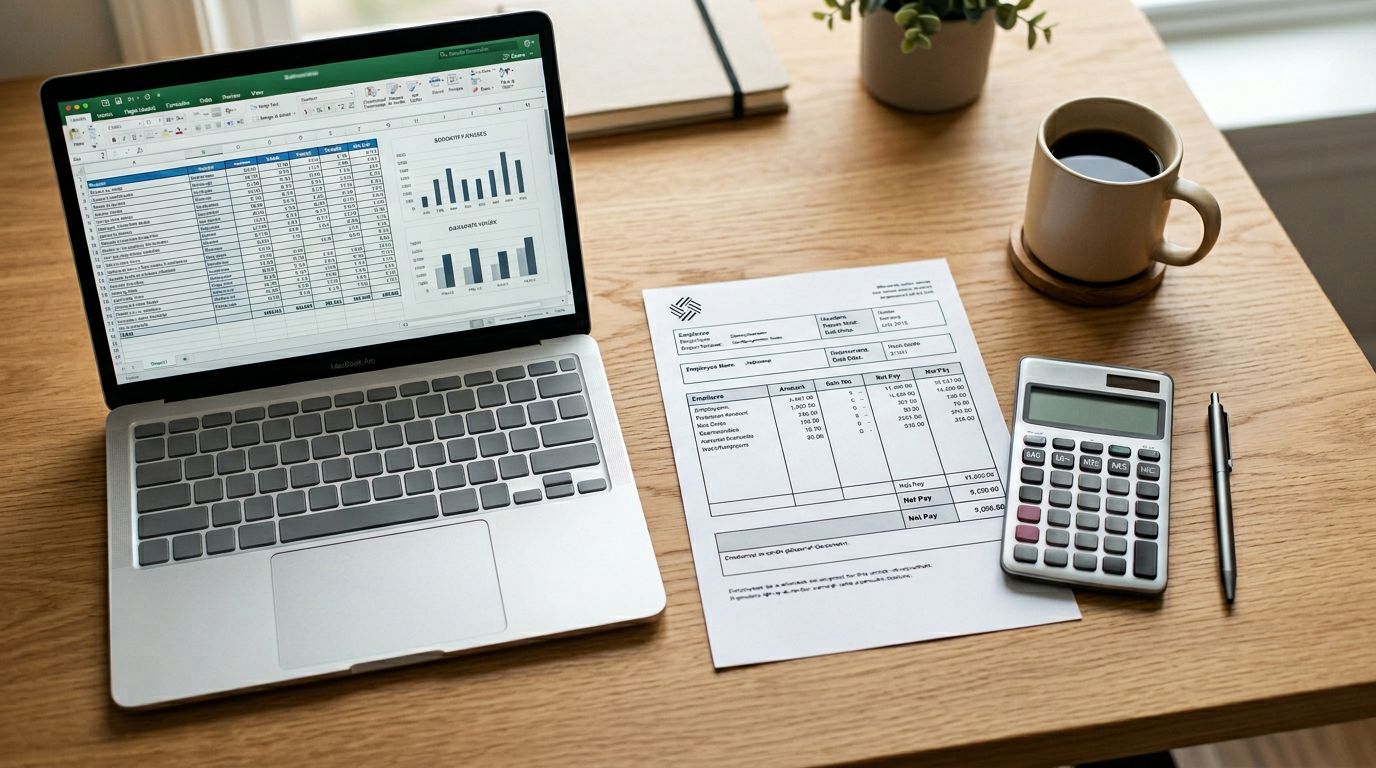
Your paycheck can feel like a bad magic trick. The job offer said one number, and the deposit shows another.
Still, once you know where to look, a pay stub is less mystery and more map. If you can read pay stub lines in the right order, you can tell what you earned, what got withheld, and whether anything looks off.
The first lines tell you if the paycheck fits the job
Start at the top, not the bottom. Check your name, employer, pay period, and pay date first. A wrong date can throw off everything below it.
Then move to earnings. If you’re hourly, compare regular hours, overtime hours, and pay rate with your schedule or timecard. If you’re salaried, gross pay should match the amount set for that pay cycle.

For a clear sample, the CFPB pay stub handout labels the common boxes in plain language.
This quick table helps you read the page in the right order.
| Line | What it means | What to check |
|---|---|---|
| Pay period | Dates covered by the check | Matches the days you worked |
| Gross pay | Total earnings before deductions | Hours, rate, overtime, bonus |
| Deductions | Taxes, benefits, other withholdings | Match your forms and elections |
| Net pay | What reaches your bank | Close to your deposit |
| Year-to-date | Running totals for the year | Useful for trends and tax prep |
Year-to-date, often shown as “YTD,” matters more than it looks. It shows the running total for pay, taxes, and deductions, so it can reveal whether a problem started earlier.
Gross pay is what you earned. Net pay is what survives the trip.
That idea clears up a lot. Many people jump to net pay first, then wonder why the number feels low. Start with gross pay, and the rest of the stub makes more sense.
Why gross pay shrinks before it hits your bank
The space between gross and net pay is where most of the confusion lives. Some of that gap is normal, and some of it comes from choices you made when you started the job.
Federal income tax is usually the biggest variable. In 2026, federal tax rates still run from 10% to 37%, but withholding is not one flat rate. Different parts of your income fall into different brackets, and your W-4 affects what comes out.
Social Security and Medicare are easier to spot. Together they are usually 7.65% of pay, which is the employee share of FICA. State income tax may also appear, although some states don’t charge it. If the tax names blur together, Investopedia’s pay stub guide is a helpful refresher.
Benefits deductions sit beside taxes and often explain why one person’s take-home pay differs from a co-worker’s. Health insurance, dental coverage, vision plans, and 401(k) contributions all reduce net pay. Some are pre-tax, which means they lower the wages used for certain tax calculations. Others are post-tax, so they come out after taxes.
Across the US, many workers lose about 20% to 30% of gross pay to taxes and benefit deductions. That range can soften the shock of a first paycheck. The money didn’t disappear, it went to taxes, insurance, or retirement savings.
When the page feels crowded, read each line as a subtraction problem. Gross pay minus deductions equals net pay. That simple order does a lot of work.
The small errors worth catching early
Most pay stubs are right, but small payroll mistakes happen. A missed overtime hour, an old benefit election, or a wrong tax setting can change your check fast.
Begin with the easy math. Multiply your hourly rate by your regular hours. Then check overtime, bonus pay, shift pay, or tips if those apply. If you got a raise, confirm the new rate shows up on the correct date.
Next, compare deductions with your recent choices. If you enrolled in health insurance last month, a new premium should appear. If you changed your 401(k), the old amount should not keep showing up. YTD columns help here because a sudden jump often points to the exact paycheck where the change started.
As of 2026, no federal law requires pay stubs, but 41 states do, and many allow electronic access if you can view and print it. So if you never receive a stub, ask payroll what your state requires and how you can get a copy.
When something doesn’t add up, don’t storm into HR like you’re filing a lawsuit over $14. Bring your schedule, prior stub, and any benefit notices. Calm details work better than panic. If a number still looks wrong after that, National Payroll Authority’s payroll error guide explains the kinds of issues payroll teams correct.
A pay stub is also a fraud check. Wrong deposit amounts, strange deductions, or a bad Social Security entry deserve quick attention. The sooner you flag it, the easier it is to fix.
Reading a pay stub gets easier once you stop seeing it as a wall of numbers. It’s a short story about one pay period, and the plot stays about the same.
Follow the same path each time: dates, earnings, deductions, net pay, then YTD. After a few pay cycles, you’ll read pay stub lines with confidence and stop guessing.


