
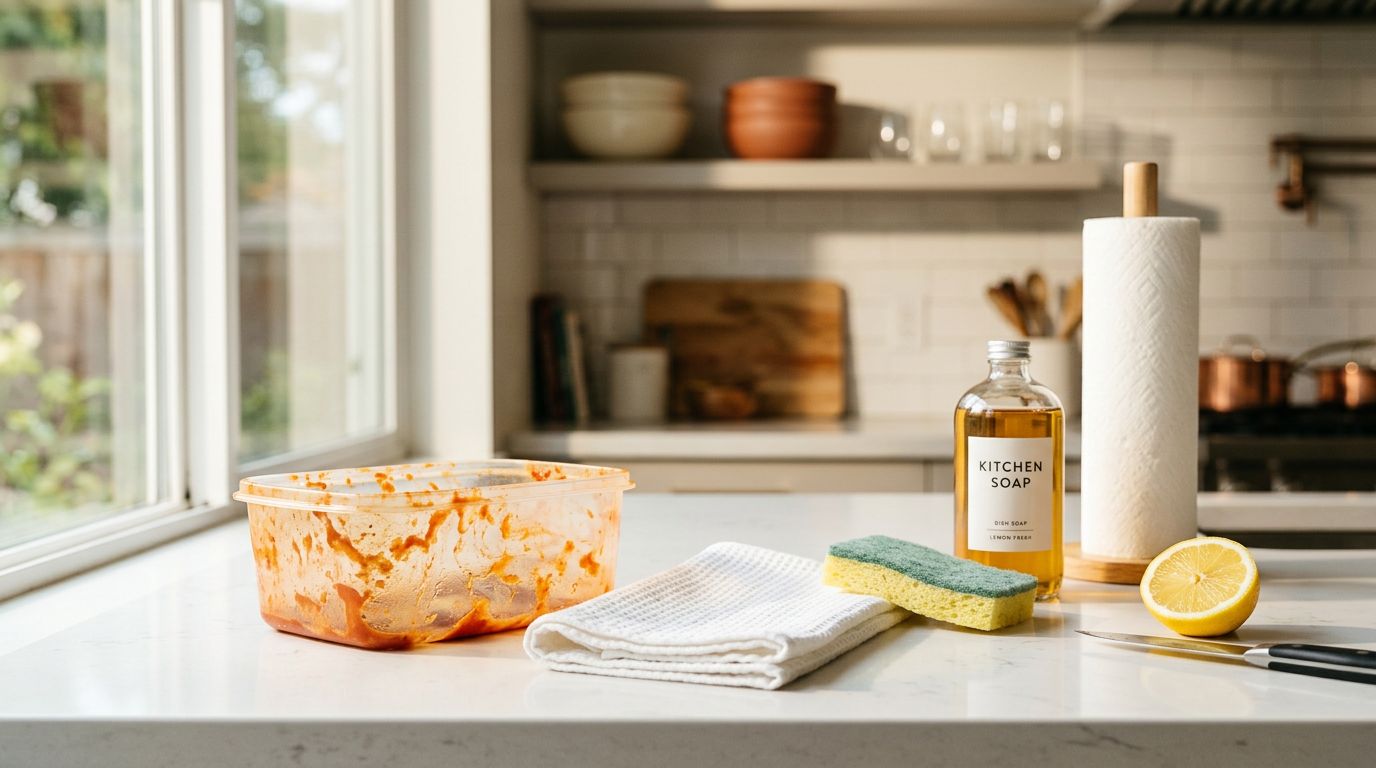
Orange plasticware has a particular talent for making a spotless kitchen look grubby. One leftover marinara lunch can leave a container with a red halo that survives two washes and a stern look.
If you searched “remove tomato sauce stains plastic containers,” the good news is that the tub probably isn’t ruined. Fresh grease, old orange tint, and scratched plasticware need slightly different treatment, but none calls for frantic scrubbing.
That stubborn color comes partly from lycopene, a pigment that clings to plastic. Start with the sauce’s two accomplices: oil and heat. Microwave heating can drive the color deeper, while hot water alone won’t remove the oily film.
This post may contain affiliate links. If you make a purchase through these links, I may earn a small commission at no extra cost to you.
Key Takeaways
- Start by removing grease with a paper towel, dish soap, and a warm-water soak for 15 to 30 minutes.
- For leftover orange color, place the clean container in direct sunlight for four to six hours, turning it once if needed.
- Use a gentle baking soda paste for stubborn marks, and avoid abrasive scrubbers that can worsen scratches.
- Prevent repeat stains by reheating tomato sauce in glass or ceramic instead of plastic containers.
- Treat bleach as a last resort only when the container maker allows it, and never mix it with other cleaners.
Why Tomato Sauce Leaves an Orange Tint
Tomato sauce stains start with lycopene, a red pigment that dissolves readily in fat. In a plastic food container, grease helps carry that oily pigment onto the surface.
Plasticware isn’t a sponge, but warm oil and repeated use can leave oily pigment clinging to plastic containers. Scratches give the residue extra places to settle, which is why older plasticware may look worse than newer pieces.

Heat makes the problem worse. A microwave warms both sauce and plasticware, so oily color moves more readily and hangs on after washing. Hot water can move that color around instead of simply washing it away. Microwave-safe means a container can tolerate heating, not that it won’t stain.
Oily residue can remain after the sauce itself is gone, especially when heat has worked it into the surface.
When “remove tomato sauce stains plastic containers” Is the Problem
Go after the grease before the color. That is why the search phrase “remove tomato sauce stains plastic containers” has no one magic answer. Fresh tomato sauce stains in a rigid tub need a quick first step. Lingering tomato sauce stains in a reusable freezer bag need more patience. Different plastic containers need different methods, so match the approach to the plasticware.
A simple cleaning hack treats stain removal as a staged process: wash first, fade the color, then gently treat the mark.
| Container or stain | Start with | Skip at first |
|---|---|---|
| Fresh stain in rigid plasticware | Warm water and a cleaner that cuts grease | Dry heat |
| Older orange tint | Baking soda paste, then direct sunlight | Abrasive scourers |
| reusable freezer bags | Gentle soapy soak and air-drying | Bleach and stiff brushes |
| Deeply scratched plasticware | Careful cleaning, then retire it from sauce duty | More heat exposure |
Begin With a Proper Dish Soap Soak
After a paper towel removes leftover sauce, fill the container with hot water, but avoid scorching heat. Add strong dish soap, such as Dawn Platinum, and soak 15 to 30 minutes, not for days, to lift grease.
Use a soft sponge on corners and the lid groove, then rinse; avoid rough scrubbing or a scouring pad. Check the maker’s instructions before using a dishwasher, since its hot water may not remove set color from plasticware.
Let direct sunlight fade what washing leaves behind
For a clean container with a lingering stain, this method can be surprisingly effective. Place it outside in direct sunlight for four to six hours, with the stained side facing up. Turn it once if the color reaches around the sides.
Sunlight’s ultraviolet rays break down lycopene, so the color often fades without harsher cleaners. This works best on fresh or moderate staining. Don’t make it a daily ritual, though. Long, repeated sun exposure can make plastic dull or brittle.
Use Baking Soda Carefully for Stubborn Marks
If washing and sunlight don’t finish the job, make a loose paste with baking soda and a little water. Rub it over the mark gently, let it sit for about 10 minutes, then rinse.
Use baking soda, not baking powder. Baking soda has mild scrubbing power, while the other powder is mostly a baking ingredient with little to offer here. White vinegar can help with lingering food odors, but dish soap cuts tomato oil more effectively.
Bleach is a last resort. Only use it if the container maker allows diluted bleach for that item, and follow the bleach label exactly. Rinse the container thoroughly. Never mix it with ammonia, acids, or another cleaner.
Keep the Next Sauce Stain From Moving In
The simplest way to prevent tomato sauce stains is to avoid reheating red sauce in plastic containers. Transfer pasta or chili to glass tupperware before using the microwave. Glass tupperware doesn’t absorb oily tomato color, while plasticware is better for cold storage; ceramic bowls work, too.
A layer of plastic wrap between the sauce and container can help, though it creates extra waste. Treat plastic wrap as a temporary barrier, not an everyday fix. For a packed lunch, let the sauce cool before placing it in reusable freezer bags. A whisper-thin coat of cooking oil, butter, or cooking spray can also form a barrier on plasticware. Use only a very light coat of cooking spray. Butter can leave extra film, and any cooking spray film still needs to be washed away, adding grease to the cleanup.
It helps to keep one sturdy plasticware container for tomato dishes, curries, and bright chili. Nobody has to pretend it is pristine. It has simply seen things.
Frequently Asked Questions
Why does tomato sauce stain plastic containers?
Tomato sauce contains lycopene, a red pigment that dissolves in fat. Oil and heat help carry that pigment into the plastic’s surface, while scratches give it extra places to cling.
What is the best first step for a fresh tomato sauce stain?
Wipe away leftover sauce, then soak the container in warm water with a grease-cutting dish soap for 15 to 30 minutes. Use a soft sponge afterward, especially around corners and the lid groove.
Can sunlight really remove tomato sauce stains from plastic?
Yes, direct sunlight can help fade lingering lycopene after the container has been washed. Set the clean container outside with the stained side facing up for four to six hours, but avoid repeated long exposure that could make the plastic brittle.
Should I use bleach on a stained plastic container?
Bleach should be a last resort and only used if the container maker permits diluted bleach for that item. Follow the label exactly, rinse thoroughly, and never mix bleach with ammonia, acids, or another cleaner.
A Clean Container Is Still a Useful Container
Those marks are annoying, not a verdict on your plasticware. Wash away oily residue gently, use sunlight for leftover color, and don’t punish the plasticware with harsh treatment.
The next time you type “remove tomato sauce stains plastic containers” into a search bar, start with the gentlest method. A little patience usually beats a dramatic cleaning experiment, while glass tupperware can help prevent repeat stains.


