
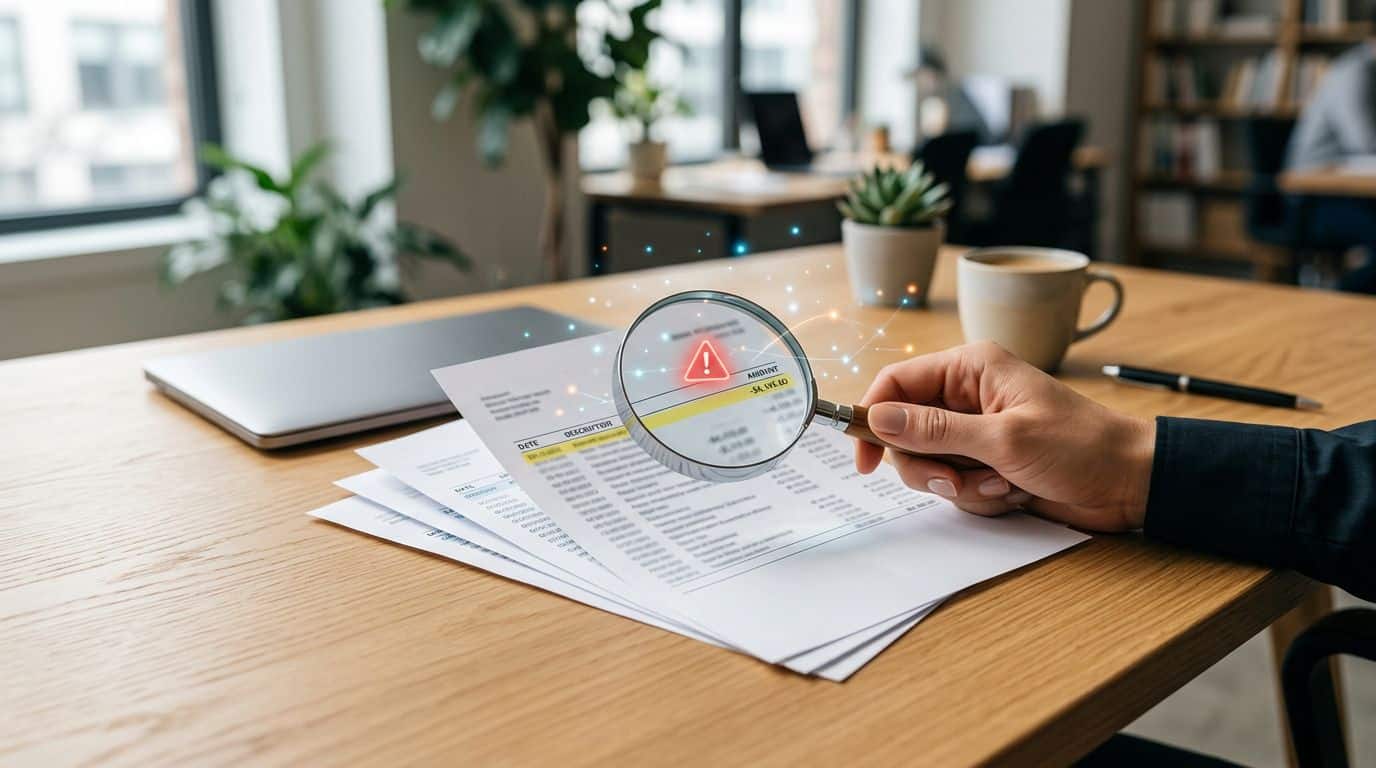
A bank statement can look dull right up until it doesn’t. One strange charge, one missing deposit, one transfer you never made, and suddenly that sleepy document feels like a smoke alarm.
That’s why the fastest way to check for bank statement fraud isn’t to stare harder. It’s to know where to look first, what patterns matter, and when to stop second-guessing yourself. A quick, calm scan usually tells you a lot.
Start with the boring details first
Most people jump straight to the transaction list. Fair enough. But the quickest check starts a little earlier, with the parts almost nobody wants to read.
Look at the statement period, the last four digits of the account number, and the opening and closing balances. If any of that doesn’t match what you expect, pause there. A wrong date range can hide missing activity. The wrong account number can mean you’re looking at the wrong document. A closing balance that feels off often points to the exact section that deserves your attention.

Then compare the balance against your banking app, recent receipts, or your own rough memory of what happened that month. You don’t need a spreadsheet and a green visor. You need a simple question: “Does this story make sense?” If you got paid twice, paid rent once, and bought groceries, the numbers should feel familiar.
This is also the moment to catch non-fraud problems that still matter. Duplicate charges, missing refunds, surprise fees, and reversed deposits can all sit on a statement like weeds in plain sight. A helpful walkthrough on how to read a bank statement and spot errors makes the point well: the top and bottom numbers frame everything in between.
One more thing, and it matters more than people think. If the statement itself arrived in a weird email, came as an unexpected PDF, or looks visually off, confirm that it’s real before doing anything else. Some fraud starts before the transaction stage. If that possibility is on your mind, these fake bank statement red flags are worth a look.
Spot suspicious transactions in minutes
Once the statement basics check out, scan the activity with a hunter’s eye. Not a panicked one, a hunter’s. You’re looking for movement that doesn’t belong.
The classic red flag is the charge you don’t recognize. Sometimes it’s large and obvious. More often it’s annoyingly small. Fraudsters love the tiny test purchase, the sort of charge people ignore because it’s $1.27 and life is busy. Early 2026 reporting has shown rising debit fraud and account takeovers, which is a reminder that the little stuff is often the opening act, not the whole show.

Watch for duplicate card charges, unfamiliar ACH debits, cash withdrawals you didn’t make, and transactions from places that make no geographic sense. If you live in Ohio and your card shows a purchase across the country an hour later, that’s not a mystery novel. That’s a problem. The same goes for subscriptions you never approved, or old ones that should have stopped months ago.
Merchant names can muddy the water. A statement descriptor often looks nothing like the store sign. So give each strange charge a brief second chance. Search your email for the amount. Check your digital receipts. See whether the merchant is a payment processor or parent company. Resources on red flags on bank statements often note this exact issue, and they’re right, some legitimate charges look suspicious at first glance.
If a transaction still doesn’t make sense after a quick receipt check, treat it as suspicious, not “probably fine.”
That single habit saves time. People lose speed when they argue with themselves. Maybe it was that lunch place. Maybe it was a free trial. Maybe I’m forgetting something. Maybe, maybe, maybe. Give the charge a fair look, then make a decision.
What to do the minute something looks wrong
Speed matters most after you find a problem. Don’t wait until the weekend. Don’t tell yourself you’ll call after dinner and then forget. The best next move is boring and effective: contact the bank through the number on your card or the official app, not a text link, not a random email, not a phone number someone sent you.
If your bank app lets you freeze or lock the card, do that first. It buys you breathing room. Then report the transaction, ask whether other recent activity looks suspicious, and write down the case number or reference number. That small note can save a lot of grief later.
Check the rest of the account while you’re there. Fraud rarely travels alone. Look for new payees, changed contact details, password reset emails, odd transfers, or alerts you didn’t trigger. If the issue involves checks or ACH activity, say so clearly. The bank needs the right lane from the start.
After the call, change your password and turn on transaction alerts if you haven’t already. A low alert threshold helps. Plenty of people set it at $10 or even lower because fraud isn’t always flashy. A simple monthly routine, like the one described in these key things to watch on a bank statement, can catch trouble before it spreads.
The trick is not perfection. It’s acting fast once something feels off.
The habit that catches fraud early
The fastest fraud check isn’t a special trick. It’s a short routine. Verify the statement details, scan for charges that break the story, and act the moment a transaction stays unfamiliar.
Your bank statement may never become your favorite reading. That’s fine. Give it a few focused minutes anyway. Speed, more than suspicion, is what turns a small problem into a fix instead of a mess.


