
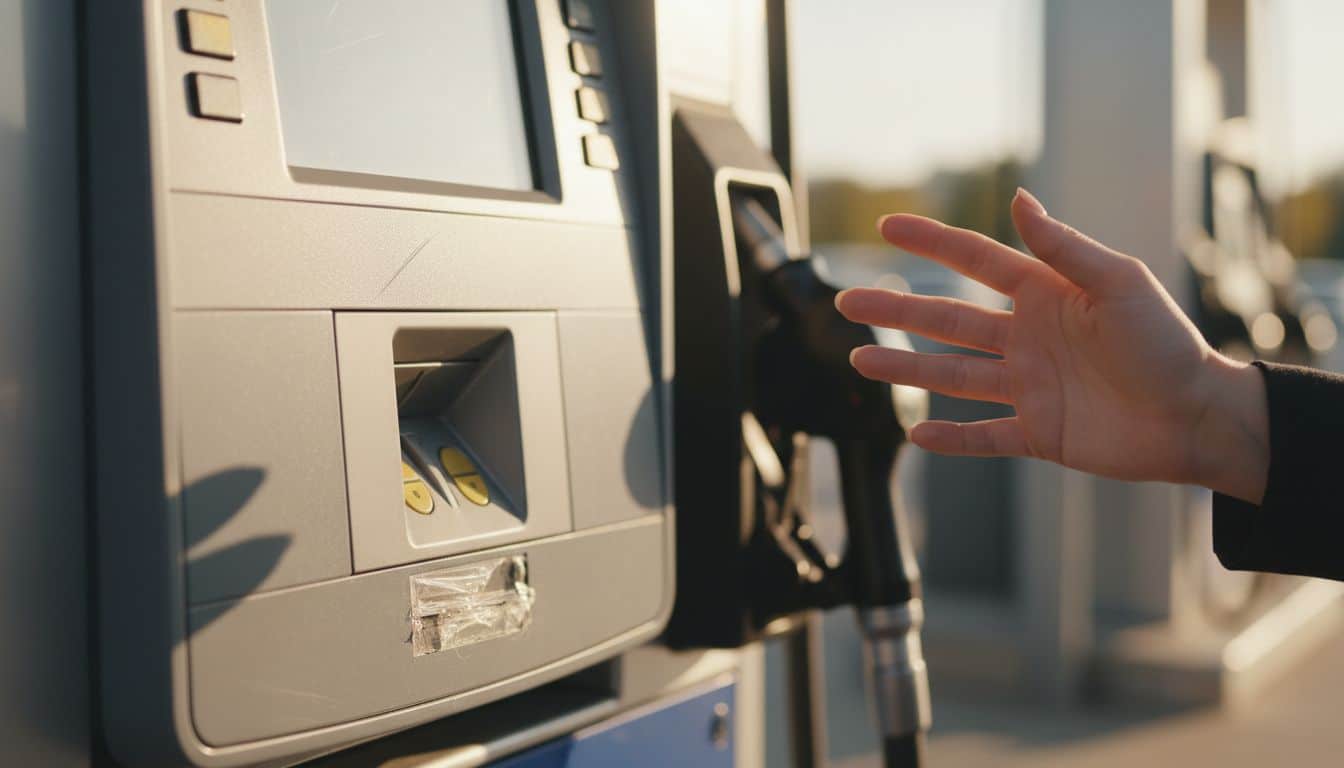
A gas pump can look harmless right up to the second your card data disappears into someone else’s pocket. The good news is that you can catch some problems before you pay.
The best defense is a 10-second check. Slow down, look for anything loose or mismatched, and trust the little voice that says, “That looks weird.” Most people don’t need detective skills here. They need a routine.
Read the whole pump before you read the card slot
Start with the pump itself, not the card reader. A lot of people walk up, grab the nozzle, and go straight for payment. That’s exactly when details get missed.
Take one small step back and look at the cabinet door, the panel around the reader, and the pump next to it. Does one machine look a little rougher than the others? Is the panel crooked, partly open, or scratched near the lock? The FTC’s consumer alert on gas pump skimming points to broken seals, open panels, and signs of tampering as early warning flags.
Many stations place security seals over the pump panel. If that seal is torn, lifted, or shows “void,” treat it like a stop sign. A gas pump skimmer is often installed inside the machine, so a damaged seal matters even if the card slot looks fine.
Comparison helps more than people think. Look at two or three pumps in the same row. They should look like cousins, not strangers. If one card reader sticks out farther, has a different color, or looks slapped on, move along. Think of it like spotting a bad tile in a bathroom floor. You may not know who installed it, but you know it doesn’t match.
The pump’s location matters too. The FBI’s advice on skimming says pumps near the store and in view of the attendant are less likely targets. Thieves prefer quiet corners. They don’t like bright lights or bored clerks with a clear line of sight.
If one pump looks different from the rest, don’t solve the mystery. Pick another pump.
Learn the signs that don’t belong there
A skimmer attached to the outside usually looks subtle, but not invisible. It may make the reader look bulky, loose, or strangely thick. The edges may not sit flush. The plastic can look like the right color from far away, then look slightly off up close. Sometimes there is sticky residue around the slot, as if something was attached in a hurry.

Keypads deserve the same suspicion. If the number pad looks thicker than normal or feels raised in a strange way, it could be an overlay. Tiny cameras can also be part of the setup, aimed at your hands to capture a PIN. That doesn’t mean you should become a spy movie extra in the parking lot. It means you should look for anything mounted oddly near the keypad or screen.
A good rule is simple: payment hardware should look boring. Clean edges, firm fit, no wobble, no extra frame, no odd bulk. If the machine has “one of these things is not like the others” energy, listen to that.
For another plain-language rundown of suspicious details, this guide to what card skimmers can look like is helpful. It mentions the same visual clues most people notice first, bulky readers, thicker keypads, and mismatched parts.
What you are looking for is not proof. You are looking for enough doubt to avoid risk. That is a much easier job.
Use a quick touch test and a smarter backup plan
After the visual check, give the reader a gentle tug. Not a wrestling match. Not a scene. A light wiggle is enough. If the card slot moves, shifts, or feels like a cap sitting on top of the real reader, stop there.

Do the same with the keypad if you need to enter a PIN. A keypad overlay can feel loose or thicker than it should. The Discover guide on gas station skimmers also recommends watching for loose parts, adhesive residue, and poor lighting around the pump. All of that fits the same pattern: something attached where it shouldn’t be.
If anything feels off, don’t negotiate with yourself. Use another pump. Better yet, pay inside. That one small inconvenience beats cancelling cards later.
When the option exists, tap-to-pay is usually safer than swiping or inserting. Tap transactions are harder for classic skimmers to capture. If you must use a debit card, avoid entering a PIN at the pump when you can run it as credit instead. And if you do type a PIN, cover the keypad with your hand. Skimmers and hidden cameras often work as a team.
One last habit matters after you leave. Check your account activity. Skimming damage often shows up later, not at the pump. A quick glance at recent charges can catch trouble before it grows legs.
A short pause beats a stolen card number
Spotting a skimmer is less about special knowledge and more about refusing to rush. Look at the whole pump, compare it with the others, and give the reader a light tug. If something seems off, move on.
That small pause is the whole trick. A gas station errand should stay boring, and with a little attention, it usually will.


