
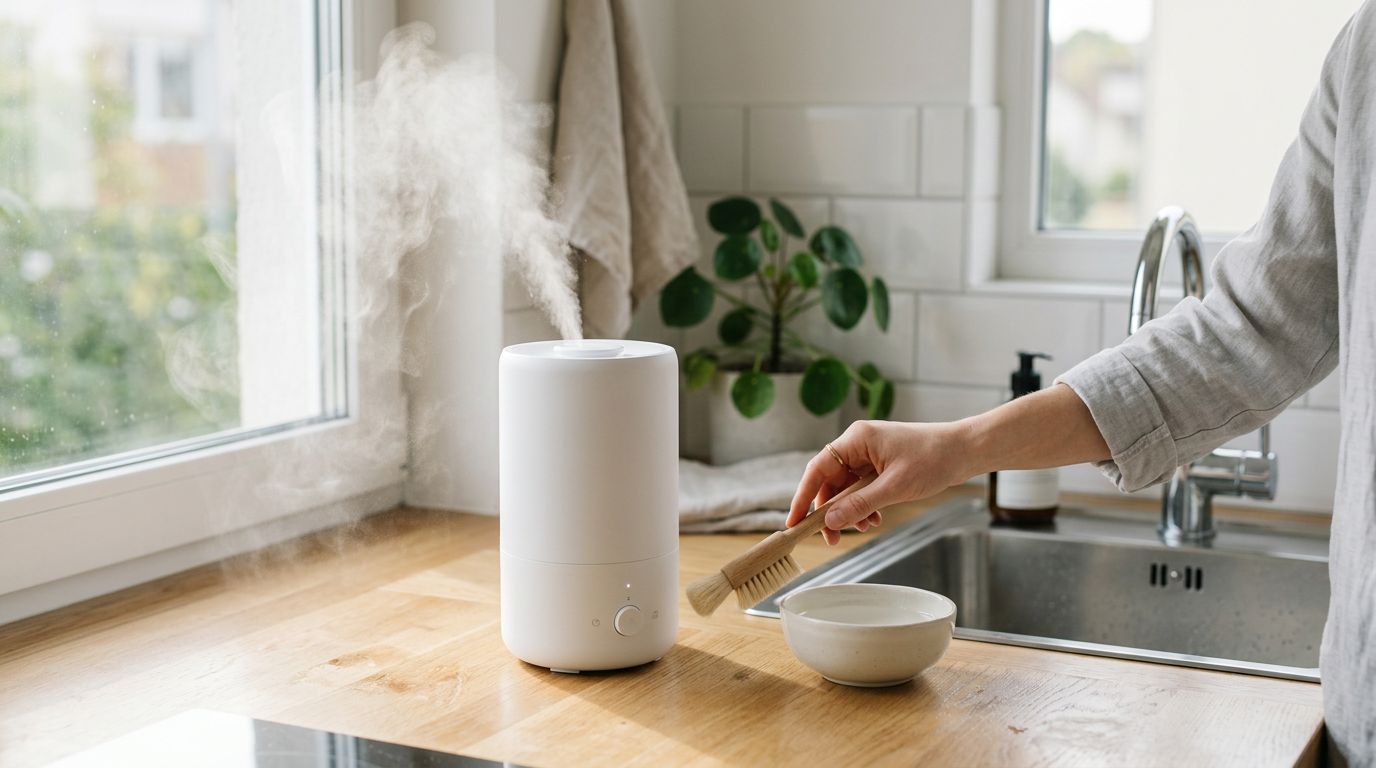
Nothing makes a room feel less clean than a humidifier that leaves a pale film on everything nearby. The good news is that white dust usually isn’t a sign that you cleaned badly. It’s a sign that minerals from the water are drying on your shelves, lamps, and floors.
If you want to clean humidifier parts without turning the room into a chalk scene, the fix is plain. Keep the residue wet, clean over a sink, and stop feeding the machine mineral-heavy water. That shift makes the whole job calmer.
White Dust Starts in the Water, Not on Your Shelves
White dust looks mysterious at first. Then it starts to feel personal, because it lands on the dresser you wiped an hour ago. In most homes, though, the culprit is ordinary tap water.
Ultrasonic and some cool-mist humidifiers break water into tiny droplets. If that water carries minerals, often calcium and magnesium, the mist can spread them into the air. When the moisture dries, the minerals stay behind as powder. If you want a quick plain-language breakdown, Hunker’s guide to humidifier white dust explains the pattern well.

The dust also settles inside the machine. That matters because dry mineral scale flakes easily. Brush it while it’s dry, and you can send a small cloud back into the room. Wet it first, and it behaves more like damp chalk than loose powder.
White dust is a water problem first, and a cleaning problem second.
That idea helps because it changes the goal. You aren’t fighting dirt alone. You’re trying to dissolve mineral buildup before it goes airborne.
Clean a Humidifier Without Sending White Dust Into the Air
The least messy way to clean humidifier parts starts before the scrubbing. First, unplug the unit and carry it low and steady to the sink or tub. Keep it level, especially if the base still holds water. A slosh across the floor only adds one more chore.
Once you’re at the sink, empty the tank slowly. Don’t dump it with a dramatic flip. Let the water run out in a controlled stream so loosened scale stays in the basin. Then take the unit apart according to the manual. Most models separate into a tank, lid, and base.
Now resist the urge to attack the crust with a dry brush. Dry scale travels. Instead, add plain white vinegar to the tank and any mineral-coated areas in the base. Let it sit long enough to soften the buildup. In many cases, 20 to 30 minutes does the job. For a model-by-model version of the same method, The Spruce’s vinegar cleaning guide is a useful reference.
After the soak, wipe the loosened film with a soft cloth, bottle brush, or sponge. If you have an ultrasonic model, clean the small vibrating plate gently with a cotton swab. That spot collects scale fast, and rough scrubbing can damage it.
Rinse each part well. Then rinse once more. If the vinegar smell lingers, the humidifier isn’t ready yet. Set the pieces on a towel and let them dry fully before you put the machine back together.
Meanwhile, wipe nearby surfaces with a damp microfiber cloth, not a feather duster. A dry duster can lift the powder into the air again. A damp cloth traps it, which is what you want when the nightstand, window sill, or crib rail has caught the fallout.
If your manual calls for a separate disinfecting step, do that on its own. Don’t mix cleaners in the tank or base.
The Small Habits That Stop White Dust From Coming Back
Cleaning solves today’s mess. Water choice decides whether you repeat it next week.
The biggest upgrade is distilled water. Because it has far fewer minerals than tap water, it leaves much less residue in the room and inside the unit. If you want the reasoning in simple terms, TapWaterData’s guide to distilled water for humidifiers connects the dots clearly.

Daily habits help too. Empty old water instead of topping it off for days. Rinse the tank, let it dry when the unit isn’t in use, and wipe out any film before it hardens. If your humidifier uses a filter or demineralization cartridge, replace it on schedule. Those parts can’t help much after they’ve worn out.
Placement also matters. Keep the unit on a washable surface or tray, especially in a child’s room or near electronics. If a little residue still appears, cleanup stays easy. And if your model lets you lower the mist output, do that before the room starts feeling like a cave. More mist isn’t always better.
A humidifier should help the room feel better, not dust it like powdered sugar. When you wet the scale before cleaning and switch the machine to low-mineral water, the mess drops fast.
Start with the tank tonight. A short rinse now, then a vinegar soak tomorrow, can spare you days of wiping white film off lamps, shelves, and the spots you notice most.


