
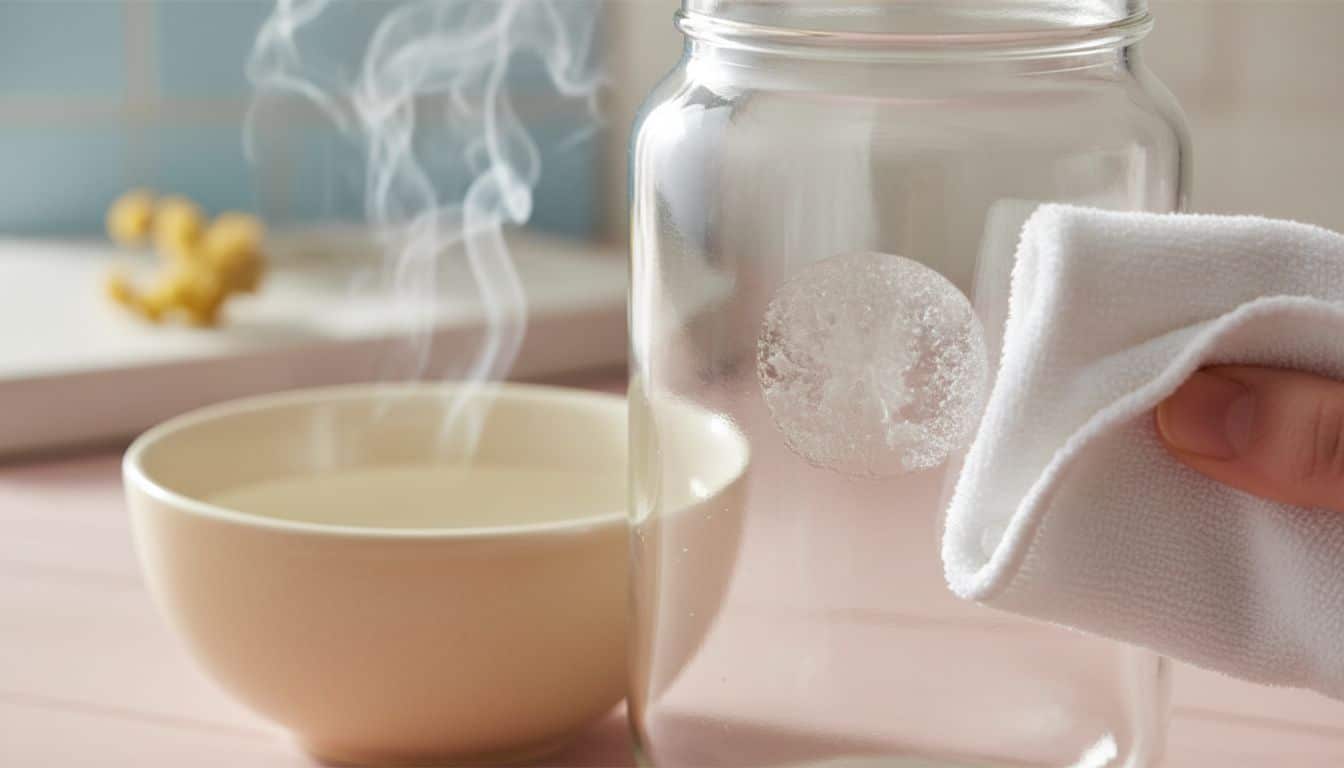
Sticker glue has a talent for overstaying its welcome. You peel off the label, admire your progress, and then the glass still looks tacky, cloudy, or streaked.
The good news is simple: you can remove sticker residue from glass without scraping if you soften the adhesive first. Once the glue loosens, it usually wipes away with far less drama.
Start by loosening the adhesive instead of fighting it
Glass seems tough, so it’s easy to assume brute force will work. However, scraping often makes the mess worse. It can spread softened glue across a wider patch, and on mirrors, jars, or coated windows, rough tools may leave fine marks you only notice in bright light.
A better approach starts with heat or moisture. If the glass item is small, like a jar or candle holder, warm soapy water often does the first half of the job for you. Let the glass soak for several minutes, then rub the sticky area with a soft cloth. The goal isn’t speed. The goal is to get the adhesive to give up.
For fixed glass, like a window or a mirror, hold a warm, damp cloth over the residue. Keep it there for a few minutes so the glue has time to soften. If the label left behind paper as well as glue, this step matters even more because dry paper turns the whole thing into a gummy paste.
Low heat also helps. A hair dryer on a warm setting can loosen old adhesive, especially on glass that hasn’t responded to soap and water. Keep the dryer moving, and don’t park heat in one spot. Glass handles moderate warmth well, but surrounding trim, paint, or tint may not.
If you want to remove sticker residue glass needs patience more than force. Once the residue feels softer, switch to a microfiber cloth and gentle pressure. Small circles work well because they lift the glue instead of pushing it around.
The best non-scraping methods for sticker residue on glass
When warm water isn’t enough, oil is often the easiest next move. A few drops of cooking oil, baby oil, or mineral oil can break down sticky residue on jars, picture-frame glass, and many household windows. Dab it onto a cloth instead of pouring it everywhere. Then press the cloth onto the spot and let it sit briefly before wiping.

Oil works because many adhesives hate it. The residue starts to loosen, clump, and slide away from the surface. After that, wash the area with dish soap and warm water so the glass doesn’t keep an oily film. Otherwise, you trade one mess for another.
White vinegar is another strong option, especially on flat glass like windows and windshields. Its mild acidity helps cut through residue that soap leaves behind. Spray a little onto a cloth or onto the glass, let it sit for a minute or two, then wipe with a clean microfiber cloth. If you’re working on a car, keep the liquid controlled around trim and seals.
Rubbing alcohol can help with stubborn adhesive that ignores both water and oil. It evaporates fast, which is useful, but that also means you may need more than one pass. Apply it to the cloth first, then rub the sticky area in short, gentle motions. On coated glass or tinted film, check the manufacturer’s care guidance before using stronger cleaners.
The best method often depends on the kind of residue left behind. Fresh sticker glue usually gives in quickly. Old residue, especially after sun exposure, can act like dried syrup. It still comes off, but it needs more soak time and less impatience.
What to do when the residue keeps smearing
Sometimes the first cleaner softens the glue but doesn’t fully lift it. That doesn’t mean you’ve failed. It usually means the adhesive has loosened halfway and needs one more round. Reapply the same method, let it sit longer, and wipe with a fresh section of cloth. A dirty cloth often spreads glue back onto the glass.
If the residue smears instead of lifting, it hasn’t softened enough yet.
That small shift in thinking saves a lot of frustration. People often scrub harder at this stage, yet harder rubbing can create hazy streaks and sore hands without solving the problem. More contact time is usually the missing piece.
A layered approach works well on stubborn spots. Warm the residue first, then use oil or vinegar, and only then wipe it away. Give each step a little room to work. Adhesive removal is closer to coaxing than wrestling.
It’s also smart to skip rough helpers. Metal blades, abrasive pads, and gritty powders can scratch or dull some glass surfaces, especially decorative pieces and coated panels. Paper towels are not as risky, but they can leave lint and drag softened glue in circles. Microfiber cloths tend to be kinder and more effective.
For car owners, take extra care if the glass has tint film, rain-repellent coating, or sensitive trim nearby. The front surface of plain windshield glass is sturdy, but the materials around it may react differently. When in doubt, test a small edge first and keep the cleaner on the cloth, not dripping into corners.
Sticky residue looks stubborn because it is stubborn. Still, it usually loses once you stop treating it like a scratch-off ticket.
Glass doesn’t need scraping nearly as often as people think. It needs time, the right liquid, and a soft cloth.
Once you soften the adhesive and wipe in stages, the residue comes off cleanly and the glass looks clear again. That calm, boring method is usually the one that works.


