
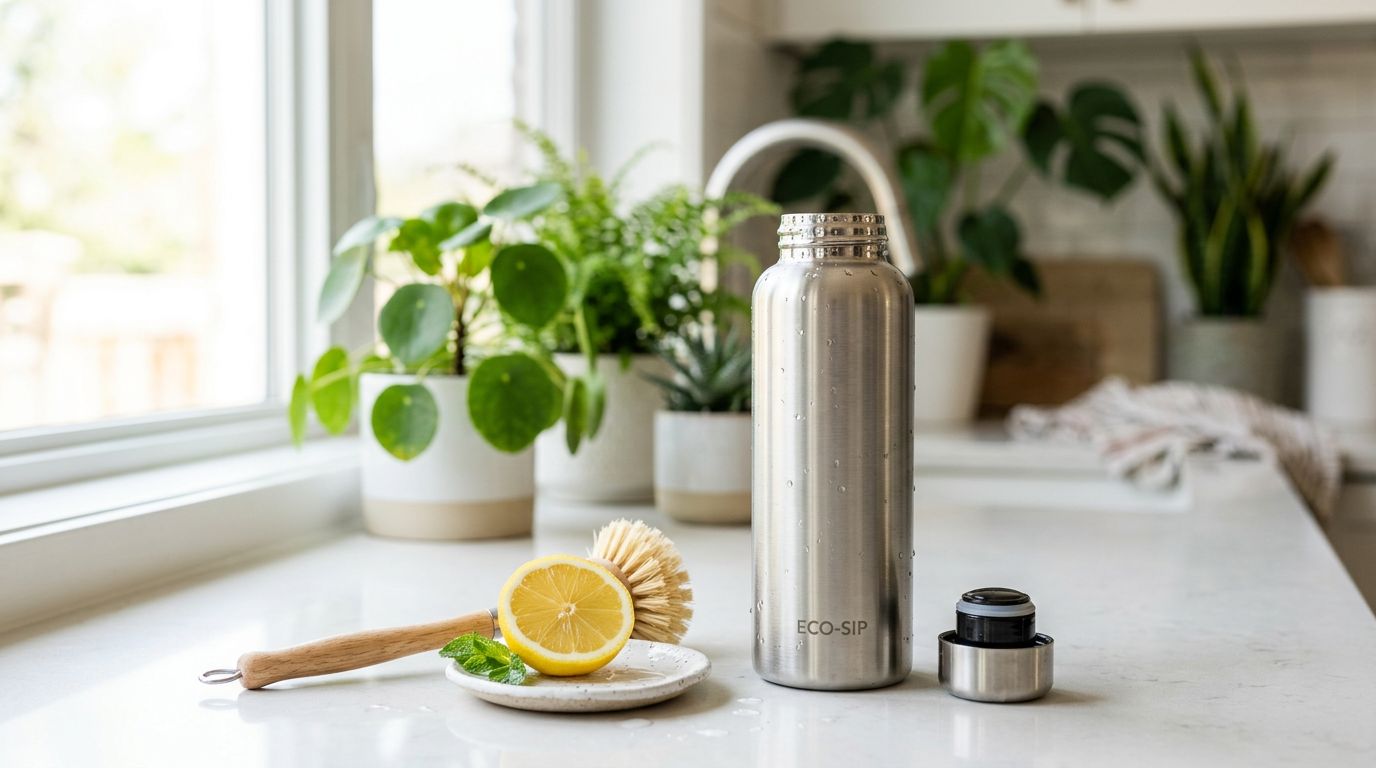
That weird smell in your reusable water bottle always shows up at the worst time. You’re already late, you take a heroic sip for quick hydration, and your water tastes like “yesterday’s gym bag.” Not ideal.
The fix isn’t fancy. It’s a few small habits that keep the gunk from getting comfortable in reusable bottles. If you want a clean reusable water bottle that stays fresh, you need to focus on two things: removing residue and letting every part of your reusable water bottle dry all the way.

Why reusable water bottles start to smell (even with “just water”)
Smells are rarely about the water itself. They’re about what builds up on the surfaces, then hangs around. A reusable water bottle is basically a tiny cave with a lid. Add warmth from your hands, a dark bag, or a hot car, and microbes treat it like a studio apartment.
Even “just water” leaves a problem behind in reusable bottles. Your mouth adds bacteria every time you drink. Then those bacteria and microbes stick to the inside and form a thin biofilm. That biofilm is why a quick rinse can feel useless. The reusable water bottle looks clean, yet it smells like a forgotten lunchbox. Unlike single-use bottles that get tossed after one go, reusable water bottles stick around long enough for bacterial build-up to become noticeable.
Lids cause most of the drama in reusable water bottles. Threads, spouts, and straws on the lid have tight corners that trap residue. Silicone gaskets in the lid also hold onto odors, especially if you drink anything besides water. Protein shakes, flavored packets, coffee, and juice leave sugars and oils behind, so bacteria multiply and the smell gets louder faster. Neglect this, and you risk harmful bacteria like E. coli taking hold.
Minerals can play a role too. If you have hard water, mineral build-up can leave a rough feeling inside stainless steel. That texture gives smells more places to cling. For stain and mineral tips, see ION8’s guide to hard water stains.
How often should you wash it? Most practical guidance lands on “after each use,” especially if you’ve had anything but water. Martha Stewart’s cleaning rundown also stresses frequent cleaning and routine care in how to clean a reusable water bottle and how often.
If your bottle smells clean right after washing but funky the next day, the lid parts probably need a better scrub and a longer dry.
A simple daily routine that stops odors before they start
The easiest way to prevent funk in your reusable water bottle is to stop feeding it. That means rinsing soon, washing with soap regularly, and drying like you mean it for food safety.
Start with the “two-minute reset.” When you finish your drink, rinse the reusable water bottle with hot water and leave it open. That small step keeps residue from drying into a sticky layer. Later, when you do a real wash, everything comes off faster.
At least once a day (or after any sweet drink), wash your reusable water bottle with hot water and a drop of dish soap to make soapy water. Swirl, scrub with a bottle brush, and don’t forget the narrow neck. A bottle brush helps because it presses bristles into the sides. For stainless steel reusable bottles, a gentle bottle brush is plenty. For plastic, the same rule applies, but odors may cling longer if you let them sit. Check if the reusable water bottle is dishwasher safe for quicker daily care.
Then deal with the lid like it’s a separate dish. Take the lid apart as much as the design allows. If there’s a removable gasket, pop it out. If there’s a straw, pull the straw and wash it through. If there’s a flip spout, open every hinge and scrub around it. Popular Mechanics has a clear routine for keeping stainless bottles fresh in this water bottle cleaning guide.
A few spots deserve extra attention because they “hold the memory” of old drinks:
- Lid threads: Food-grade grime hides in the grooves, so scrub with a bottle brush.
- Silicone gasket (O-ring): Remove it when you can, then wash and air dry it flat.
- Straw and mouthpiece: Run soapy water through the straw, then rinse until there’s no slippery feel.
Drying is the quiet hero. After washing, set the reusable water bottle upside down at an angle so it can air dry inside. Dry the lid and gasket separately. Finally, store reusable bottles with the cap off (or loosely on) so trapped moisture can’t turn into that swampy smell.
Deep-clean rescue when the funk won’t quit
Sometimes the smell has a head start. Maybe the reusable water bottle sat in a backpack all weekend. Maybe you made a smoothie once and thought, “I’ll wash it later.” No shame. You just need a deeper clean that sanitizes, breaks up residue, and knocks down stubborn odors.
First, do a full disassembly and a normal soap wash. Deep-cleaning works better when you remove the obvious grime first. Next, choose a method that matches your reusable bottle and your patience.
Here’s a quick way to pick a deodorizing approach:
| Method | Best for | How long | Notes |
|---|---|---|---|
| White vinegar soak | Musty, sour smells | 15 to 30 minutes | Rinse very well afterward |
| Baking soda wash | Lingering odors, “plastic taste” | 30 minutes (as a soak) | Scrub after soaking for best results |
| Hydrogen peroxide soak | Killing stubborn mold spores | 15 to 30 minutes | Use 3% solution with hot water, rinse thoroughly |
| Denture tablet soak | Stubborn smell in narrow bottles | 15 to 30 minutes | Follow package directions, rinse well |
| Diluted bleach solution | Moldy odor or visible spots | About 2 minutes | Use a very dilute mix, then rinse repeatedly |
The takeaway: start mild (soap, white vinegar, baking soda), then step up to hydrogen peroxide or bleach only if needed to disinfect.
For white vinegar, fill the reusable water bottle with hot water, add a splash of plain white vinegar, and let it sit. Meanwhile, soak the lid and gasket in a separate bowl with the same mix. After soaking, scrub the threads and crevices, then rinse until the vinegar smell is gone. This sanitizes and eliminates lingering residue and odors.
For baking soda, add a spoonful of baking soda to hot water and shake. Let it sit, then scrub. Baking soda is helpful when odors feel “embedded,” especially in plastic.
If you prefer a guided, step-by-step approach, E-Cloth’s smell removal walkthrough lays out a simple process and the basic tools.
When you’re deep-cleaning reusable bottles like stainless steel ones, follow brand guidance and avoid harsh abrasives that can scratch the inside. Ocean Bottle’s care notes are a useful reference in deep clean your metal water bottle.
Never mix bleach with vinegar (or any other cleaner). Rinse between methods, and when in doubt, stick to soap and hot water.
If smells keep coming back, inspect the gasket. Silicone can absorb odors over time, and tiny cracks can trap residue or even foster mold. Replacing a cheap ring can save an otherwise great reusable water bottle that doesn’t surprise you in public.
Conclusion
A funky reusable water bottle doesn’t mean you’re doing life wrong; it just means the bottle needs a better system. Wash the bottle with hot water, treat the lid like its own dish, and let every part dry fully. Add a weekly deep-clean when you’ve had anything besides water. With that rhythm, the smell stops showing up in your reusable bottles, supporting consistent hydration, and your clean reusable water bottle stays quietly dependable.


