
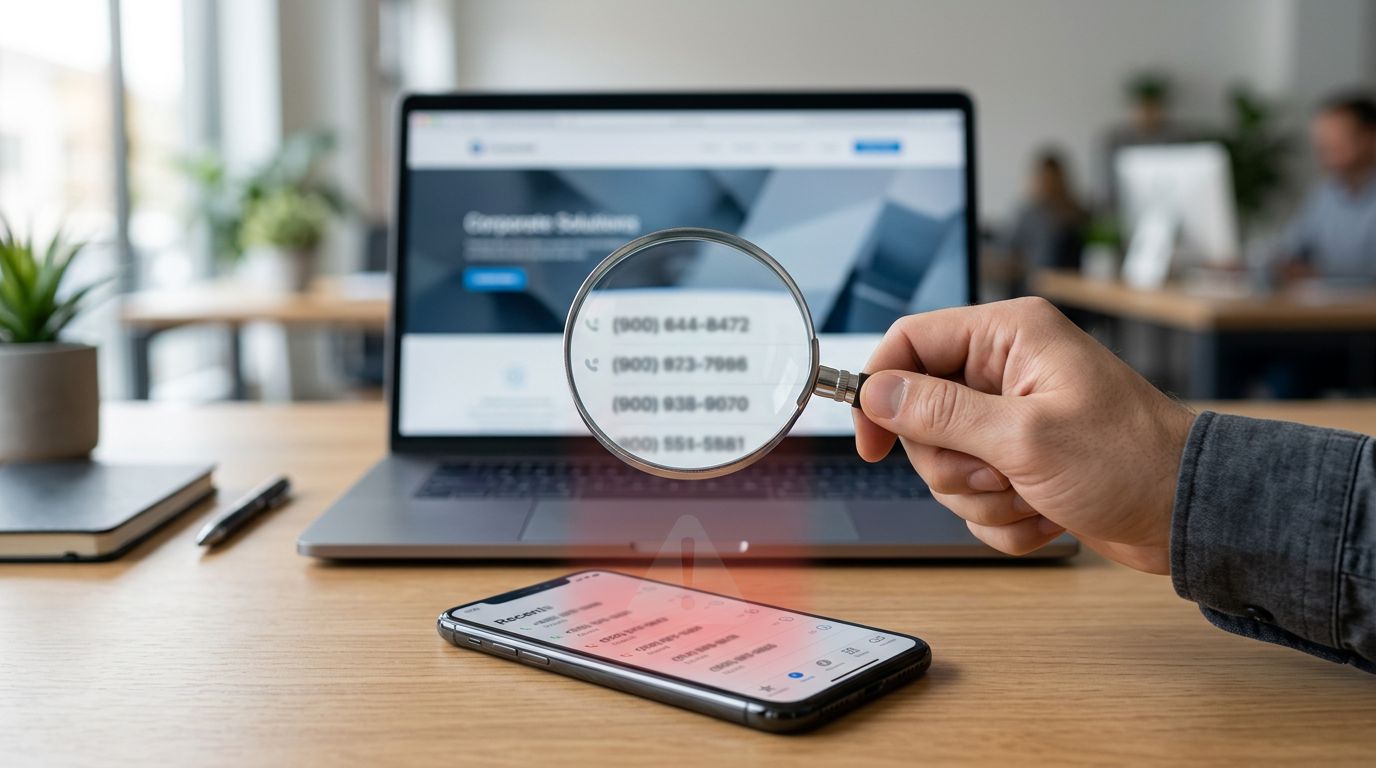
You can lose money to a fake customer service number before the call even gets going. Sometimes the trap is only a phone number in a search result, sitting there like it belongs.
That is what makes these phone scams so annoying. It does not always look like a scam. It looks like help, right when you are stressed, late, locked out, or trying to fix something fast.
The good news is that fake support lines usually give themselves away long before you dial.
Key Takeaways
- Trust the source, not the search engine: Never assume a phone number found at the top of search results is legitimate; scammers often pay for ads to position their fake support lines above official links.
- Verify through official channels: Rely on information from trusted sources you already possess, such as your bank card, a product manual, a physical bill, or the company’s official app, rather than random web results.
- Watch for manufactured urgency: Be skeptical of calls that rely on high-pressure tactics, threats of account closure, or immediate demands for payment; legitimate companies do not operate with the frantic energy of a scam.
- Identify specific red flags: Immediately end the call if you are asked to provide passwords, grant remote computer access, or pay using untraceable methods like gift cards, wire transfers, or cryptocurrency.
The first lie often appears in search results
The number at the top of your search engine results is not automatically the right one. That sounds obvious when you are calm. It feels much less obvious when your flight has changed, your package is missing, or your laptop is shouting about a problem you did not know it had.
Scammers know that urgency makes people skim. They buy ads, copy company names, and build pages that look close enough to pass a rushed glance. A paid result can sit above the official website, which means “first” does not mean “real.” For example, scammers often create fake pages impersonating Amazon customer service to trick shoppers into revealing account details.
A good rule is almost boring: trust the source, not the position on the page. If the number came from a search ad, a pop-up, a social media post, or a comment thread, treat it like a stranger introducing himself as your accountant.
A phone number is only as trustworthy as the place you found it.
That matters because fake support lines often depend on panic. The setup is simple. You search for help, see a polished page, call the number, and hear someone who sounds ready. The scam works because the performance begins before anyone speaks, setting the stage for various phone scams.
The FBI’s warning on tech support scams describes this pattern well. Criminals pose as support staff, then steer the call toward payment, access, or personal data. It is not only about computers, either. Similar tricks show up with airline customer service, retailers, banks, streaming services, and delivery companies.
So pause for ten seconds. Ask one question before any other: “Where did I get this number?” If the answer is “a search result I clicked without checking,” you are not ready to call yet.
Check the source before you check the digits
A fake number can look perfectly normal. It might even have your local area code, as impersonator scams often rely on creating a sense of legitimacy to lower your guard. That is why studying the digits themselves is not enough. The safer move is to verify the number through a place the company already controls.
The official website is the obvious option, but not the only one. A bill, a bank card, a receipt, a product box, a printed manual, or the company’s own app can all be better sources than a search result. Scammers are good at copying a number, but they are worse at controlling every official place a company already uses. Furthermore, always remember that a real company already possesses your personal information and would rarely need you to provide sensitive data over an unverified line.

If you do use the web, type the company name yourself instead of clicking the first thing you see. Be wary of links found on social media platforms, as these often guide users to fraudulent pages designed to look official. Once on the site, check the contact page carefully. Does the domain look right? Is the site the same one the company uses in its app, emails, and billing pages? Does the support page feel complete, or does it exist only to push one phone number at you?
This is also where a little suspicion pays off. A real company page usually gives you several ways to get help, not one giant phone number and a manufactured emergency. Support pages tend to include account help, policies, hours, chat, and order lookup. Scam pages often skip that boring, ordinary stuff because such details take significant effort to forge.
Microsoft’s guide to spotting tech support scams also warns about fake error messages and pop-up alerts that push you to call. If a page tells you your device is infected and flashes a support number, close it immediately. Your browser is not your help desk.
Listen for the company name, and what never gets said
Sometimes you only realize the number is wrong after you call. That does not mean you are stuck. The first few seconds of the conversation can tell you a lot.
A real agent usually identifies the business clearly. A scammer often opens with something vague, like customer support, support desk, or account department. That is a small detail, but it matters. Legitimate support is tied to a real company. Fraud likes fog.
If the person will not say the company name plainly, ask them to. Ask again if needed. You are allowed to be direct. Keep in mind that caller ID can be spoofed, which makes the identity of the person on the other end questionable. Asking, “Which company is this for?” is not a rude question. It is the adult version of checking whether the person at your door knows your name.
The same goes for basic call flow. Real support usually asks what you need, then verifies only what fits the issue. A fake line may jump straight to your full credit card number, bank login, one-time code, Social Security number, or other sensitive personal information. That is not efficient service. That is fishing with a headset on.
Listen for odd script changes too. If you ask a simple question and the answer sounds rehearsed, detached, or strangely generic, trust that reaction. When a caller ignores what you asked and pushes back to payment, verification, or urgent recovery, the mask slips.
There is nothing dramatic about hanging up on a suspicious call. It is not impolite. It is quality control.
Panic is part of the script
Most fake support calls are built around pressure. The caller wants your brain in sprint mode, because sprint mode is where people stop checking details.
That pressure can sound different depending on the scam. Your account is locked. Your package is held. Your booking will be canceled. Your computer is infected. Your refund expires today. The message changes, but the tempo stays the same: act now, think later.
Real customer service can be busy. It can even be blunt. What it usually is not, though, is theatrical. A legitimate company does not need to scare you into getting help. It already has your business. A scammer needs momentum, so the call keeps moving before you have time to verify anything.
Watch for three pressure tactics. The first is a countdown, spoken or implied. The second is a threat, like account closure or legal trouble. The third is isolation. That is when the person insists you stay on the line, not call back, and not contact the company another way.
Banks have been warning customers about that rhythm for years. Chase’s fraud warning signs point to the same red flags, such as fear, urgency, and the demand to resolve a fraudulent transaction. A company may ask you to confirm a charge, but it will never ask you to fix it with gift cards, cryptocurrency, or a wire transfer. They might even try to direct you to a local crypto ATM to finalize the payment. No serious business handles support like a ransom note.
When a call feels rushed, slow it down on purpose. Say you will call back through the number on your bank account, your statement, or the company’s official app. If the person objects, you have your answer.
What real support usually will not ask you to do
There are a few requests that should make you stop the call almost on reflex. One is a demand for payment through gift cards, a wire transfer, or cryptocurrency, all of which are major red flags. Another is a request for your passwords or one-time passcodes. A third is a demand to hand over remote access to your phone or computer before the problem is even clear.
That last one catches a lot of people. A stranger might claim they can fix the issue if you install software and let them take a look at your system. Sometimes they frame it as a routine procedure, and they may sound helpful enough to make you second-guess your instincts. Still, requesting remote access is a significant risk, and a real company should never smuggle such a large request into a casual support call.
There is a common thread here: fake support wants control, and they want it fast. They are looking for control of your account, your device, or your payment method. Legitimate support may verify your identity, but the request should always fit the reason you called. If you are checking an order status, nobody needs your online banking password. If you are asking about a flight, nobody needs to move money between accounts. Always be vigilant about protecting your bank account and credit card information from anyone who demands immediate, unusual actions.
When a number feels off, hang up and start over from a trusted source. Use the phone number printed on the back of your card, open the official app, or visit the company website by typing the address yourself. If you already shared payment information, contact your bank right away to freeze your accounts and consider reporting fraud to the appropriate authorities.
That restart can feel inconvenient, but it is far cheaper than trusting the wrong voice for five more minutes.
Frequently Asked Questions
What should I do if I suspect I have called a fake support number?
If you realize you are on the phone with a scammer, hang up immediately without providing further information. Afterward, contact your bank or credit card company through a verified number on the back of your card to secure your accounts and monitor for any unauthorized activity.
Can I trust a phone number if it has my local area code?
No, you cannot rely on the area code for safety. Scammers often use spoofing technology to display local or familiar-looking numbers to build trust and lower your guard, so you should always verify the contact information through an official company source.
Is it ever acceptable for a support agent to ask for remote access to my computer?
While some legitimate technical support teams may request this, it should never be the first step or a requirement for simple inquiries. If an unsolicited caller or someone you found via a search engine demands remote access to your device, treat it as a serious security threat and terminate the connection.
How can I verify a company’s website is the real one?
Type the company’s official web address directly into your browser rather than clicking on search results or links from social media. Look for consistent branding, a functional support page with multiple options like chat or email, and ensure the domain matches the one you see on your physical statements or product packaging.
Conclusion
Spotting a fake hotline is less about detective work and more about refusing to rush. Check where the number came from, listen for a clear company name, and treat pressure like the warning sign it is.
The strange little truth is that safe customer service often looks boring. It comes from the company app, the back of the card, the printed receipt, or the official site. Boring is good when money, accounts, and personal details are on the line. Whether you are dealing with a government agency or a major retailer, legitimate organizations will always offer verified customer support channels that do not involve the common red flags or high-pressure tactics discussed here.


