
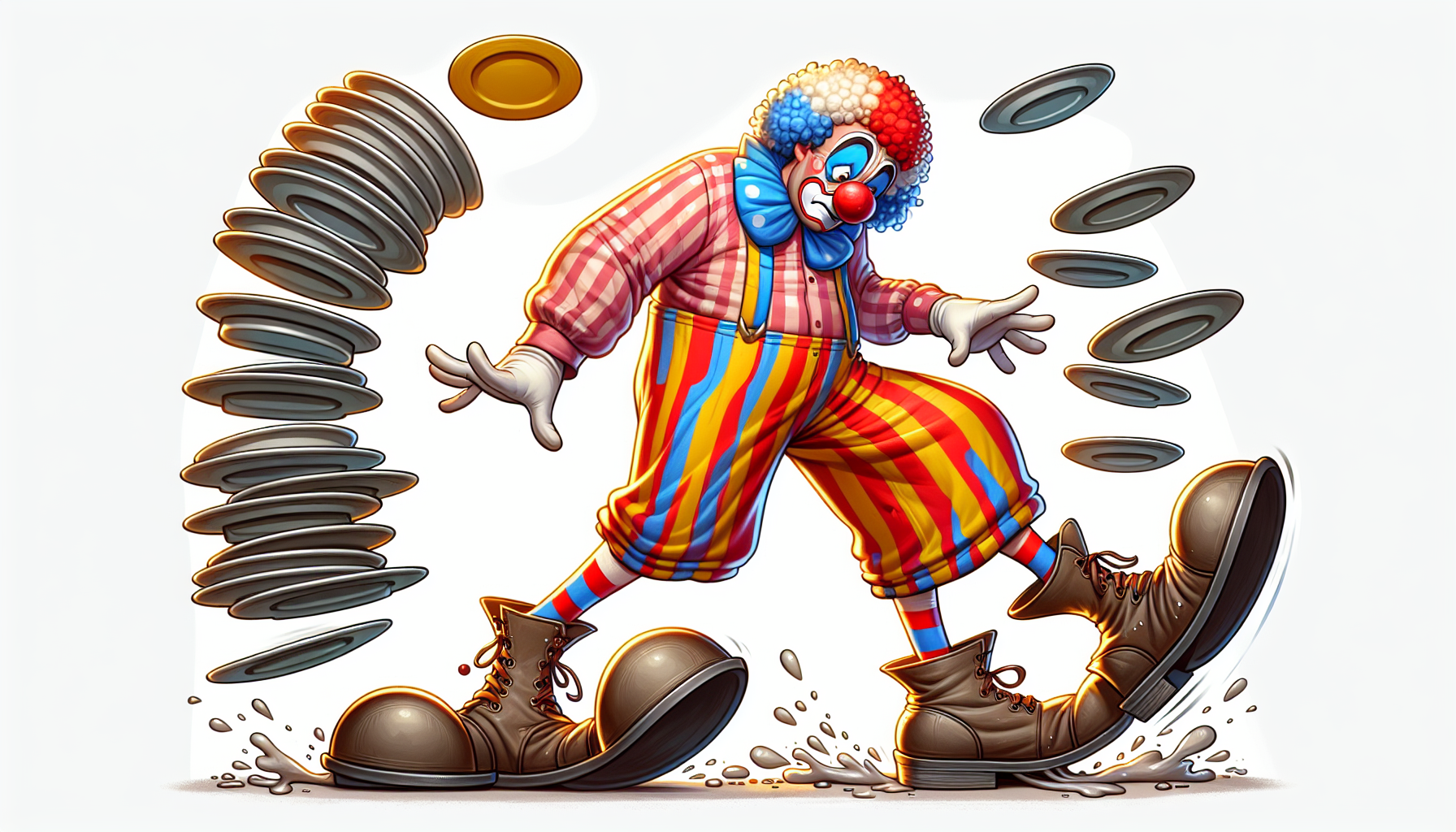
Clowns are often associated with comedy and humor, but a clumsy clown can add a whole new level of entertainment to a performance or poem. Creating a funny verse about a clumsy clown requires some creativity and careful consideration of language and imagery.
Create a Funny Verse About a Clumsy Clown
Here are some tips on how to craft a hilarious poem about a bumbling clown:
1. Focus on the Physicality
Clumsiness is all about physicality, so it’s important to focus on the clown’s movements and actions. Think about how a clumsy person might trip, stumble, or knock things over. Then, try to exaggerate these movements in your poem to make them even more comical.
For example, you could write:
His shoes were too big, his pants too short,
He tripped over his own feet, then he fell with a snort.
This verse highlights the physicality of the clown’s clumsiness and makes it more humorous by exaggerating his missteps.
2. Use Wordplay and Puns
Wordplay and puns can add a whole new level of humor to a poem. Look for words and phrases that can be twisted or played with to create a joke or pun. You can also use homophones or homonyms to create wordplay that is both clever and entertaining.
For example, you could write:
He tried to juggle plates, but he was just too clumsy,
He dropped them all, what a plateful of muss see!
This verse uses the word “muss” as a play on words with “must”, creating a pun that adds humor to the clumsy clown’s mishap.
3. Emphasize the Irony
One way to make a funny verse about a clumsy clown even funnier is to emphasize the irony of the situation. Clowns are meant to be skilled and graceful performers, so a clumsy clown is a funny contradiction.
For example, you could write:
He practiced his act, but he just couldn’t cope,
A clumsy clown, he was a joke!
This verse emphasizes the irony of a clown who is supposed to be skilled and entertaining but is instead bumbling and awkward.
4. Add Personality and Emotion
While clumsiness is often associated with humor, adding personality and emotion to your poem can make it even more engaging. Think about the character of the clown and what emotions he might be feeling as he struggles with his clumsiness. Incorporating these details into your poem can make it more relatable and entertaining.
For example, you could write:
He tried to make the children laugh,
But every step he took was a gaffe.
He felt embarrassed, and oh so small,
His clumsy ways were a clown’s downfall.
This verse adds personality and emotion to the clumsy clown, making him a sympathetic and relatable character that the reader can root for.
5. Experiment with the Poetic Form
Finally, don’t be afraid to experiment with the poetic form to create a verse that is both playful and unique. While a traditional rhyme scheme can be effective, breaking the rules of poetry can sometimes lead to even funnier and more memorable verses.
For example, you could write:A clown who’s clumsy, it’s quite a sight,
He tries to walk, but he can’t get it right.
His feet are big, his nose is red,
He falls over, bumping his head.
The children laugh, but he can’t see why,
He just wants to curl up and cry.
Once you have identified the humorous elements in your subject matter, you can start brainstorming different ways to incorporate them into your poem. Here are a few tips to help you come up with a funny verse about a clumsy clown:
Use irony: Irony is a powerful tool in creating humor. You can use it by presenting a situation that is unexpected or the opposite of what you would normally expect. For example, instead of describing the clown as graceful, you could describe them as “a bull in a china shop” or “a hippo on a tightrope.”
Play with language: Wordplay and puns can be an effective way to add humor to your poem. For example, you could use words like “trip,” “stumble,” or “fumble” to describe the clown’s movements. You could also use alliteration or rhyme to create a playful tone.
Exaggerate: Exaggeration is another effective technique in humor writing. You could exaggerate the clown’s clumsiness by describing them as “falling over their own feet” or “knocking over everything in sight.” This can create a sense of absurdity and playfulness in your poem.
Use metaphors and similes: Metaphors and similes can be a great way to create humor by comparing the clown to unexpected objects or animals. For example, you could describe the clown as “a bull in a china shop” or “a baby giraffe learning to walk.”
Use physical comedy: Physical comedy is another great way to add humor to your poem. You could describe the clown’s physical actions in a way that is comical and exaggerated, such as “tripping over their own shoelaces” or “spinning around like a top.”
Here is an example of a funny verse about a clumsy clown:
Verse:
There once was a clown so unsteady
On his feet, he was often quite unsteady
He’d trip and he’d tumble
And cause quite a rumble
In the circus, he was known as quite a medley
In this verse, the use of alliteration in “trip and tumble” adds to the playful tone. The metaphor of the clown being a “medley” reinforces the idea that he is a mixture of many different things, including clumsiness. The use of exaggeration in the phrase “cause quite a rumble” also adds to the humor of the poem.
Overall, when creating a humorous poem about a clumsy clown, it’s important to lean into the humor of the situation and find creative ways to highlight the clown’s clumsy behavior. By using techniques like irony, wordplay, exaggeration, and physical comedy, you can craft a funny and memorable poem that will make your readers laugh out loud.


