
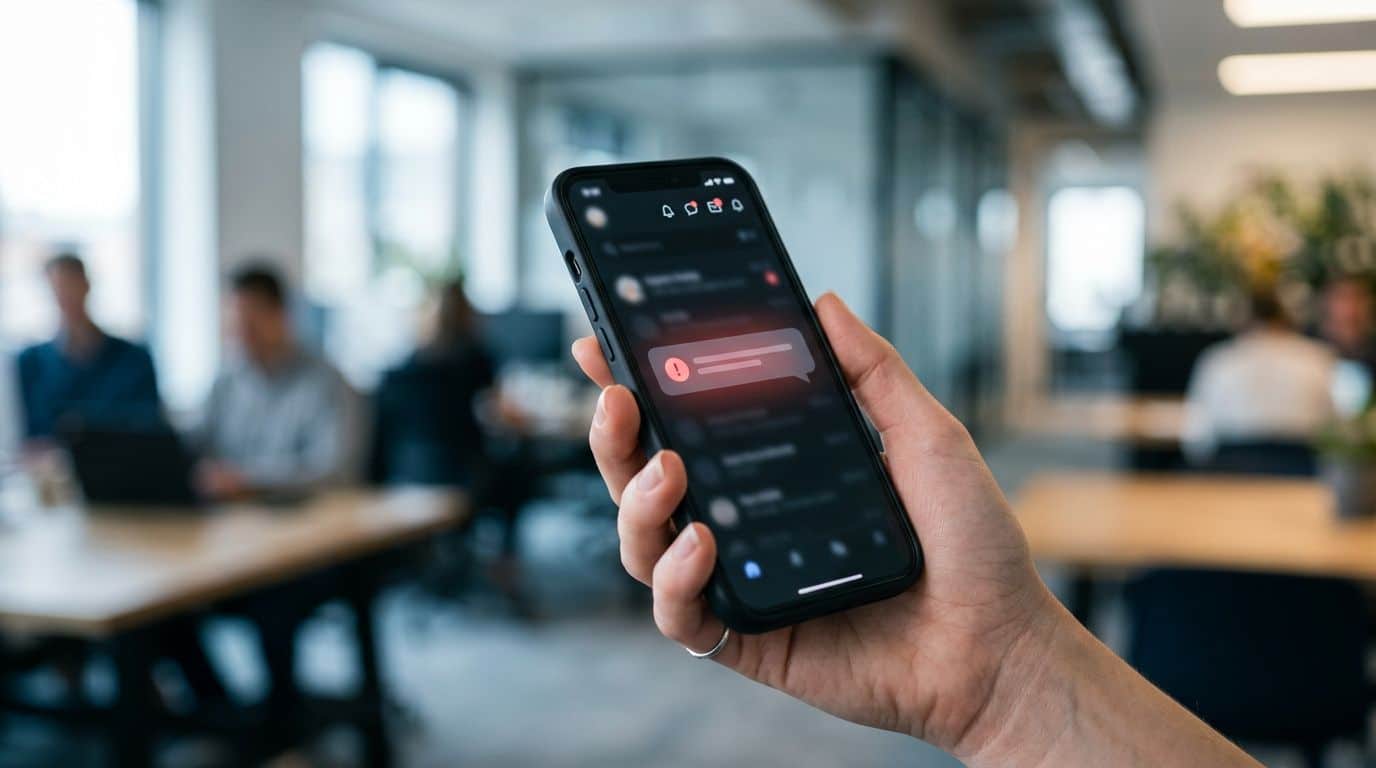
A phishing text rarely looks dramatic at first glance. It looks ordinary, familiar, and slightly annoying, like a package delay, a bank alert, or a note about a bill you forgot.
That ordinary look is the trick. Scammers count on speed, not depth, because most people read texts in the middle of life, not at a desk with a magnifying glass. A calm pause is often all it takes to spot the lie.
Why phishing texts fool smart people
A phishing text lands where your guard is often lowest, on the same screen where family messages, school updates, and two-factor codes appear. That makes it feel more trusted than a random email. Security teams call this smishing, or SMS phishing, but the method is simple: create pressure, look familiar, and get you to tap before you think.
That pressure usually comes dressed as help. A fake bank text says your card was locked. A fake delivery text says your package can’t be shipped. A fake government notice says you owe money now. The story changes, but the pace stays the same.
Recent reports on SMS scams to watch in 2026 show how polished these messages have become. Some now use your name, mention a real company, or copy the tone of a real customer service alert. That does not make them real. It only means the costume got better.
AI has made that costume sharper. Some scam texts sound cleaner than the clumsy messages people used to laugh at. So spelling errors still matter, but perfect grammar no longer proves safety.
If a text tries to rush you, slow your hands first.
That one habit beats a surprising number of scams.
Read the message, not the mood it creates
The first clue is often the sender. A real bank may use a known short code or a thread you have seen before. A scammer may use a random mobile number, an email address sent by text, or a strange mix of letters and numbers. Even then, don’t relax too soon. Sender names can be faked, and old message threads can be mimicked.

Next, look at the feeling the message is trying to create. Most phishing texts want one of four reactions: panic, fear, greed, or curiosity. “Your account is locked.” “Final warning.” “You won a prize.” “Tap to confirm now.” Those lines work like a fire alarm pulled in your pocket. The point is to make you move.
A real company can send urgent texts, of course. The difference is that a real company can also wait for you to verify the issue through its app, its website, or the phone number on your card. A scammer hates that extra step.
Then look for small cracks in the story. Does the message mention a package when you ordered nothing? Does it claim to be from your bank but use a number you don’t recognize? Does it ask for a payment method that feels odd? Many fake messages still show these seams. If you want to see how those clues appear in practice, these fake text message examples are useful.
Links deserve special suspicion. So do QR codes. In April 2026, reports described traffic violation texts that pushed QR codes. The message looked official, asked for a tiny payment, and led people to phishing pages. A QR code can feel safer because you are scanning, not clicking, but the result is often the same.
What to do instead of tapping
Start with the simplest move, do nothing for one minute. That pause breaks the spell. Once the rush fades, check the claim outside the text. If the message says your bank needs you, open the bank’s app yourself. If it says a package is stuck, visit the shipping company’s site by typing the address you already know. If it mentions your doctor, school, or utility, call the number from a bill, card, or official website.
Don’t reply to test the message. Even a short “Is this real?” can tell a scammer your number is active. Also avoid calling the number inside the text, because that phone number may belong to the scammer too.
If you are unsure, show the message to someone else before acting. A second set of eyes often spots the fake tone fast. This helps older adults, teens, tired parents, and anyone reading a text while distracted, which is to say, most of us.
When a message is clearly a phishing text, report it through your phone if that option appears, then delete it. Blocking the sender can help, although scammers often switch numbers. If you already tapped, back out at once. Do not enter passwords, card numbers, or one-time codes. Then change any exposed password and contact the real company through an official channel.
A calm pause is the real filter
You do not need special technical skill to spot a phishing text. You need a small habit: pause, verify, and refuse to follow the path the message built for you.
Most scam texts fall apart when you stop treating the text itself as the source of truth. A real company can wait for you to check. A scam can’t, and that is often the clearest sign of all.


