
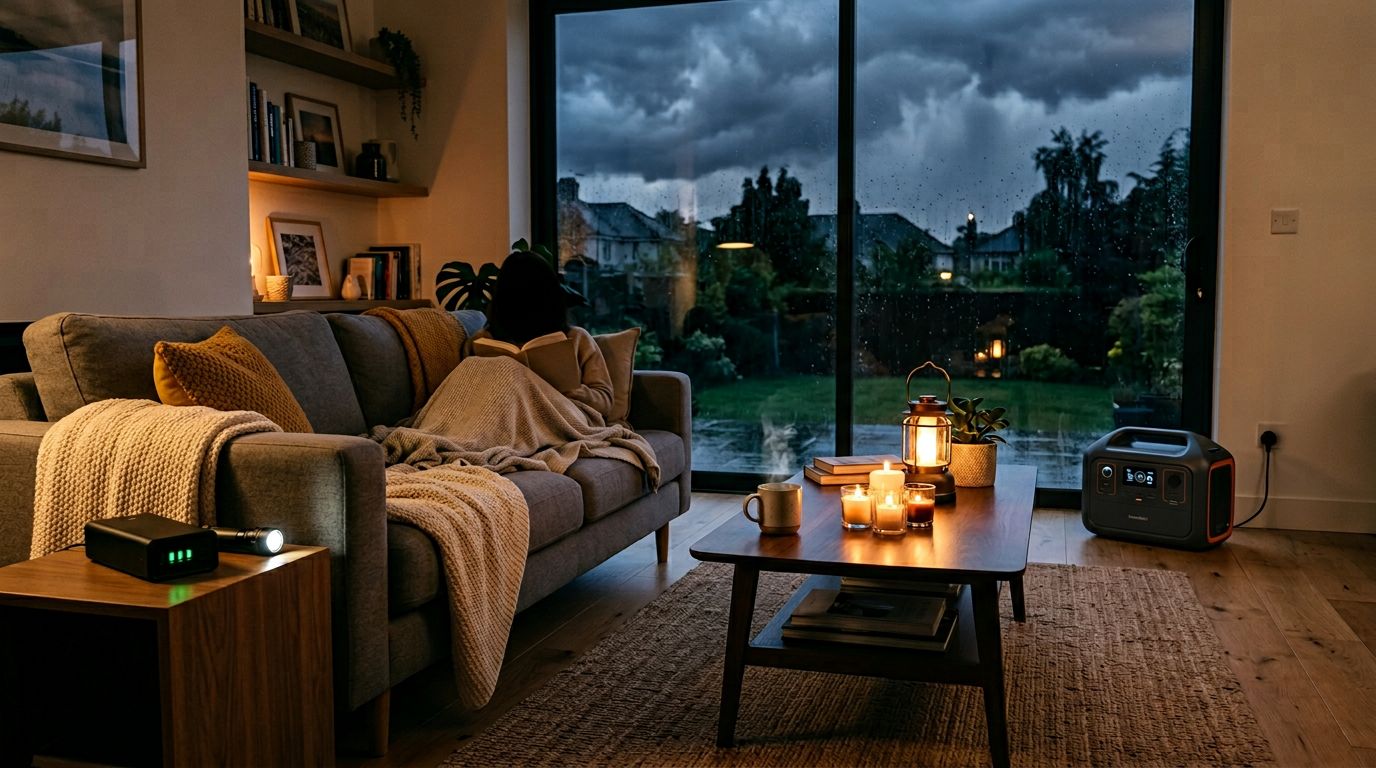
A power outage at 8 p.m. can make a normal home feel oddly prehistoric. Yet good power outage preparedness has more to do with small fixes than stockpiles.
That matters more now because outages are rising. March 2026 tracking logged more than 210,000 outage events across 46 states, so a little planning is no longer only for storm-heavy places.
You don’t need a bunker, a wall of canned beans, or a new hobby in amateur radio. You need a plan that fits a normal home and a normal budget.
Start with the power outage you are most likely to have
Most people are preparing for a bad evening or a rough weekend, not a month off-grid. Usually the cause is plain old bad luck, a storm, a heat wave, a blown transformer, or a tree that chose the wrong wire. That realistic frame keeps spending in check and helps you focus on what will make life easier fast.
Plan for 24 to 72 hours first. If you can cover that window, short outages feel annoying rather than chaotic. The American Red Cross power outage safety guide is useful because it stays grounded in daily needs, such as lighting, food, communication, and medicine.
Plan for two days before you plan for the apocalypse. That is the gap most homes actually need to close.
Then walk through your place with the lights off. Notice the tripping spots, the useless flashlight with dead batteries, and the phone charger that only works when the outlet does. If someone in the home uses refrigerated medicine or powered medical equipment, that issue moves to the top of the list.
Renters and apartment dwellers have a few extra wrinkles. Elevators may stop, entry systems may fail, and electric stoves may become expensive kitchen decor. Families with kids, older adults, or pets should also plan for comfort, because fear grows faster in a hot, dark, noisy home.
Build a small kit that makes power outage preparedness easy
A good kit fits in one bin or on one shelf. When supplies spread across the house, half of them vanish by the time you need them. Keep the plain essentials together: flashlights, batteries, a fully charged power bank, water, shelf-stable food, a first aid kit, and any daily medicine that would be hard to replace in a hurry.

Keep one light near every bed, not only in the closet by the hallway. In a real outage, nobody wants to play treasure hunt with a dying phone battery. That battery bank may matter even more than the flashlight, because your phone becomes your news source, weather update, map, and way to tell family you are fine.
It also helps to stock the items people forget until the room goes dark. A manual can opener, spare pet food, wet wipes, cash for a store with a dead card reader, and a paper note with key numbers can save a lot of swearing. PG&E’s general outage safety page has a practical family checklist, and the advice travels well beyond its service area.
Candles deserve less love than they get. They look charming for about five minutes, then they create work and risk. Battery lanterns and headlamps are safer, easier, and far less dramatic.
Make your home easier to live in during a power outage
Most outage misery comes from friction. The fridge gets opened every ten minutes. The phone dies first. Nobody remembers how to open the garage, and dinner turns into dry cereal by flashlight. A few simple habits cut that chaos down fast.
Start with food and water. Keep a few meals that need little or no cooking, and store water you will rotate instead of forgetting in a dusty corner. During the outage, keep the refrigerator and freezer closed as much as possible, because every peek lets the cold escape and shortens the life of what is inside.
Then set up the house for comfort. Pick one room where people can gather, use battery lights, and stay warmer or cooler together. In summer, close blinds before the heat builds. In winter, shut doors to unused rooms and pile on blankets. Children usually do better with a simple routine and familiar snacks than with long talks about emergency readiness.
Safety rules matter more than extra gadgets. Keep generators outside and well away from doors and windows. Never use a grill, camp stove, or oven to heat the home. The CDC’s guidance on power outage health risks is worth reading because carbon monoxide can build fast and without warning.
Also unplug sensitive electronics if the outage drags on, and leave one light switched on so you notice when power comes back. If you see a downed line, stay far back and report it. When traffic lights are out, slow down and treat the intersection with care. The best outage plan is the one that makes the whole event boring.
Preparation starts to feel reasonable once you cut out the movie version of it. A bin in the closet, a charged battery, a plan for food, and a few safety rules will carry most homes through the outage they are most likely to face.
That is the heart of power outage preparedness. When the next storm or grid hiccup hits, you’ll want ordinary systems that still work, even in the dark.


