
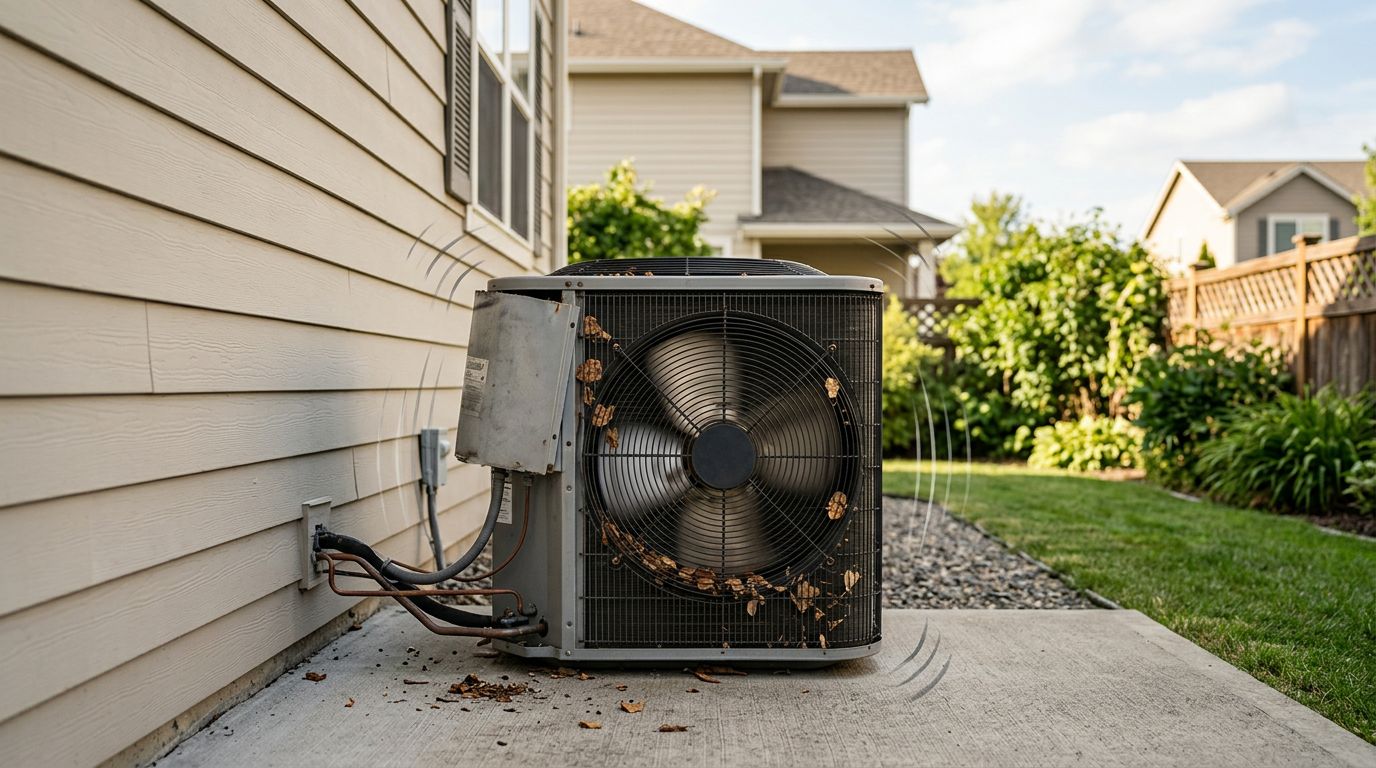
A loud outside AC unit can turn a peaceful afternoon into an unexpected mechanical concert. While some noises are normal for your outdoor unit during start-up, others may indicate a loose part, a tired motor, or a underlying issue that shouldn’t wait until next week.
The trick is noticing what kind of noise you hear and when it happens. A loud outside AC unit isn’t always an emergency, but it is your system asking for attention. By learning to identify these sounds early, you can take the right steps to prevent a total system failure.
Key Takeaways
- A steady hum and the sound of rushing air are usually normal. However, a screeching noise, a grinding sound, or a repeated banging noise indicate a potential problem.
- Loose panels, yard debris, and an uneven condenser pad can make your outdoor unit much louder than it needs to be.
- Always turn the system off before inspecting anything near the fan or electrical components.
- If you notice burning smells, smoke, potential electrical issues, or a tripped circuit breaker, contact a professional immediately.
- A professional HVAC technician can accurately diagnose the difference between a minor repair and serious compressor issues before the noise leads to a complete system failure.
Start by Separating Normal AC Sounds From Trouble
Your outdoor unit, also called the condenser, has a noisy job. It moves heat away from your indoor unit, powers a large fan, and contains a compressor that operates under significant pressure. Because of these moving parts, it will never be completely silent.
A healthy unit often makes a low electrical hum while it runs. You may hear air moving through the top grille as the condenser fan pulls air through the system. You might hear a clicking sound once when it starts or stops. On a hot day, the sound may seem more prominent because the system runs longer and works harder to keep your home cool.
Heat pumps can be even more theatrical. During the winter, a heat pump may make a brief whooshing sound when it changes modes or enters a defrost cycle. That noise can be surprising, but it is not automatically bad news.
The concern begins when the sound is new, sharp, irregular, or loud enough to interrupt a conversation on the patio. If your unit has always had a mild hum but now sounds like a shopping cart rolling down stairs, something has changed.
Dirty condenser coils can also make the condenser work harder. Leaves, grass clippings, cottonwood fluff, and windblown debris block airflow around the unit. This guide to noisy AC units explains how blocked condenser coils can contribute to louder operation.
Listen from a safe distance. Does the noise happen only when the fan starts? Does it continue after the fan is running? Does it appear during every cooling cycle? Those small details help narrow the cause.
A familiar sound that becomes louder is usually more useful than a mysterious sound you only hear once.
What Different Outdoor AC Noises Can Mean
The noise itself isn’t a perfect diagnosis, but it can point you in the right direction. Pay attention to the sound, the timing, and whether the unit still cools your home normally.
| Sound you hear | Common cause | What to do |
|---|---|---|
| Rattling noise | Loose components, debris, uneven pad | Inspect with power off |
| Screeching noise | Failing fan motor bearings | Turn it off and arrange service |
| Grinding | Mechanical issue or compressor issues | Shut down the system |
| Buzzing noise | Electrical issues, failing contactor | Have it checked promptly |
| Banging noise | Loose fan blades, damaged parts | Turn it off and call for help |
| Hissing noise | Refrigerant leak or pressure issue | Persistent hissing needs service |
A rattling noise is often the least alarming sound. Sheet metal panels can loosen over time, or other loose components may vibrate during operation. A screw may work its way out, or a twig can get caught in the grille. Even a slightly uneven concrete or composite pad can make a normal vibration sound much louder.
A screeching noise deserves quicker attention. Modern central air conditioners do not usually have belts in the outdoor unit, so the sound often points to worn-out bearings within the fan motor or another moving part that is struggling. Letting it run can turn a simple motor replacement into a larger, more expensive repair.
Grinding is one of the sounds you do not want to debate with yourself. The outdoor fan may be rubbing against its housing, or you may be dealing with a significant mechanical issue. In more serious cases, compressor issues may be to blame. Switch the thermostat off and do not keep restarting the system to see if the sound disappears.
A buzzing noise is harder to pin down. While it can come from a loose panel, it can also stem from electrical issues, such as a failing contactor. If the buzzing noise is unusually loud, the fan won’t start, or the unit trips the breaker, leave it alone and call an HVAC professional.
Then there is the awful banging noise. This often indicates loose fan blades striking the inside of the cabinet, though a compressor with damaged internal parts can also make a heavy metallic sound. Neither is a good candidate for a do-it-yourself repair.
Finally, a hissing noise typically points to a refrigerant leak or an issue with pressure equalization. Because refrigerant is vital to the cooling process and the gas can be harmful, a hissing noise requires prompt professional attention.
Homeowners often describe their own outdoor unit noises in forums, including this discussion about a loud condenser in a small backyard. The details vary, but one pattern is common: the longer a bad noise continues, the less likely it is to remain a simple fix.
Safe Checks Before You Call for AC Service
You can perform several sensible checks as part of your regular maintenance to identify loose components or minor obstructions without opening electrical panels or disassembling the condenser. Start by turning the thermostat to off and wait until the fan has stopped completely. If you need to work close to the equipment, always switch off power at the outdoor disconnect or the appropriate circuit breaker.
Look around the cabinet first. Remove leaves, sticks, mulch, and anything leaning against the unit. Shrubs should not crowd the coil, though the exact clearance depends on the manufacturer instructions. A condenser needs room to pull in air to function efficiently.
Check the outside panels and top grille for loose screws or brackets. You can tighten an obvious loose exterior screw if the power is off and the screw belongs to a simple access panel. However, do not remove the service panel, touch wiring, or reach through the fan guard. The capacitor inside an outdoor unit can hold a dangerous electrical charge even after power is disconnected.

If the coil is visibly dirty, rinse it gently with a garden hose after shutting off power. Spray from the outside toward the cabinet at low pressure. Do not use a pressure washer, as it can flatten the delicate aluminum fins and create a new airflow problem.
Check whether the unit seems level. A condenser should not rock when you lightly press the cabinet. Soil can settle under the pad, especially after heavy rain or winter freezing, and an uneven base can cause vibration that travels through the cabinet, nearby fence, or wall. While checking the base, inspect the refrigerant lines to ensure they are secure and not vibrating against the unit or the home structure.
It also helps to check the indoor air filter. A clogged filter will not usually cause a loud outdoor rattle, but restricted airflow impacts indoor unit performance and can make the whole system work harder. If you want a visual refresher before cleaning around the condenser, this outdoor AC noise troubleshooting video shows the kind of debris homeowners often find.
When a Loud AC Unit Needs Immediate Attention
Some noises can wait for a weekday appointment. Others should stop the cooling cycle now to prevent a total system failure.
Turn the system off if you smell burning plastic, hot wiring, or a strong electrical odor. You should also shut it down if you see smoke, repeated sparks, or a breaker that trips again after being reset once. When a breaker trips, it is addressing underlying electrical issues; it is simply doing its job to protect your home.
Stop the unit if the fan is not spinning but the compressor is still making a loud hum. This often points to a failing capacitor, which prevents the fan motor from engaging. If the compressor continues to run without proper airflow, it can quickly overheat. This is an expensive way to find out that a fan motor needed a simple repair, and catching it early can help you avoid major compressor issues later on.
Call a professional HVAC technician when grinding, hard banging, or constant screeching continues. Also make the call if the unit is icing up, blowing warm air indoors, or making a hissing sound that does not stop after a few seconds.
A professional HVAC technician can inspect the fan motor, capacitor, contactor, compressor mounts, refrigerant pressures, and electrical connections. These components are not safely diagnosed by sound alone, no matter how confident a neighbor may be.
Age matters too. An older condenser may be louder because its internal parts have years of wear behind them. Still, age does not automatically mean replacement. A loose panel on a 15-year-old unit is still just a loose panel, but having an expert evaluate the noise ensures you are not overlooking a problem that could lead to a system failure.
Frequently Asked Questions
Is it normal for my AC to make any noise at all?
Yes, it is perfectly normal for your outdoor unit to make a low electrical hum and the sound of rushing air while it runs. Because the condenser contains a compressor and a large cooling fan, it will never operate in total silence, but these sounds should be consistent and steady.
Can I fix a loud AC unit myself?
You can safely perform basic maintenance like clearing yard debris from around the cabinet or tightening loose exterior panels if the power is completely disconnected. However, you should never attempt to disassemble internal components or touch electrical wiring, as capacitors can hold a dangerous charge even when the unit is turned off.
When does a noisy AC become an emergency?
If you hear grinding, screeching, or heavy banging, or if you notice burning smells, smoke, or a tripped circuit breaker, you should shut the system down immediately. Operating a damaged unit can turn a relatively simple motor or capacitor repair into a catastrophic compressor failure, which is significantly more expensive to fix.
How often should I inspect my outdoor unit for potential noise issues?
It is a good idea to perform a quick visual inspection of your condenser at the start of every cooling season and after severe weather. Keeping the area clear of leaves, sticks, and overgrown shrubs prevents airflow restrictions that can make your unit work harder and run louder than it should.
A Quieter Unit Starts With the Right Response
You should never have to tolerate a loud outside AC unit that sounds like it is struggling to function. While a soft hum, the steady movement of air, and an occasional clicking sound are all part of normal operation, noises like grinding, squealing, or electrical buzzing deserve a closer look.
The safest first move is simple: turn the system off, clear away any obvious debris, and listen for consistent patterns. Remember that regular maintenance is the most effective way to prevent these alarming sounds from developing in the first place. By staying proactive, you can ensure a minor issue remains a small, affordable repair rather than turning into a hot and expensive surprise during the peak of summer.
This post may contain affiliate links. If you make a purchase through these links, I may earn a small commission at no extra cost to you.


