
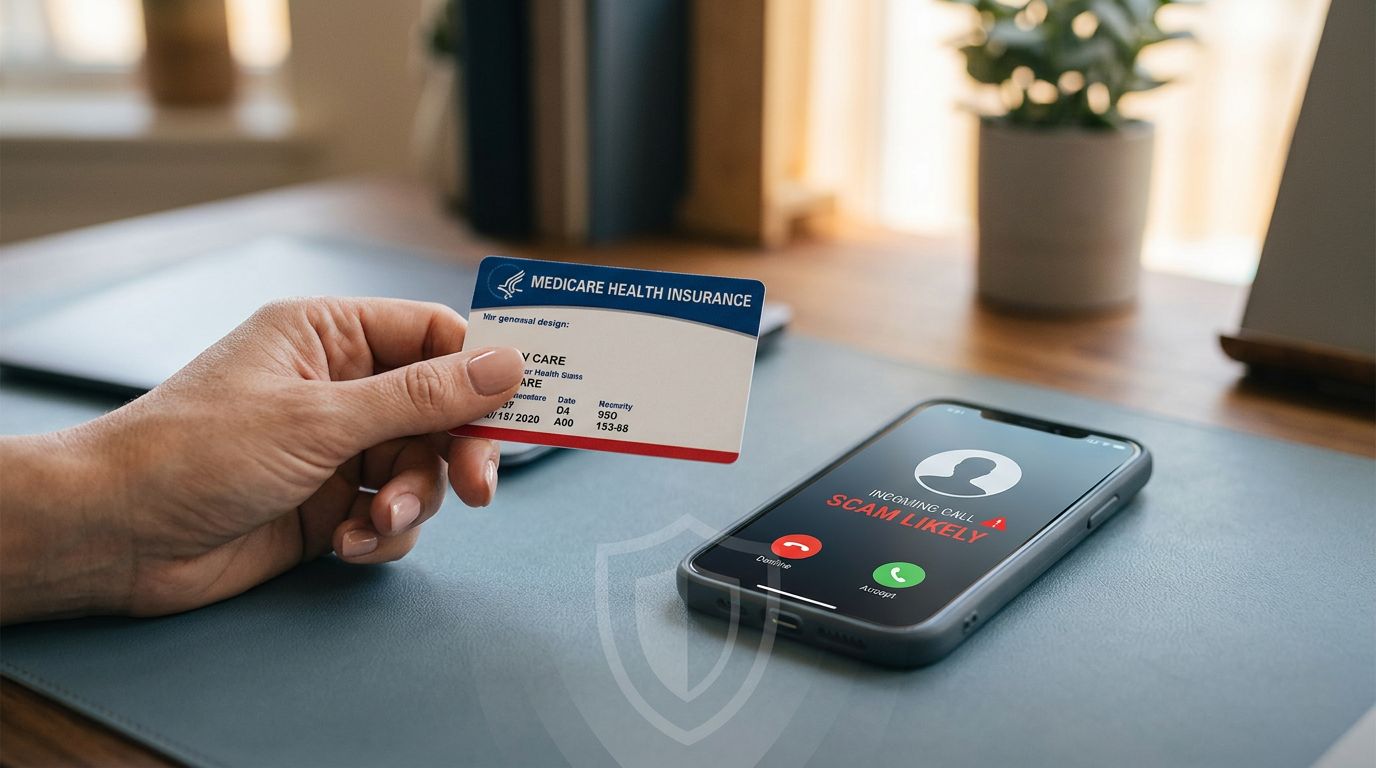
A phone call that starts with “This is Medicare” can sound ordinary, right up until the caller asks for your card number. That is how many people get pulled into a Medicare card scam. These attempts do not always start with a dramatic threat; instead, they often begin with a calm voice and a small request that seems routine.
If you have ever wondered whether a caller was legitimate, you should trust that instinct immediately. The safest move is to slow the moment down, as most scams fall apart the second you stop rushing. Taking a pause is the best way to ensure you are not handing over your personal information to someone looking to exploit it.
Key Takeaways
- Recognize the pattern: Medicare will never cold-call you to demand private information, threaten to cancel your benefits, or ask for payment over the phone.
- Slow down the interaction: Scammers rely on artificial urgency to bypass your judgment; if a call feels rushed or suspicious, hang up immediately.
- Verify through official channels: Never share your Medicare number with an unexpected caller. If you are concerned, verify the request by calling 1-800-MEDICARE or your plan provider directly using a trusted, verified phone number.
- Act quickly if compromised: If you have shared personal or financial information, contact Medicare, your bank, and relevant insurance providers immediately to freeze accounts and report the incident.
When the first contact already feels off
The quickest way to judge a Medicare-related interaction is simple: did you ask for it? If you receive unsolicited phone calls out of nowhere and the person wants personal information right away, the odds are already bad.
Real Medicare business usually gives you room to breathe. You may get mail first. You can verify a number. You can hang up and call back through an official channel. A scammer hates all three. These fraudulent attempts often peak during Medicare open enrollment, when beneficiaries are already expecting news about their coverage.
That matters because Medicare does not cold call you to demand private information. It also does not text or email asking you to pay for a new card, confirm your Social Security number, or hand over bank details. The Federal Trade Commission offers clear guidance on protecting your personal information, warning that any unsolicited request for sensitive data is a major red flag.
Another clue is tone. Honest customer service sounds boring. Scam calls sound urgent, flattering, or slightly theatrical. “Your coverage is at risk.” “You’ve been selected.” “This special card upgrade expires today.” That is not routine administration; that is pressure with a tie on.
A lot of people get tripped up because the caller sounds polished. Some even use caller ID spoofing to make the number look legitimate, or they may already know your name and address. That does not prove anything, as personal details are easy to find or buy. What matters is what they ask for next.
If someone contacts you first and wants your Medicare number before you have verified them, stop there.
The same rule applies to texts and emails. A message may look official, but if it pushes you toward suspicious links or asks you to confirm account details, treat it like a stranger at the door asking to see your wallet. Polite smile, firm no.
The red flags have a pattern
Scammers change scripts, but they rarely change strategy. They want urgency, confusion, and information, preferably in that order.

One common pitch is the fake card problem. The caller claims your new Medicare card needs to be replaced, your new Medicare card needs an upgrade, or your new Medicare card must be activated. Then comes the hook: a fee, a confirmation number, or a request for your Medicare number and other personal details. Medicare does not charge you to unlock a card over the phone.
Another favorite is the freebie. Examples include genetic testing claims or medical equipment claims that promise you expensive items at no cost. These offers sound generous, but the real goal is to steal your Medicare number. Once a scammer has it, they may try to commit billing fraud or combine it with other data for identity theft.
Threats are just as common. If the caller says your benefits will end today unless you act now, hear the alarm for what it is. Real agencies do not force life-changing decisions in a panic-filled phone call. Furthermore, the Social Security Administration will never call you to ask for a Social Security number over the phone.
This quick comparison can help when the script is moving fast:
| What they say | What it usually means |
|---|---|
| “You need to pay for a new Medicare card.” | Fake fee, fake deadline |
| “You qualify for free supplies if you verify your number.” | Bait for personal information |
| “Your benefits will be canceled today.” | Pressure tactic |
| “Click this link to confirm your card details.” | Suspicious links |
The internet version has its own tells. Bad spelling, awkward grammar, odd web addresses, and suspicious links that do not look right are classic warning signs. So is any message that asks for your Social Security number, bank account, or credit card because of a supposed Medicare update. You should also regularly monitor your Medicare Summary Notice or your Explanation of Benefits documents to check for any signs of fraudulent activity.
A scammer’s best friend is haste. Their second-best friend is embarrassment. They want you to feel too rattled to think and too foolish to ask someone else. Do not hand them either.
How to slow the moment down before you answer
You don’t need a perfect fraud radar. You need a short script and the nerve to use it.
When a caller starts asking questions, say, “I don’t give personal information or my Medicare number on unexpected calls. I’ll contact Medicare myself.” Then hang up. No debate, no explanation, no long goodbye. A real representative won’t object to verification. A scammer usually will.
The same idea works by text and email. Don’t tap the link. Don’t reply “STOP” if the message looks suspicious. Don’t download an attachment to see what it’s about. Delete it, or save a screenshot first if you want to report it.
If you’re unsure, step sideways instead of forward. Use a phone number from your Medicare paperwork, your plan documents, or the official customer service line, 1-800-MEDICARE, which is managed by the Centers for Medicare and Medicaid Services. You can also reach out to your local SHIP office for state-specific guidance and support. That one small pause can save you from a big mess.
This is where caregivers can help without taking over. Create one house rule: no Medicare number, no Social Security number, and no bank account information given out during an unexpected contact. Not on the phone, not by text, not by email. A simple rule beats a complicated speech, especially when someone is tired or caught off guard.
It also helps to remember how little you owe a stranger. You do not owe them speed. You do not owe them trust because they sound official. You do not owe them a polite answer to a rude request.
A caller may say, “But I need to verify your identity first.” Fine. They can wait while you verify theirs, through an official number you found yourself. That little flip in the script often ends the conversation fast.
If you already shared information, act in this order
First, don’t sit there feeling sick and embarrassed. Plenty of smart people get fooled when a call sounds routine. Shame wastes time, and time matters more.
If you gave out your Medicare number or other personal information, call Medicare right away at 1-800-MEDICARE. The official Medicare fraud reporting page explains how to report fraud, and the Centers for Medicare and Medicaid Services oversees this entire process to ensure your information is handled correctly. If you prefer local guidance, the Senior Medicare Patrol can help you report fraud and sort out what happened.
If bank account information was involved, call the bank or card issuer next. Protecting your financial details is critical because this type of theft can quickly lead to identity theft. Ask them to watch for fraud, freeze or replace the card if needed, and note the incident on your account. The faster you move, the fewer doors stay open.
After that, start checking your Medicare Summary Notice, Medicare Advantage plans, and other insurance paperwork for charges or services you don’t recognize. Strange billing can indicate fraudulent activity or Medicare fraud that may show up later. Think of it like checking the windows after someone tried the front door. The problem may not stop at the first attempt.
If the scam arrived by text, email, or a fake-looking website, save what you can without clicking anything else. A screenshot, phone number, or copy of the message may help when you report it. Then block the number and move on.
Families should talk about this before the next call comes in. Not with a lecture, and not with that tone adult children sometimes get by accident. More like a fire drill. Calm, clear, and practiced. Decide who gets called if something feels off, and establish a clear plan on how to report fraud together. Keep official numbers in one place so you are prepared to report fraud whenever necessary. Make the response automatic.
The biggest mistake after a scam attempt is thinking it was probably nothing. Maybe. But if personal information changed hands, treat it like a real problem and respond early.
Frequently Asked Questions
Can I be charged for a new Medicare card?
No, Medicare cards are issued free of charge and you will never be asked to pay a fee to receive, activate, or replace your card. Any caller claiming you owe money to update your coverage or unlock your benefits is a scammer.
How can I tell if a caller is really from Medicare?
Medicare will not initiate contact to ask for your Social Security number, bank details, or Medicare number. If you are unsure, hang up and dial the official Medicare customer service line at 1-800-MEDICARE to speak with a legitimate representative.
What should I do if I think I was targeted by a scammer?
If you received a suspicious call but did not share any information, simply hang up and block the number. If you accidentally provided your Medicare or personal information, contact 1-800-MEDICARE immediately to report the fraud and monitor your account statements for unauthorized activity.
Is it safe to click links in emails about my Medicare benefits?
You should never click links in unexpected emails or text messages claiming to be from Medicare, as these often lead to phishing sites designed to steal your credentials. Delete these messages immediately and only access your Medicare account by typing the official website address directly into your browser.
Conclusion
A Medicare card scam typically follows a predictable pattern involving surprise contact, artificial urgency, offers of free equipment, or threats of service termination. The most effective way to protect your personal data is not to engage in a debate, but simply to pause.
When an individual or service contacts you asking for your Medicare number before you have verified their identity, end the conversation immediately. Always use an official contact number that you have sourced yourself from a trusted, verified website. Making this pause a standard habit is your best defense. By staying vigilant and refusing to share your private information, you can ensure that Medicare fraud remains preventable.


