
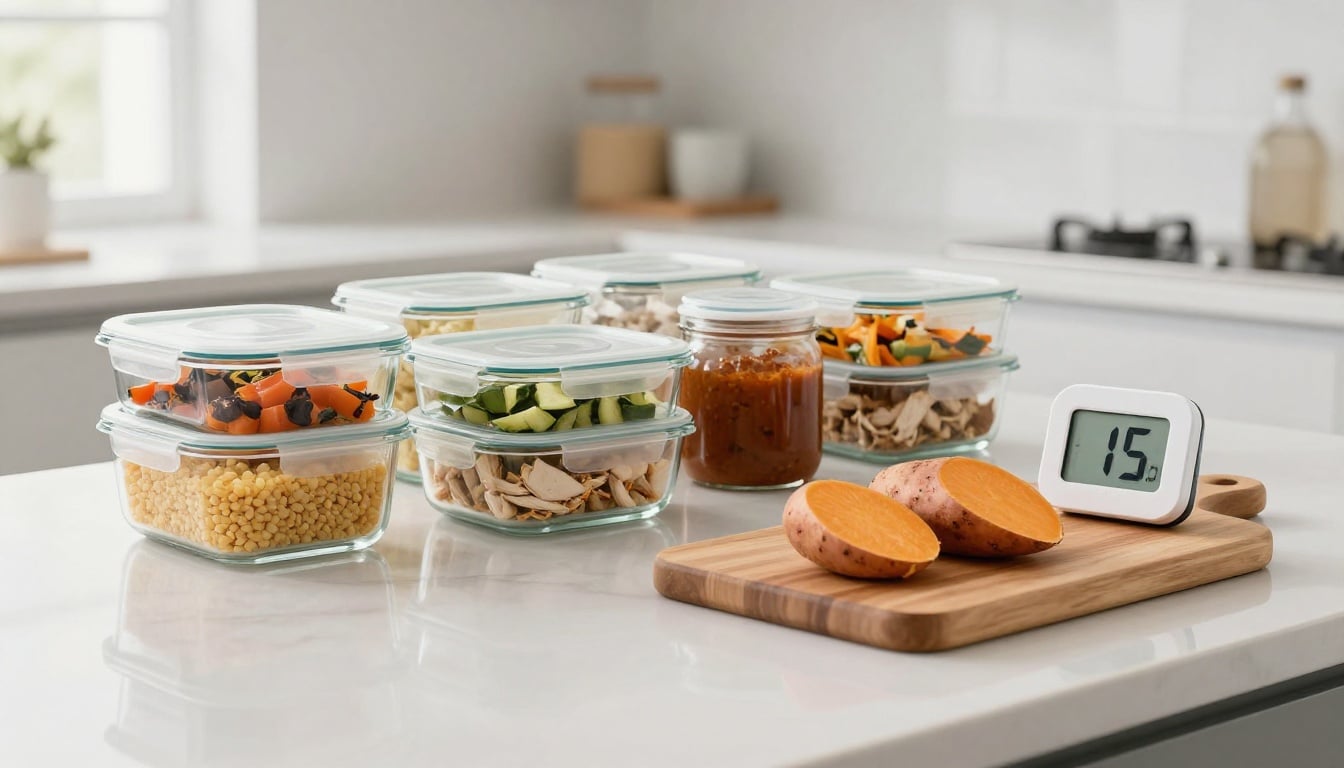
You know the moment. You open the fridge, and a stack of containers looks back like a silent group project. Half a sweet potato. A lonely cup of rice. Chicken that was exciting on Tuesday and suspiciously quiet by Friday.
Meal planning fixes that, without turning you into a person who owns matching glass containers and says things like “my prep window.” This is a small system for busy cooks who want dinner in 15 minutes, reducing food waste to save money on budget meals, and fewer sad, repeat meals.
The trick is to stop thinking in “leftovers” and start thinking in “parts.” Parts from your leftovers can be recombined, fast.
Set up a 5-minute leftover inventory (before hunger wins)
Reverse meal planning starts with a quick scan, not a spreadsheet. Give yourself five minutes, set a timer if you need the drama, and pull out leftover ingredients from your refrigerator and pantry that can become a “part”: cooked grains, roasted veg, proteins, sauces, soups, even that bagged salad you keep meaning to eat.
Then, sort your leftover ingredients by what the food can do, not what it was.
- Base: Rice, pasta, potatoes, bread, tortillas, greens.
- Protein: Chicken, beans, tofu, eggs, deli turkey, lentils.
- Veg: Roasted, steamed, raw, frozen, pickled.
- Finishers: Salsa, pesto, yogurt, cheese, nuts, hot sauce, lemon.
If you’re not sure what’s still safe, keep it boring and follow standard guidance. The USDA’s page on leftovers and food safety is the straight talk version. For a quick refresher on storage windows and reheating, leftover safety tips from EatRight are also easy to follow.
Here’s the part that makes the plan stick: label like you’re helping Future You, who will be tired and lightly annoyed. Turn spontaneous finds into premeditated leftovers with these steps.
- Name it: “Taco chicken,” “rice,” “roasted broccoli.”
- Date it: Month and day is enough.
- Portion it: Divide into individual portions or serving sizes. One-meal containers beat one giant mystery tub.
- Tag it: Add “BOWL,” “PAN,” or “SOUP” so it already has a destination.
Now you’re not “eating leftovers.” You’re choosing ingredients.
The 15-minute rules that keep your leftover meal prep honest
The reason leftovers fail isn’t effort. It’s friction. One container needs reheating. Another needs chopping. A third needs “a quick sauce,” which turns into 20 minutes and a sink full of regret.
So your plan needs rules that protect your time. Think of them like bumpers at a bowling alley, not a lecture.
| 15-minute rule | What it means in real life | If you can’t do it, then… |
|---|---|---|
| Start the clock early | The timer starts when the fridge opens, not when the pan heats | Put it back and choose a simpler format |
| One heat source only | Microwave + skillet, or oven + sheet pan, not three burners and a side quest | Freeze leftovers in a meal-sized portion for the freezer |
| One chop item max | Slice scallions or a cucumber, not a full cutting-board event | Use frozen veg or bagged salad |
| Sauce is allowed, cooking isn’t | A sauce can be store-bought, or stirred in cold | Save “real cooking” for another day |
Storage matters here, too. If your refrigerator temp is off, your whole plan gets risky fast. The American Heart Association has a clear guide on how to store and how long to keep leftovers, including the basics on chilling quickly and keeping food cold enough.
One more sanity saver: pick a default “finish” you always have from pantry staples. It can be jarred salsa, teriyaki, pesto, plain yogurt plus lemon, or even just butter and garlic powder. When the finish is predictable, the meal feels intentional, not accidental.
Choose one of three salvage formats (and repeat it all week)

A leftover meal plan works best when it’s built on formats, not recipes for leftovers. Formats don’t care if you have fajita veg or steamed broccoli. They just need a base, a protein or veg, and a finish. This approach shines with leftovers from batch cooking and ties right into smart meal planning.
Mix and Match Bowls (the no-drama dinner)

Bowls are the fastest way to make leftovers feel new, because the order does the work. Warm base first (microwave rice, reheat potatoes, toast bread into croutons). Add the star of the show (your protein) and veg, warm or cold. Finish with something bold and something crunchy.
A sample salvage move: rice + leftover chicken + whatever veg is closest to the front of the fridge (even smaller portions that started as side dishes), then salsa and crushed chips. It’s not fancy, but it’s dinner that didn’t require negotiations.
If the bowl needs more “meal” energy, add a fried egg, canned beans, or shredded cheese. Those are 15-minute-friendly upgrades.
Sheet-Pan Remix (when you want crispy edges)
This one is for nights when you want food that feels cooked, but you don’t want to actually cook. Heat the oven, throw leftovers on a sheet pan, and let high heat reheat and re-crisp at the same time.
Roasted veg, cooked sausages, tofu, chickpeas, even leftover rice can work if you spread it thin and let it dry out a bit. Add a quick sauce after it comes out, not before, or it’ll steam instead of brown.
If you want inspiration for the “throw it on a pan” mindset, Allrecipes has plenty of ideas in their roundup of super-easy sheet pan suppers. Your version can be looser, the point is the format, not perfection.
Soup or Skillet Save (when the fridge is a patchwork)
When leftovers are too small to stand alone, soup or a one-pan skillet brings them back into the group chat. Start with a simple base: broth, bouillon and water, or a jar of pasta sauce thinned with water. Add the leftover ingredients that need saving, and keep the heat gentle until it’s hot.
This format loves frozen veg, canned beans, and any cooked grain that’s drying out. It also forgives odd combos. For fruit leftovers or specific leftover greens, smoothies are a quick alternative. The goal isn’t a signature soup, it’s a warm meal that uses what you already have. Parts not used right away make great freezer meals, so try freezing leftovers in the freezer.
Finish with acid (lemon, vinegar, pickles) and something rich (cheese, yogurt, olive oil). That’s the difference between “I ate leftovers” and “I ate on purpose.”
Conclusion
A good leftover meal plan isn’t strict, it’s kind. You’re giving yourself a way to eat well on busy nights, without throwing food away or ordering out again. This system reduces the need for a complex shopping list, so make “shop your shelves” a regular habit. Pick one format for tomorrow, label two containers tonight, add these salvage nights to your meal schedule or meal planning template, and let the 15-minute rules be the referee. These meals are perfect for breakfast and lunch the next day, and they will save money while improving your meal planning. What’s in your fridge or freezer that could be dinner with one sauce and a timer?


