
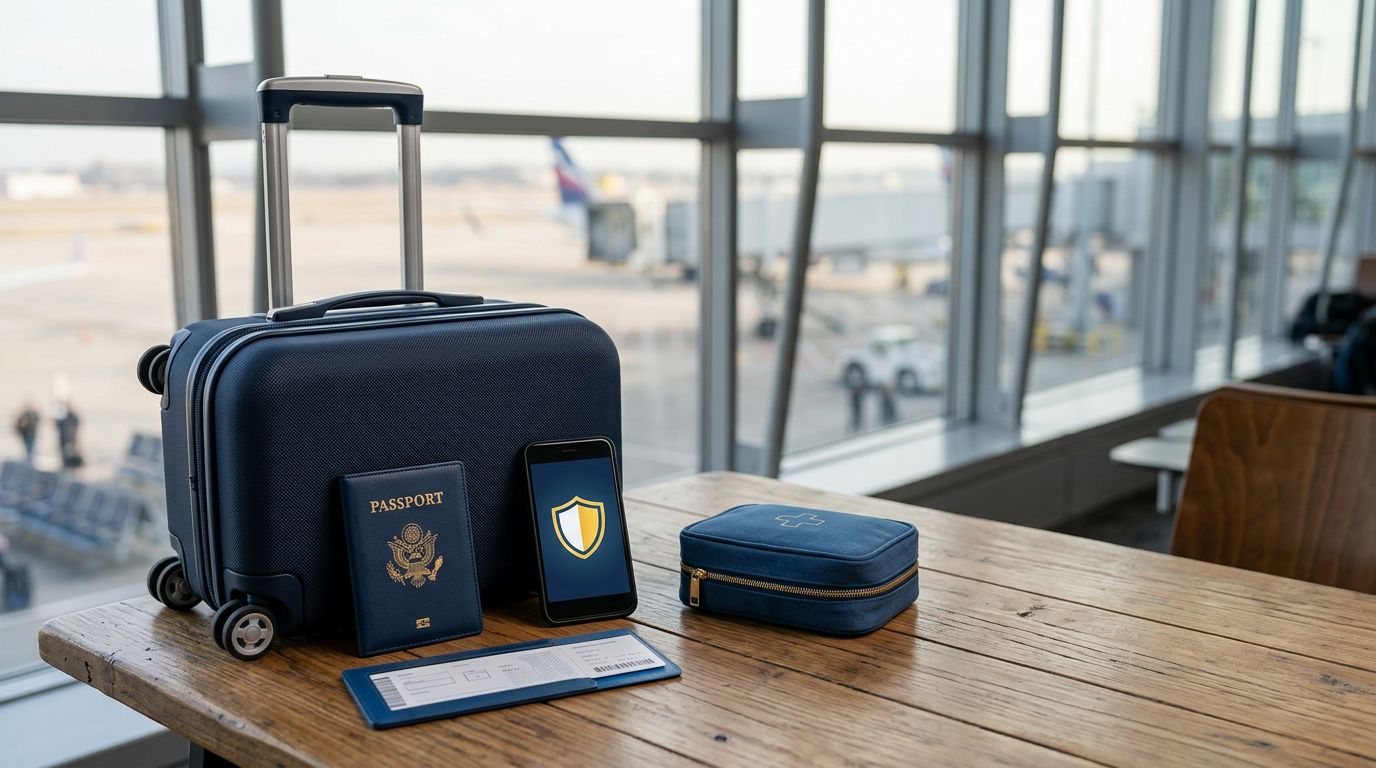
A three-night trip can go sideways as easily as a three-week one. Unexpected flight cancellations, missed connections, a broken ankle on a wet cobblestone street, or a passport that vanishes between the airport cafe and the gate doesn’t care how brief your itinerary is.
That is why short trip travel insurance deserves more than a rushed click at checkout. Whether you are looking at single trip travel insurance or a more comprehensive travel insurance plan, the right choice is not necessarily the biggest one. It is a travel insurance policy that covers the expensive problems you cannot comfortably pay for yourself.
A little reading before you buy can save a lot of unhappy reading from a hospital waiting room.
This post may contain affiliate links. If you make a purchase through these links, I may earn a small commission at no extra cost to you.
Key Takeaways
- Emergency medical expenses and medical evacuation coverage usually matter more than a refund for a low-cost hotel booking.
- Check what your health insurance and credit card already cover before paying twice for the same benefit.
- Buy based on your destination, activities, health needs, and prepaid costs, not simply the number of travel days.
- Read the exclusions before purchase, especially for pre-existing medical conditions, alcohol-related incidents, and adventure activities.
- Compare several travel insurance plans side by side, because looking at various single trip travel insurance options reveals that similar prices can hide very different limits.
Start With the Financial Risks You Cannot Absorb
Short international trips have a funny way of making people careless. You are only going to Lisbon for a long weekend, or maybe you are spending four days in Tokyo. What could possibly happen if you skip buying single trip travel insurance?
Quite a lot, unfortunately. The trip may be short, but an overseas medical bill does not politely shrink to match it. Neither does an emergency air ambulance, a last-minute flight home, or dealing with unexpected missed connections and flight cancellations after a family emergency.
The U.S. State Department’s travel insurance guidance makes an important point: many domestic health plans, including Medicare, may not care for care outside the United States. Do not assume your usual card in your wallet will solve a problem abroad.
Start by separating costs into two piles when evaluating your travel insurance cost. The first is money you have already paid and would lose if you cancel, protected by trip cancellation coverage and trip interruption coverage. The second is the frightening pile: emergency medical expenses, medical evacuation coverage, and an unplanned trip home through travel medical insurance.
For a short trip, the second pile often matters more.
A $300 flight is annoying to lose. A hospital stay in another country can be life-altering expensive.
If your trip is mostly refundable and inexpensive, you may not need generous cancellation cover, though you still want strong medical and evacuation protection. When browsing travel insurance plans, this is the part of a policy that keeps a bad day from becoming a financial mess.
How Does One Compare Short Trip Travel Insurance?
Carrying out a thorough travel insurance comparison is less glamorous than choosing restaurants, but it takes less time than you think. Put two or three plans next to each other when shopping for single trip travel insurance, and look at the actual benefits, not the cheerful heading on the sales page.

A good comparison begins with four questions. How much emergency medical expenses does it provide? What is the medical evacuation coverage limit? Does it cover cancellation and interruption for the costs you have prepaid? What conditions or activities does it exclude?
Here is how the common coverage types fit a single trip travel insurance break.
| Coverage type | What it can help with | When it matters most |
|---|---|---|
| Emergency medical | Treatment for illness or injury abroad | Every international trip |
| Medical evacuation coverage | Transport to suitable care or home when medically necessary | Remote destinations or serious illness |
| Trip cancellation coverage | Non-refundable prepaid costs before departure | Expensive, fixed bookings |
| Trip interruption coverage | Unused trip costs and extra transport after departure | Family emergencies or covered illness |
| Trip delay coverage | Meals, lodging, and essentials after a long covered delay | Flights with tight connections |
| Baggage and personal effects | Lost, stolen, damaged, or delayed belongings | Trips with checked bags or costly gear |
Do not treat every category as equally important. A weekend in a major European city with a backpack needs something different from a five-day hiking trip in Patagonia with adventure sports coverage. The first traveler may care most about medical care and delayed bags. The second should study evacuation wording with a cup of coffee and a serious face.
A travel insurance comparison marketplace such as InsureMyTrip can make this easier because it lets you view travel insurance plans from more than one insurer. You are looking at the details behind a standard travel insurance policy, including limits, deductibles, waiting periods, and exclusions.
The cheapest travel insurance cost is not always poor value. It may be perfectly suitable if your bookings are refundable and your main concern is emergency medical care. It is poor value if it excludes the reason you need insurance in the first place.
Check Your Existing Cover Before Buying More
Before you buy single trip travel insurance, take ten minutes to check what you already have. This is not thrilling work, but neither is paying for duplicate coverage.
Your health insurer can tell you whether it pays for non-emergency care overseas, emergency treatment abroad, or medical evacuation. Ask about the deductible, the network rules, and whether you must pay first and claim later. “Worldwide coverage” can sound reassuring until you find it only applies to urgent care, which means you might still need dedicated travel medical insurance.
Credit cards are another common source of confusion. Some premium credit card travel insurance includes trip delay coverage, baggage delay, rental car coverage, or accident cover when you pay for travel with that card. Benefits vary sharply by card and country. Many cards offer little or no medical coverage, which is the gap you should take most seriously when evaluating different travel insurance plans.
Also check your airline, tour operator, and accommodation rules. If your hotel allows cancellation until 48 hours before arrival, you do not need a travel insurance policy built around recovering that hotel cost. Keep the receipt anyway. Claims departments enjoy paperwork with the devotion of a cat to an unattended suitcase.
Be honest about pre-existing medical conditions. Some policies exclude them outright. Others offer a waiver if you meet conditions and purchase your travel insurance policy soon after making your first trip deposit. If you are dealing with pre-existing medical conditions, do not leave single trip travel insurance until the night before you fly.
Match the Policy to the Place and the Plan
Destination changes the calculation. A city break in a country with reliable public hospitals is not risk-free, but it is different from a scuba trip, ski holiday, cruise, or visit to an isolated island.
The usual policy wording may exclude mountaineering, off-piste skiing, motorcycling, scuba diving beyond a stated depth, or organised sports. “I only planned to rent a scooter for an afternoon” will not be much comfort after an accident. Check whether you need a helmet, the correct licence, or optional add-on coverages within your single trip travel insurance.
Cruise passengers should pay attention to medical evacuation coverage and missed-port coverage, which are often found in dedicated cruise travel insurance policies. Travelers heading into the mountains should look at the evacuation limit and rescue exclusions. Anyone taking expensive camera equipment or a laptop for work should check per-item limits under baggage and personal effects. A policy may advertise a generous total limit while paying only a modest amount for one lost item.

Photo by DΛVΞ GΛRCIΛ
Consider the local realities too. In some places, private clinics may expect payment before treatment. In others, public services may help quickly, but returning home could be difficult after a serious injury. The emergency travel assistance provided by comprehensive travel insurance plans is useful only if you call it early, before making costly arrangements on your own.
This is where single trip travel insurance becomes less about trip length and more about exposure. Two nights in another country can include a ski slope, a rental car, a ferry crossing, and a foreign emergency room. That is plenty of opportunity for modern travel insurance plans to matter.
Read the Parts That Usually Cause Arguments
Insurance is a contract, which is a polite way of saying the important parts are often printed in language nobody reads until they need money. Read them now.
Pay attention to the definition of a covered reason within your trip cancellation coverage and trip interruption coverage. Ordinary anxiety about flying, a change of heart, or deciding a forecast looks dreary usually will not qualify. Upgrading your travel insurance policy to include cancel for any reason protection may offer wider flexibility, but it often costs more and may reimburse only part of your prepaid expenses, while a standalone cancel for any reason option requires careful timing during checkout.
Look for the policy exclusions around alcohol and drugs, pre-existing medical conditions, pregnancy-related care, civil unrest, pandemics, and high-risk activities, particularly if you need robust emergency medical expenses protection. The wording differs from insurer to insurer. Do not rely on a friend who says their travel insurance policy paid for something similar in 2019. Their plan, medical history, and claim details are not yours.
Also check the claims process. Save booking confirmations, receipts, medical notes, police reports for theft, and notices from airlines when delays occur. A claim without evidence is like trying to explain a missing passport to border control, technically possible, but not a situation you want.
For many travelers, single trip travel insurance is purchased once and forgotten. Keep the insurer emergency number in your phone and send it to the person traveling with you. If you are traveling alone, leave your itinerary and policy details with someone at home.
Choose a Provider After Comparing the Policy, Not the Logo
Well-known names can be a useful starting point, not a finishing line. In 2026 comparisons, when you look at travel insurance quotes, providers including Travelex, Seven Corners, Allianz Travel Insurance, Tin Leg, IMG, Travel Insured International, and Berkshire Hathaway Travel Protection appear regularly. That gives you a list to investigate, not a reason to buy blind, especially when you are reviewing various travel insurance quotes.
Request travel insurance quotes for the same trip cost, destination, ages, and dates to accurately evaluate your potential travel insurance cost. Then compare the medical limit, evacuation benefit, deductibles, and exclusions line by line across different travel insurance plans. If one option for comprehensive travel insurance costs slightly more but has far stronger medical cover, it may be the sensible choice.
Deciding on the overall travel insurance cost often comes down to frequency. Annual travel insurance can work out well if you expect to take three or more overseas trips in a year, and comparing annual travel insurance options helps frequent flyers save money. For one short international break, a dedicated single trip travel insurance plan is usually easier to judge, and single trip travel insurance keeps things simple. Buying annual travel insurance or single trip travel insurance soon after booking matters if cancellation cover or a pre-existing condition waiver is important to you, and reviewing comprehensive travel insurance early ensures you lock in your benefits.
Frequently Asked Questions
Do I really need short trip travel insurance for a weekend getaway?
Yes, a brief itinerary does not protect you from unexpected events like medical emergencies, flight cancellations, or lost luggage. Overseas medical bills and emergency evacuations can be extremely costly regardless of how short your trip is.
Does my health insurance or credit card already cover me abroad?
Many domestic health plans and credit cards offer limited or no coverage outside your home country, particularly for emergency medical evacuation. Always check your existing policies and card benefits before assuming you are fully protected.
What should I prioritize when comparing travel insurance plans?
Emergency medical expenses and medical evacuation coverage are generally the most critical components of any policy. You should also evaluate cancellation costs, destination risks, and policy exclusions rather than focusing solely on the cheapest price.
Final Thoughts
The right short trip travel insurance is not the policy with the longest list of benefits. It is the one that protects you from the costs you could not easily handle, while fitting the trip you are actually taking, and keeping the overall travel insurance cost reasonable. When looking at a single trip travel insurance option, the final travel insurance cost often reflects how well the plan balances everyday protections with peace of mind.
Check your existing cover, put medical and evacuation protection first, and read the exclusions before you pay. Whether you need travel medical insurance for emergency medical expenses, trip cancellation coverage for sudden flight cancellations, or a travel insurance policy with optional add-on coverages like cancel for any reason, thorough travel insurance comparison helps you find the right fit. A short holiday should leave room for a lost afternoon, not a financial disaster.


