
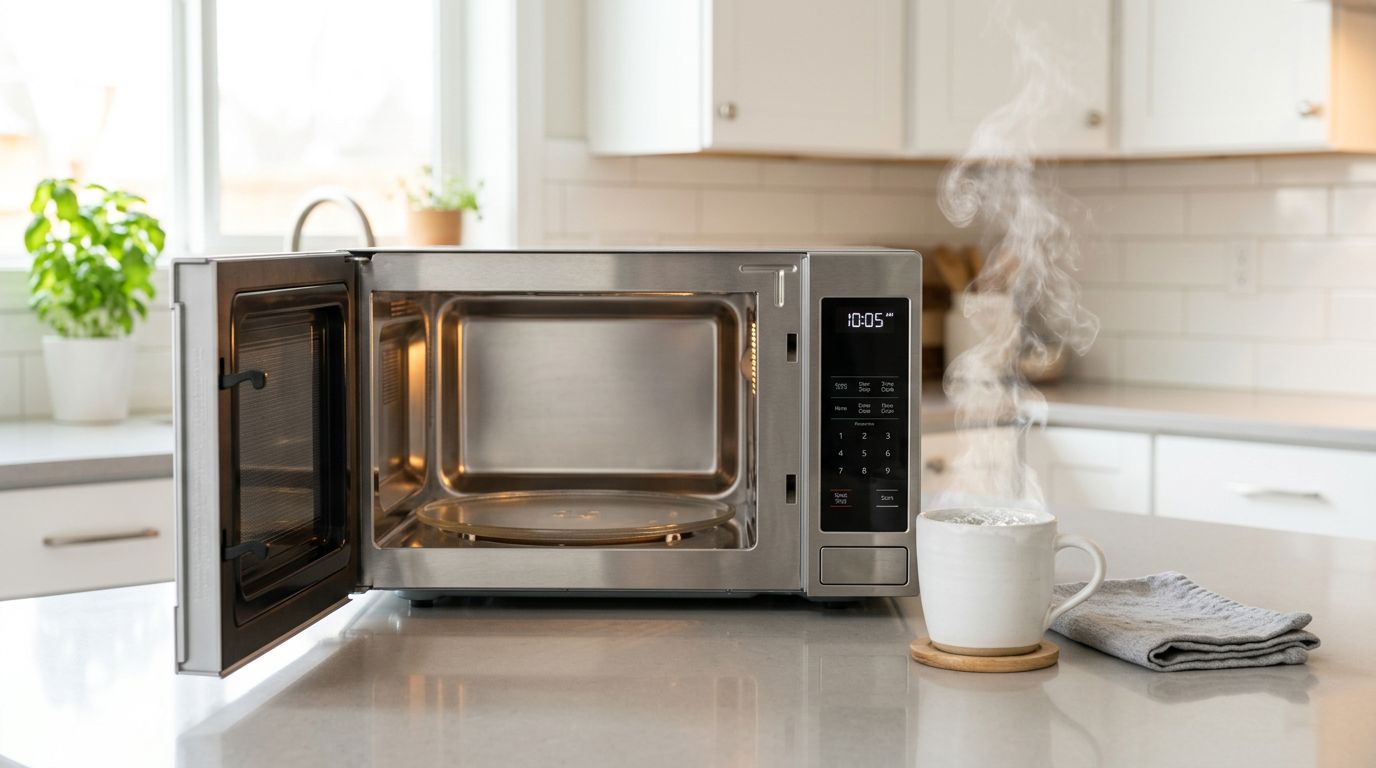
If your microwave looks fine with the door shut, you’re not alone. Most messes happen in secret, behind that tinted window, after one bowl of soup “gently” explodes.
The good news is you can clean microwave steam style, fast, with almost no scrubbing. A mug of hot steam softens dried food, loosens grease, and makes wipe-downs feel less like a punishment. It’s a small reset that fits into real life, even if you’re juggling dinner and a sink full of dishes.
Why a mug of steam works so well (and why it’s fast)
Steam cleaning works for the same reason a long shower fogs up a mirror. Warm water vapor lands on surfaces, then turns back into tiny droplets. In a microwave, those droplets soak into crusty splatters and dried sauces. As a result, the mess stops clinging like it pays rent.
Heat helps too. Microwaves warm the water in your mug quickly, and that heat spreads through the air inside the box. Grease softens, sugar turns less cement-like, and the ceiling splatter that used to laugh at your sponge suddenly wipes away.
A mug is also a smart choice for small kitchens. It’s easy to grab, easy to carry, and less likely to slosh than a wide bowl. If you’re a renter, it’s also gentle. You won’t need harsh sprays that leave odors behind or risk damaging the inside coating.
Steam isn’t magic, though. It’s more like soaking a pan before washing it. You’re giving the mess time to loosen, so your hands don’t have to fight it. If you want a second opinion from a food and home site that tests simple methods, The Kitchn’s lemon microwave cleaning method explains the same idea in plain terms.
Let the steam sit with the door closed for a minute or two. That “waiting” time is what replaces scrubbing time.
Choosing your steam mix: water, lemon, or vinegar
Plain water works, and it’s the easiest option. Still, a small add-in can help with smells and greasy film. The key is keeping it simple, because you’re cleaning a food appliance.
Lemon steam for fresh smell and light grime
Lemon is the crowd-pleaser. It makes the microwave smell clean without smelling like “cleaner.” The mild acid also helps with residue. If you already have a lemon that’s gone a bit sad in the fruit bowl, this is its moment. For a quick reference, Southern Living’s lemon microwave steps are close to what most home cooks do.
Use lemon when:
- The microwave smells like last night’s fish.
- You’re dealing with light splatter and want a fresher scent.
- You don’t want vinegar odor hanging around.
Vinegar steam for grease and stubborn odors
White vinegar has a stronger smell up front, but it fades. It’s a practical choice when the inside feels sticky or when popcorn smells have moved in permanently. Keep the ratio mild, because you’re steaming, not pickling.
Use vinegar when:
- You see greasy film on the walls or door.
- Tomato sauce splatters have dried into little red fossils.
- You need odor control more than “nice” scent.
If you like a vinegar approach, Practically Functional’s vinegar and steam method walks through the basics and matches the same low-effort idea.
Mug and safety notes that save headaches
Pick a microwave-safe mug, ideally ceramic, with a comfortable handle. Avoid anything with metallic trim. Don’t use a travel mug unless the label says microwave-safe, because some have hidden metal.
Fill the mug about halfway. Too little water can boil away, and too much can slosh when you pull it out. Also, set the mug on the turntable so it rotates and heats evenly.
The fast mug-of-steam routine (steam, wipe, done)
This is the routine when you want a clean microwave without turning it into a project. Read it once, then it becomes muscle memory.
- Set up the mug: Add water to a microwave-safe mug (about half full). For lemon, squeeze in a wedge and drop it in. For vinegar, add a small splash, then stir with a spoon.
- Heat until you get steady steam: Microwave on high until the water is steaming and the window looks foggy. In most microwaves, that’s a few minutes, depending on power.
- Let the steam work with the door closed: Wait 1 to 2 minutes before opening. This is the soaking step, just in air form.
- Remove the mug carefully: Use an oven mitt if the handle feels hot. Set it on a trivet or a thick towel.
- Wipe top to bottom: Start with the ceiling and walls, then move to the door and bottom. A damp microfiber cloth works well, because it grabs softened grime instead of pushing it around.
- Clean the turntable and ring: Lift them out, wash with dish soap in the sink, then dry and replace. If you’re in a hurry, wipe them well and wash later.
- Finish the edges and vents: Use a cloth around your finger to get the door seam and the front lip, where drips like to hide.
If the inside still feels tacky, repeat the steam for a shorter burst. Grease builds in layers, and sometimes the first steam only loosens the top coat.
For best results, keep your wiping cloth just damp, not dripping. Too much water can run into creases and make the job feel messier than it needs to.
Stuck-on splatters, smells, and a few gotchas
Some messes need a little extra patience, not extra force. Burned-on spots often respond to a second steam cycle plus a gentle scrub with a non-scratch sponge. If you still see a shadow stain, try a paste of baking soda and water on the cooled surface, then wipe it off after a few minutes. Skip abrasive powders or steel wool, because they can scratch the interior.
Odors can linger even after the walls look clean. In that case, wipe the door seal carefully, then steam again with lemon. Also check the waveguide cover (the small panel inside on some models). If it looks dirty, wipe it gently, because buildup there can cause smells and uneven heating.
A few safety points matter more than people think:
- Don’t add bleach or ammonia products. Heat plus fumes is a bad mix.
- Don’t seal the mug with plastic wrap. You want steam to escape.
- Don’t rush the removal. Steam burns feel dramatic, and they happen fast.
If you worry about whether steam is safe for microwaves, Homes & Gardens’ steam-cleaning guidance discusses the method and addresses common concerns, including when to avoid overdoing it.
Finally, once it’s clean, keep it clean with one small habit: cover foods that splatter. A paper towel or a microwave cover costs seconds, and it saves you from repeating the “tomato sauce ceiling” saga.
Conclusion
A mug of steam turns microwave cleaning from a chore into a quick reset. Heat the water, let the fog loosen the grime, then wipe while everything is soft. The best part is that this clean microwave steam method fits busy schedules, small kitchens, and low patience. Next time you hear a suspicious “pop” in the microwave, you’ll know exactly how to undo it in minutes.


