
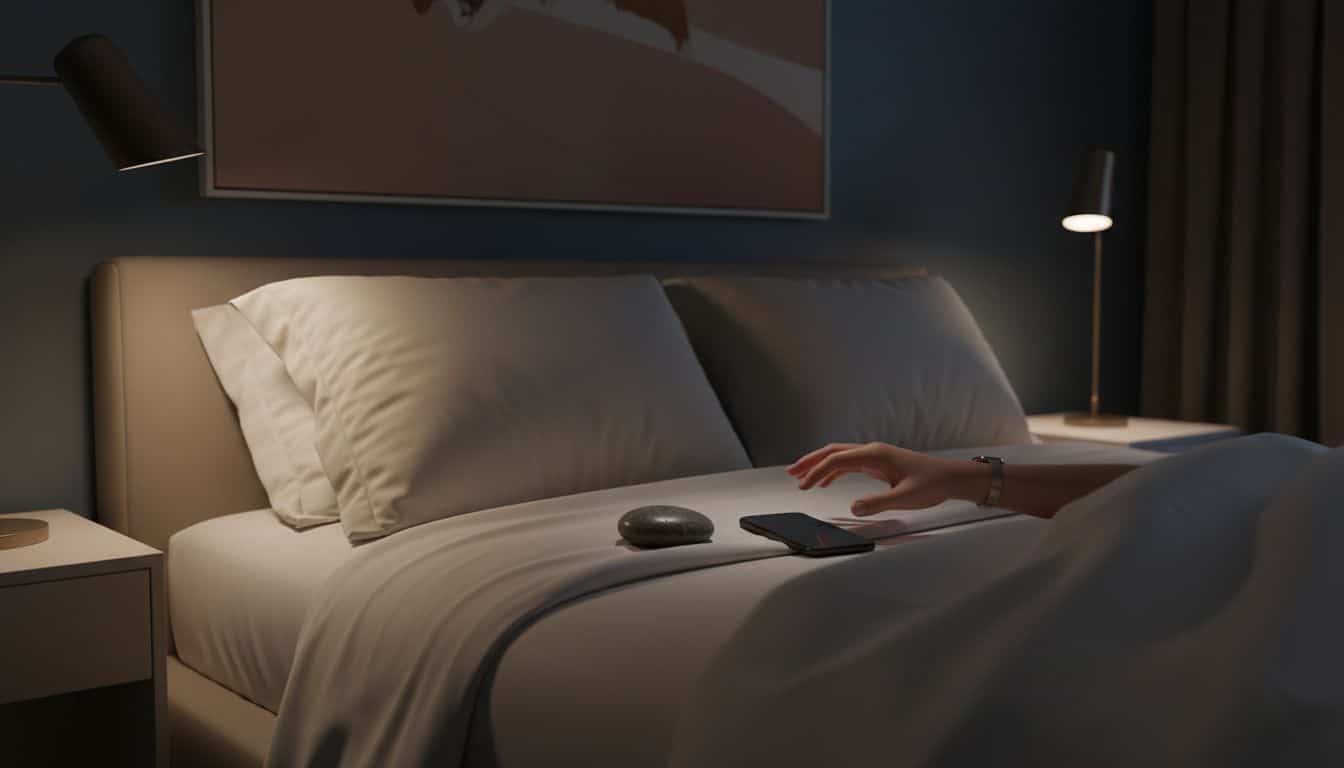
You don’t start doomscrolling in bed because you love suffering. You start because you want a soft landing after a loud day. Then your brain gets handed an endless buffet of social media outrage, gossip, tragedy, negative news, and hot takes, delivering those addictive dopamine hits it craves. Suddenly it’s 12:41 a.m. and you’re negotiating with yourself like a tiny lawyer, all while harming your mental health.
If you want to stop doomscrolling without turning bedtime into a daily willpower contest, you need a small interruption that shows up at the exact moment your habit kicks in. Not a big plan. Not a 12-step routine. One physical cue you can’t “forget” because it’s literally in your hand.
Why doomscrolling in bed feels irresistible (even when you’re exhausted)
At night, your brain is tired but still alert. Doomscrolling keeps your nervous system in a state of high alert. That mix is sneaky. You have less patience for friction, and your guard is down, so the phone wins by default. Also, bedtime can be the only quiet time you “own,” which makes scrolling feel like stolen freedom.
That’s why doomscrolling often tags along with revenge bedtime procrastination, a compulsive behavior in the habit loop. You’re not only chasing information, you’re chasing control. NPR has a helpful explanation of this pattern in its Life Kit piece on reclaiming a good night’s sleep.
There’s another reason it sticks: doomscrolling is a slot machine that fits in your palm. Refresh, scroll, refresh, maybe the next post will make you feel calmer, or at least “caught up,” instead of fueling more catastrophizing. Late-night usage disrupts your internal clock and circadian rhythms. The problem is that “caught up” is a horizon that moves every time you walk toward it.
So willpower fails for a boring reason. Your bed is acting like a cue. You get under the covers, your brain expects phone time, and your hand reaches before you decide. That reach is the moment to target, because it’s earlier than the spiral.
Stimulus control means the bed should cue sleep, not phones. A good cue doesn’t lecture you. It interrupts you. It creates a tiny pause, like a speed bump on a road you’ve been driving half-asleep.
The one physical cue that works: put a rubber band around your phone
A rubber band sounds almost silly, which is part of why it works. Your phone feels smooth and familiar, like a river stone you’ve carried for years. Add one thick rubber band and it becomes slightly annoying. Slightly different. Slightly harder to mindlessly use. This rubber band serves as a competing behavior that disrupts the automated reach for your phone.
Most importantly, it changes what your fingers feel. Doomscrolling thrives on autopilot. A tactile mismatch breaks the spell long enough to spark mindful awareness so you can make a choice.
Treat the rubber band like a tiny “Do you mean to be here?” sign for your thumb.
This idea shows up in practical advice, including SELF’s piece on what to do if you can’t resist your phone before bed. The point is not punishment. The point is a cue that arrives right when you need it.
Here’s how to set it up so it actually helps you stop doomscrolling in bed, not just give you a rubber band to lose in the sheets:
- Choose the right band: Pick a thicker rubber band (or a silicone band) that feels obvious in your grip. If it’s flimsy, your brain will ignore it.
- Make it “night-only”: Put the band on at a set time, like right after you plug in your phone. That timing matters because it ties the cue to your wind-down routine.
- Use it as a decision point: When your hand closes on the phone and you feel the band, pause to cultivate mindful awareness and say (quietly, in your head), “Not in bed.” Then place the phone down.
- Give your hands a substitute: Keep a paperback, a sleep mask, hand lotion, or a notebook for a brain dump on your nightstand. Your hands want a small ritual, so give them one.
The rubber band is not magic. It’s a physical reminder that interrupts the loop. Once interrupted, you can do the next tiny action, which is putting the phone out of reach while creating a sleep-friendly environment.
How to make the cue stick on anxious nights (when you want the scroll most)
The hardest nights aren’t the easy ones. They’re the nights when your mind is loud, blue light from electronic devices spikes cortisol levels, and scrolling feels like sedation. So the cue has to work even when you’re not feeling disciplined, supporting your mental health amid the noise.
First, keep the goal small as part of your wind-down routine. You’re not trying to become a different person by tomorrow. You’re trying to protect the part of the night that decides how tomorrow feels. That means you need a “minimum viable win.”
On good nights, the rubber band technique, a form of cognitive behavioral therapy (CBT) inspired thought-stopping, can mean: feel band, put phone down, lights out. On rough nights, it can mean: feel band, put phone down, do deep breathing exercises for two minutes, then reassess. Your brain usually stops bargaining once it feels safer.
It also helps to tighten your digital environment for better sleep hygiene and less screen time so the cue has backup. Screens close to sleep can keep your brain keyed up, especially if the content is stressful or if you’re exposed to bright light. If you want context on why scrolling in bed can disrupt rest, Sleep.me has a straightforward overview of how phone scrolling affects sleep quality.
A few common snags show up here, and they’re worth handling with zero drama:
If you use your phone as an alarm, keep it, but change its location to a designated phone landing spot. Put it phone outside the bedroom or across the room on a dresser, still within earshot, to maintain the bed zone. The cue still works because you’ll feel the band when you pick it up, but you won’t be able to scroll while half-asleep under the covers.
If you worry you’ll miss something urgent, set a boundary that doesn’t rely on hope. Allow calls from key contacts, silence everything else, and remind yourself that most “emergencies” arrive as push alerts because an app wants engagement, not because your life is on fire.
If your hand goes for the phone without thinking, pair the cue with one simple script: “Phone stays parked.” Say it like you’re talking to a puppy, not prosecuting yourself in court. Gentle works better at midnight.
Finally, make sure the rubber band doesn’t become a toy. If you catch yourself snapping it and continuing to scroll, that’s not failure, it’s feedback. Move the phone farther away before you get into bed, then let the band be the reminder if you still reach for it.
Conclusion: the cue is small, but the pause is everything
How Does One Stop Doomscrolling In Bed Using One Physical Cue? To stop doomscrolling in bed, you don’t need a new personality. You need a pause at the exact point your habit starts. This simple shift improves sleep quality and protects your mental health from the noise of social media. A rubber band around your phone is that physical cue; it adds friction, changes the feel of the device, and reminds you, in the moment, that bed is for sleep.
Try it for seven nights. Keep it boring, keep it kind, and keep the win small. Then notice what happens when your last doomscrolling, sparked by this physical cue, becomes your last breath, not your first regret tomorrow morning.


