
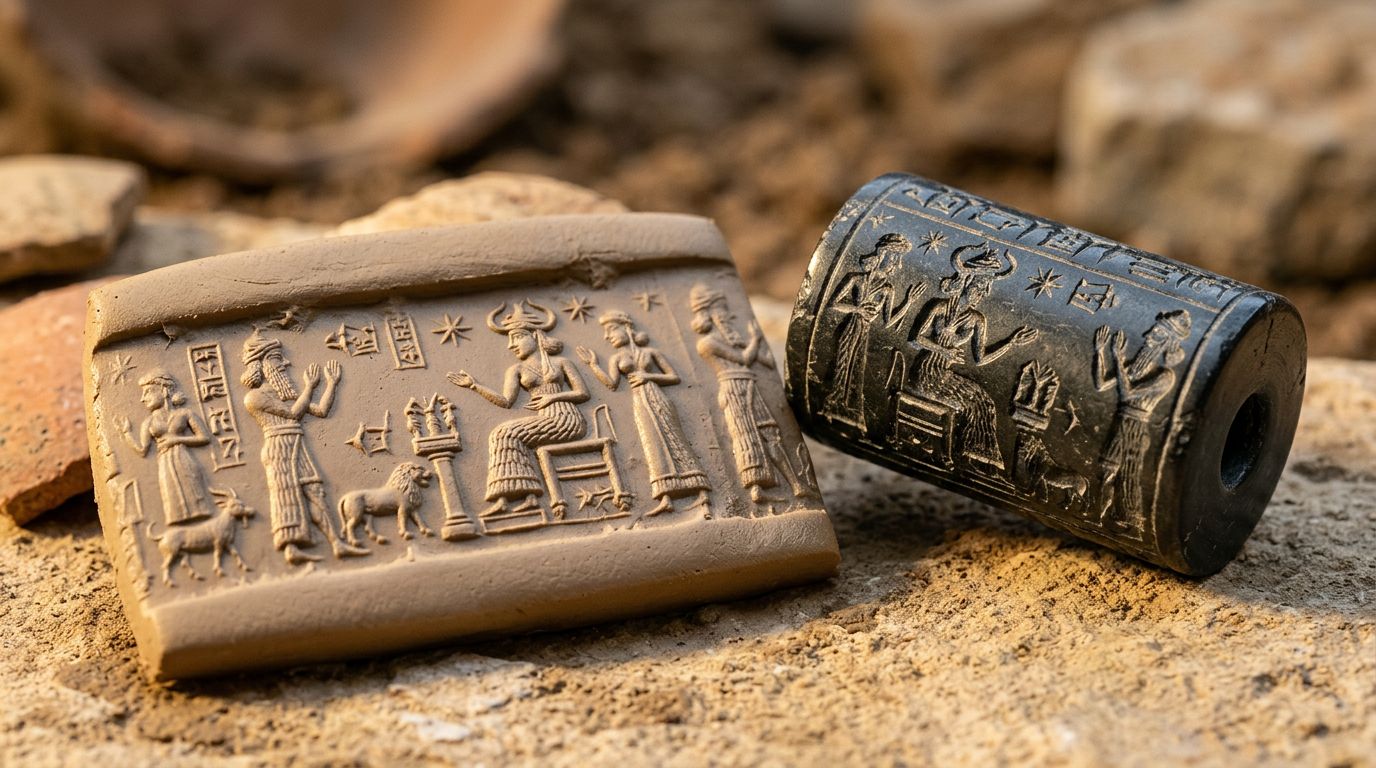
A cylinder seal can fit in your palm, yet in ancient Mesopotamia it could authenticate goods, secure storage, or connect a person or institution to an action. Sumerian cylinder seals were small carved cylinders rolled across wet clay, leaving a long, repeating image behind.
They look decorative at first. Then you notice the gods, animals, feasts, fights, and tiny human figures pressed into the clay. Each cylinder seal had a practical job, making these little objects feel less like museum trinkets and more like ancient paperwork with better artwork.
This post may contain affiliate links. If you make a purchase through these links, I may earn a small commission at no extra cost to you.
What Are Sumerian Cylinder Seals?
A cylinder seal was a small object, often stone, with images carved around its curved sides. Many were about the size of a thumb. A central perforation let a cord pass through, so someone could wear the seal around the neck or pin it to clothing.
To use a cylinder seal, a person rolled it over wet clay. The motion produced a continuous strip of imagery, much like a patterned paint roller across a wall. Unlike a stamp seal, its rolling surface could create a longer scene in one movement. That mark could help show who had handled a jar, door latch, or bundle.
A seal might be pressed into clay covering the stopper of a storage jar. It could cover the knot around a bale of goods. It might also be rolled across a cuneiform tablet or the clay envelope that held one. The carved object was distinct from the impression seal left in the clay, and a broken closure showed that somebody had opened it.
The Met’s hunting-scene seal and modern impression from the Metropolitan Museum of Art makes the basic idea easy to see. The British Museum’s collection offers a comparable example, showing an impression seal beside its clay impression. The carved cylinder itself can look hard to read. Its clay impression shows the full scene as it was meant to appear.

The seal was not a modern signature in the handwritten sense, but it did much of the same social work. As an administrative tool, a cylinder seal linked a person or institution to goods, documents, and specific actions. If goods arrived sealed, the seal impression could tell a warehouse official who had sent them and whether the package had been disturbed.
The First Cylinder Seals Appeared in Busy Cities
No one knows the name of the person who invented it. Ancient Mesopotamia did not leave us a cheerful tablet saying, “Good news, I have solved the stamp problem.”
The classic form became established in the late fourth millennium BCE, around 3400 BCE, during the Uruk period. The British Museum’s object record for an early seal dates it to around 3300 BCE, supporting this chronology. In ancient Mesopotamia, Uruk was a huge and growing city with temples, workshops, storehouses, trade, and records to manage. A stamp seal repeated a single design, while a cylinder seal covered a longer surface in one roll.
That mattered in a world of clay containers and documents, as administration during the Uruk period filled offices with records. A stamp seal still had its uses, but a rolling design made repeatable marks easier to check. The cylinder seal later spread across the ancient Near East and remained in use for more than three millennia.
Early designs can seem spare, with animals, geometric patterns, and groups of people. Later visual conventions grew more crowded, especially by the Old Babylonian period. Akkadian-period seals, for example, often show energetic scenes of gods, heroes, and animals. By the Old Babylonian period, inscriptions could identify a seal’s owner and sometimes name the owner’s father or profession.
How the Seals Were Made
A finished seal can look almost casual, as if somebody picked up a pebble and doodled on it. The work behind it was anything but casual. Hard stone does not take instructions well.
Stone, grit, and a hole through the middle
These objects belonged to a tradition of hardstone carvings. Materials ranged from common limestone and clay to serpentine, hematite, agate, chalcedony, and lapis lazuli. Softer materials were easier to shape. Harder stones held fine details and signaled status, especially when precious stones were available.
Hematite resisted wear and held crisp details. Its hardness made it demanding to cut. A polished hematite surface could look almost glassy. That dark polish gave hematite a distinctive visual effect.
The maker shaped a small blank into a cylinder, creating the body of a cylinder seal. Then came the central hole. Artisans used a bow drill with abrasive grit to start the opening from one end, then turned the bow drill from the opposite end. Turning the bow drill gradually brought both channels together. A biconical opening often reveals bow drill work.
Similar abrasive skills also appear in stone beads. The same methods helped makers shape stone beads, too. A seal, however, was not a bead, since its surface carried a rolled image.
The hole was practical. It let the owner thread the seal onto a cord or pin. It also kept the object close, which made sense when it could authorize goods or transactions.

The image had to be carved backward
The outer surface was engraved in intaglio, meaning the lines were cut down into the stone. This differs from relief carvings, where the design rises from the surface. Seal-cutters used small burins, drills, abrasives, and turning tools to remove material. Figures, animals, and symbols had to be arranged around a curved surface, without much room for error.
During the Old Babylonian period, some cutters favored denser scenes and more animated figures. A British Museum example shows how narrow perforations and crisp recessed lines depended on controlled cutting.
Before use, the completed cylinder seal was rolled across soft clay to test its positive impression.
Here is the part that catches many beginners. The engraved design is a negative image. The clay impression is positive. In intaglio, a recessed god, animal, or inscription becomes raised in that clay.
That reversal is the key to an impression seal. A raised god, animal, or inscription on clay began as a recessed cut in stone. The resulting impression seal preserves the positive form of that negative design.
The impression, not the cylinder alone, is the finished picture.
This explains why museum displays often show both. A small stone cylinder can hide its story until you see the clay impression beside it. A banquet-scene seal and its modern impression at the Metropolitan Museum of Art make that reversal plain.
A Seal Was More Than an Ancient Signature
A cylinder seal carried identity, but it was not only about personality. It supported the machinery of daily life. Temple officials, merchants, scribes, household managers, and people responsible for stored goods all had reasons to use one. A seal could express personal identity, but identity might also be institutional or tied to a role.
A repeated impression could mark ownership. It could show who had approved a shipment or witnessed an agreement. On a sealed jar or door, it made tampering visible. This was not product branding in the modern supermarket sense, but it did attach a recognizable mark to goods and authority.
The images also said something about the owner’s world. A worshipper facing a deity could express religious loyalty or involvement in religious rituals. A feast scene could suggest status or ritual. A heroic contest might show strength, protection, or a favorite myth. It is tempting to treat every figure as a secret code, but that can get silly fast. Context matters more than a single animal or pose.
An impression seal can identify an authorized act, but it does not always tell us who physically rolled the cylinder.
That distinction matters when people try to build a full biography from one object. Some seals have inscriptions, but many do not. In the Old Babylonian period, an inscription might identify an owner, his father, or his profession. The British Museum’s Adda seal offers an earlier example, pairing a named owner with a scene of deities.
A seal found in a grave may have been a cherished personal possession, a sign of office, or one piece of a group of grave goods. It may have been placed there with other grave goods for reasons we cannot recover. Burial context alone does not provide a full biography or hand us the owner’s life story on a clay platter.
Losing a cylinder seal would have been more than annoying. It could create a problem of trust. If the seal marked your authority over goods or documents, you needed others to recognize your replacement mark. Small objects can carry a lot of pressure. Anyone who has lost a house key five minutes before leaving understands the feeling.
How to Read a Cylinder Seal in a Museum
Start with the impression seal if one is displayed, and compare its rolled result with the cylinder seal itself when both are shown. Follow the scene as though unrolling a tiny comic strip, noting its direction of movement and its continuous design, unlike a stamp seal. Figures may repeat at the join, so there is not always a neat beginning and ending.
Then inspect material and workmanship, noting how dark serpentinite, pale limestone, blue lapis lazuli, dark hematite, and agate create different visual effects. Material may reflect availability, taste, skill, or wealth, while hard, glossy stone made a strong impression when rolled into damp clay. Notice whether the hematite is evenly polished and whether a bow drill shaped the central perforation. Compare the hole with stone beads; a museum label or technical analysis is stronger evidence than visual guesses about whether a bow drill shaped it.
Then ask what the seal was sealing, since a tablet, jar stopper, bundle, or door fastening each tells a different story. The seal impression may preserve clues about handling. The Met’s guide to cylinder-seal impressions from the Metropolitan Museum of Art shows details a still photograph can miss when comparing the carved cylinder seal with its result.
Finally, keep an eye on provenance and dating, because a recorded excavation history gives more to work with than a vague claim of origin. A British Museum collection record may identify an archaeological site and a date such as the Old Babylonian period. A British Museum collection search or Metropolitan Museum of Art object record may connect a findspot to a building, burial, tablet group, or grave goods.
Frequently Asked Questions
What is a Sumerian cylinder seal?
A Sumerian cylinder seal was a small carved cylinder, often made from stone, that was rolled across wet clay to create a continuous impression. It could identify a person or institution, authorize goods, secure storage, or mark a document.
How is a cylinder seal different from a stamp seal?
A stamp seal presses one design into clay, while a cylinder seal rolls a longer, repeating scene across its surface. The rolling motion made cylinder seals useful for marking tablets, jar stoppers, bundles, and door fastenings.
What do the images on Sumerian cylinder seals mean?
Scenes may show gods, animals, worshippers, feasts, heroes, or ritual activity. They can express religious loyalty, status, authority, or mythology, but one figure or symbol does not always have a single fixed meaning.
How were Sumerian cylinder seals made?
Artisans shaped stone into a small cylinder, drilled a central hole with abrasive grit, and carved the design into its curved surface using burins, drills, and other tools. The image was cut in intaglio, so its recessed lines produced a raised, positive image when rolled into wet clay.
What should I look for when viewing one in a museum?
Start with the clay impression if one is displayed, then compare it with the carved cylinder and follow the scene as though unrolling a tiny comic strip. Also note the material, central perforation, carving quality, inscription, object being sealed, and the seal’s provenance.
Final Thoughts
These small seals make ancient Mesopotamia feel close enough to touch. A cylinder seal joined art, trust, religion, trade, and administration in one small carved object.
The strongest way to understand one is to compare the carved object with its impression seal in clay. The roll in clay is where the seal comes alive.


