
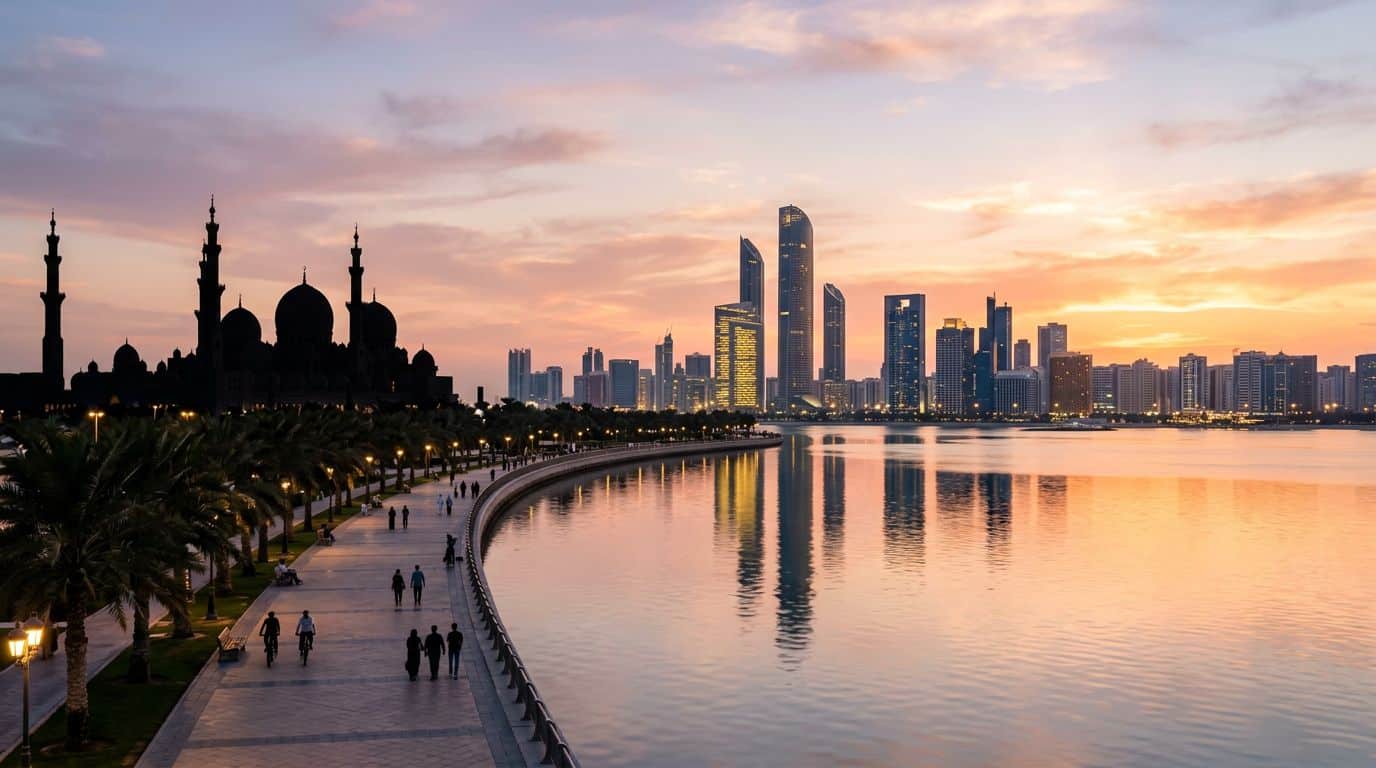
Some cities shout. Abu Dhabi doesn’t need to. It wins people over with space, light, calm roads, and a style that feels confident without showing off.
That matters on a first trip. You want the major sights, but you also want to know how the city moves, what deserves your time, and what to expect right now. Abu Dhabi rewards a steady pace, so it helps to start there.
Why Abu Dhabi feels easier than many capital cities
Abu Dhabi is the UAE’s capital, yet it often feels less hurried than visitors expect. The skyline is sleek, the roads are wide, and the neighborhoods give you room to breathe. If Dubai can feel like a fast edit, Abu Dhabi feels more like a long, well-framed scene.
That slower rhythm shapes the trip. You can pair a grand mosque with a quiet waterfront walk, then spend the evening over grilled fish or saffron rice without feeling rushed. Families tend to like that balance. So do first-time visitors who want culture and comfort in the same day.
Timing makes a big difference. For most travelers, October to March is the sweet spot for outdoor plans, and both the official best time to travel to Abu Dhabi guide and Lonely Planet’s seasonal advice point to milder weather in those months. In April 2026, the city is already hot, with daytime temperatures often reaching 35C to 40C. Because of that, early mornings and late afternoons are your friends.
Clothing matters too. Light fabrics help with the heat, but modest dress still shows respect, especially at religious sites. Carry water, sunglasses, and more patience than you think you’ll need. The sun in Abu Dhabi has a way of settling arguments quickly.
The Abu Dhabi sights that stay with you
Most trips begin with the Sheikh Zayed Grand Mosque, and that’s the right instinct. The building is immense, but it doesn’t feel cold. White marble, patterned courtyards, reflective pools, and the softness of the light give it a rare calm. Even people who arrive for the photos usually leave talking about the atmosphere.

Go early if you can. The heat is lower, the light is better, and the place has more breathing room. Allow time to move slowly. Abu Dhabi’s best landmarks reward attention, not speed.
After that, head to Louvre Abu Dhabi. The museum is strong before you even step inside because the dome creates shifting patterns of shade and light over the water. Inside, the collection mixes civilizations and periods in a way that feels clear rather than heavy. If you’re visiting in spring 2026, check the museum calendar before you go, because temporary exhibitions can shape how long you want to stay.
Then give yourself an outdoor counterpoint. The Corniche is perfect for a long walk, especially near sunset, when the skyline softens and the sea starts to pull your attention away from the towers. Saadiyat Island adds beaches and a more relaxed resort feel. If you want a fuller picture of the city’s style, add Qasr Al Watan or an evening drive past the lit skyline.
Abu Dhabi works best when you mix one major landmark with one slower hour outdoors.
That simple rhythm keeps the city from turning into a checklist.
Food, transport, and smart travel tips for 2026
Food gives Abu Dhabi much of its warmth. Emirati cooking leans on rice, seafood, meat, dates, and patient spice. Hospitality matters as much as the menu, which is why meals often feel generous even in casual places. For a good starting point, the official local cuisine guide gives useful context, and Time Out Abu Dhabi’s restaurant picks can help if you want current dining ideas across budgets.
Try at least one meal that feels rooted in place. A grilled hammour dish, a fragrant machboos, or coffee with dates will tell you more than another safe hotel breakfast. Mina Market is also worth a look if you want a glimpse of the city’s working food life rather than its polished dining rooms.
Getting around is usually easy. Taxis are common, air-conditioned, and practical for most visitors. Ride-hailing apps are useful too, especially if you’re moving between Saadiyat, Yas Island, and central Abu Dhabi. Public buses exist, but they make more sense if you’re staying longer and don’t mind a slower pace. If you’re planning desert trips or long drives, renting a car gives you freedom, though many travelers won’t need one inside the city.
April 2026 also calls for a little extra awareness. Recent regional security alerts have affected the UAE, even though daily life in Abu Dhabi often still looks normal on the ground. Keep your plans flexible, check airline updates and official travel advisories each day, and follow local instructions if alerts are issued. Avoid military zones and industrial sites, keep your phone charged, and build indoor options into your itinerary.
Heat is the other serious factor right now. Start outdoor plans early, take midday breaks, and don’t treat hydration like a side note. Abu Dhabi is easy to enjoy when you respect the climate. It becomes tiring when you try to out-stubborn the sun.
Some cities demand a sprint. Abu Dhabi rewards a steadier way of seeing.
If you give it time, the city starts to make sense through contrast: mosque and museum, skyline and sea, polished avenues and old food traditions. That’s why a first visit to Abu Dhabi often feels less like ticking off sights and more like learning a place’s cadence.


