
Running out of meds always feels personal, like the bottle waited for the worst possible day to go empty. The day you’re late, the day your kid is sick, the day your brain is already doing that thing where it drops tasks on the floor and walks away.
A medication refill system isn’t about becoming a perfectly organized person. It’s about building a tiny routine that keeps you stocked even when life gets loud. Six minutes, once a week, on purpose, beats forty minutes of panic on a Tuesday.
The 6-minute meds and refills system (what you do in the six minutes)

Printable infographic showing the six steps in the 6-minute routine, created with AI.
Pick one weekly moment that already exists, like Sunday after coffee, Monday after school drop-off, or Friday when you finally sit down. This is not “whenever I remember.” This is an appointment with your future self, the one who gets cranky when the pharmacy is closed.
Set a timer for six minutes. If you finish early, you don’t add chores. You stop. That’s the trick that makes it repeatable.
Here’s the whole system, start to finish:
- Refill date check: Look at each bottle or your pharmacy app and find the next refill date (or “refills remaining”).
- Count pills left: A quick count is enough. You’re estimating your runway, not doing a lab report.
- Request refills: If it can be refilled, request it now, while you’re already holding the phone.
- Set two reminders: One reminder for 7 days before you run out, one for 2 days before.
- Confirm pickup or delivery: Make sure it’s actually processing, not just “received.”
- Quick notes: Jot anything odd (new insurance, pharmacy said “out of stock,” doctor needs a visit, prior auth pending).
If you only do one step, do the pill count. It turns “I think I’m fine” into a number, and numbers don’t lie when the calendar gets messy.
Build a refill runway that survives busy weeks

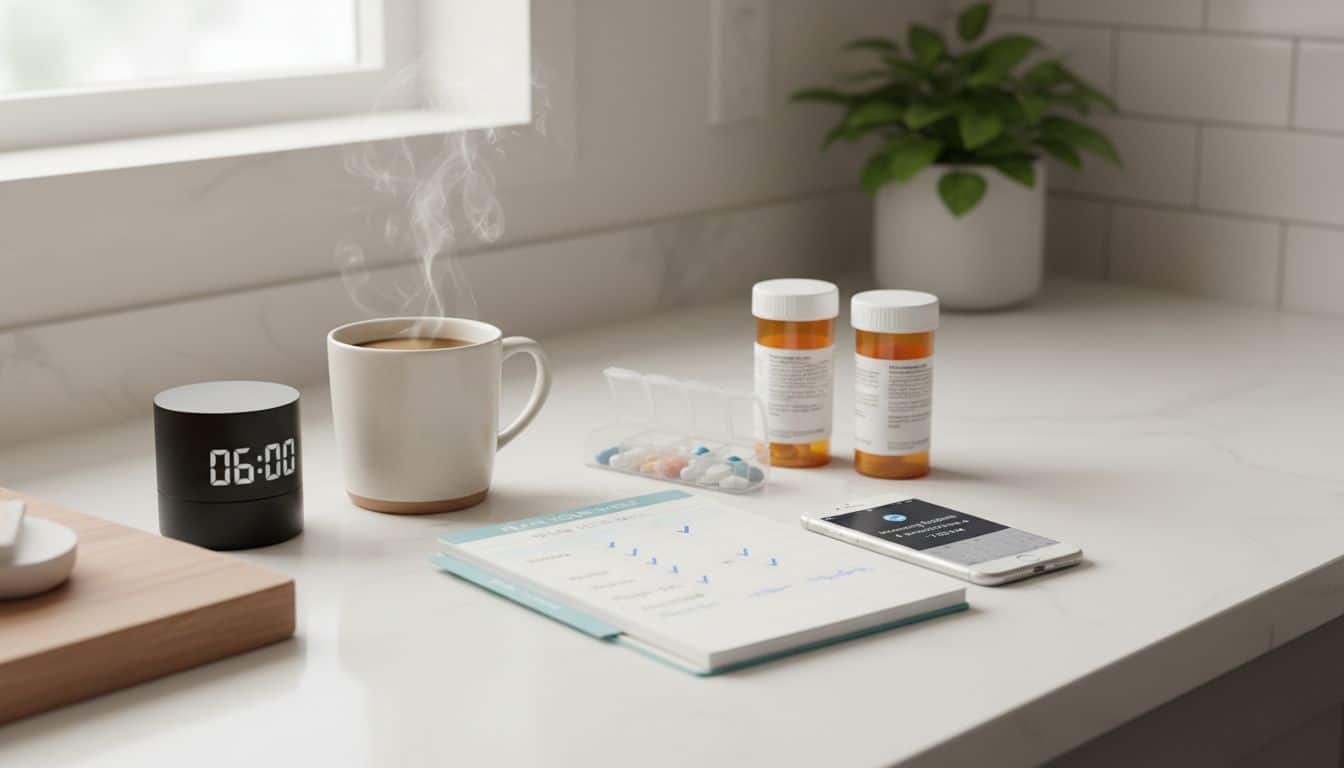
A calm kitchen routine scene with meds and a phone calendar, created with AI.
Most refill problems aren’t caused by forgetting forever. They happen because we remember too late. The refill runway fixes that by making “run out day” irrelevant. You’re always acting while you still have time.
The 7-day reminder is your planning reminder. It gives room for pharmacy delays, prescriber approval, and insurance weirdness. The 2-day reminder is your action reminder. It’s the one that says, “Stop scrolling, this is real.”
If your pharmacy allows 90-day fills, mail order, or automatic refills, those can help, but they don’t replace your six minutes. Auto-refill still fails sometimes, and the system catches failures before they become emergencies. For a general overview of how pharmacies think about staying supplied, see Express Scripts’ guidance on avoiding running out.
Also, plan for the boring chaos: holidays, travel, snow days, and weekends. If your refill date lands on a Sunday, your real deadline is Friday. Your system should treat that as normal, not as a surprise plot twist.
One more safety layer: keep a small “go bag” for medications and essentials if you ever need to leave quickly. It’s not dramatic, it’s practical. Consumer Reports has a solid checklist in their medication go-bag guide.
Cut down the pharmacy and prescriber friction (so refills don’t stall)
A refill request can be “sent” and still not be happening. The stall points are predictable: the prescription has no refills left, the doctor needs a visit, the pharmacy needs to order stock, or insurance wants a prior authorization.
This is why the last step, quick notes, matters. You’re building a mini memory for future you. Keep it simple: one running note in your phone called “Meds,” with the med name, dose, pharmacy, Rx number if you have it, and anything that went weird last time.
If reminders are your weak spot, use a tool that nudges you without judgment. A dedicated medication reminder app can handle both doses and refill prompts, and it keeps the nagging out of your brain space. If you want an example to test, Medisafe on Google Play is one option many people start with, and MedicaApp’s refill reminders are another.
If you manage meds for someone else, make your system “handoff-proof.” That can be as simple as one shared calendar event titled “Meds and refills,” plus a shared note with the current pharmacy and prescriber details. The goal is that another adult can step in without doing detective work in a kitchen drawer.
When life happens anyway, use a calm rescue plan (then fix the weak link)
Even with a medication refill system, there will be a month where something breaks. The pharmacy is out of stock. The prescriber is out of office. Insurance decides to ask questions with the urgency of a sleeping cat.
When you notice you’re low, don’t try to outsmart it alone. Call the pharmacy first and ask what’s blocking the fill. If it’s “no refills remaining,” ask them to send the request to your prescriber while you’re on the phone. If it’s stock, ask when they expect it and whether another location can fill it.
If you’re down to just a few doses, ask your pharmacist what options exist for a short supply, and ask your prescriber’s office what they can do today. Rules vary by medication, state, and insurance plan, so this is one of those times where the fastest path is a real human.
For non-controlled meds, some people also talk with their care team about keeping a small emergency backup on hand. If you’re curious what that planning can look like, read how to develop a backup medication supply and then confirm what’s appropriate for your situation.
Once the fire is out, adjust one thing. Maybe your reminders need to be 10 days and 3 days. Maybe you need to request refills the moment you open the last bottle from the pharmacy bag. Small changes beat big promises.
If you set your six-minute timer this week, future you gets to open the cabinet and feel nothing at all. That’s the best outcome. Boring is the new successful.


