
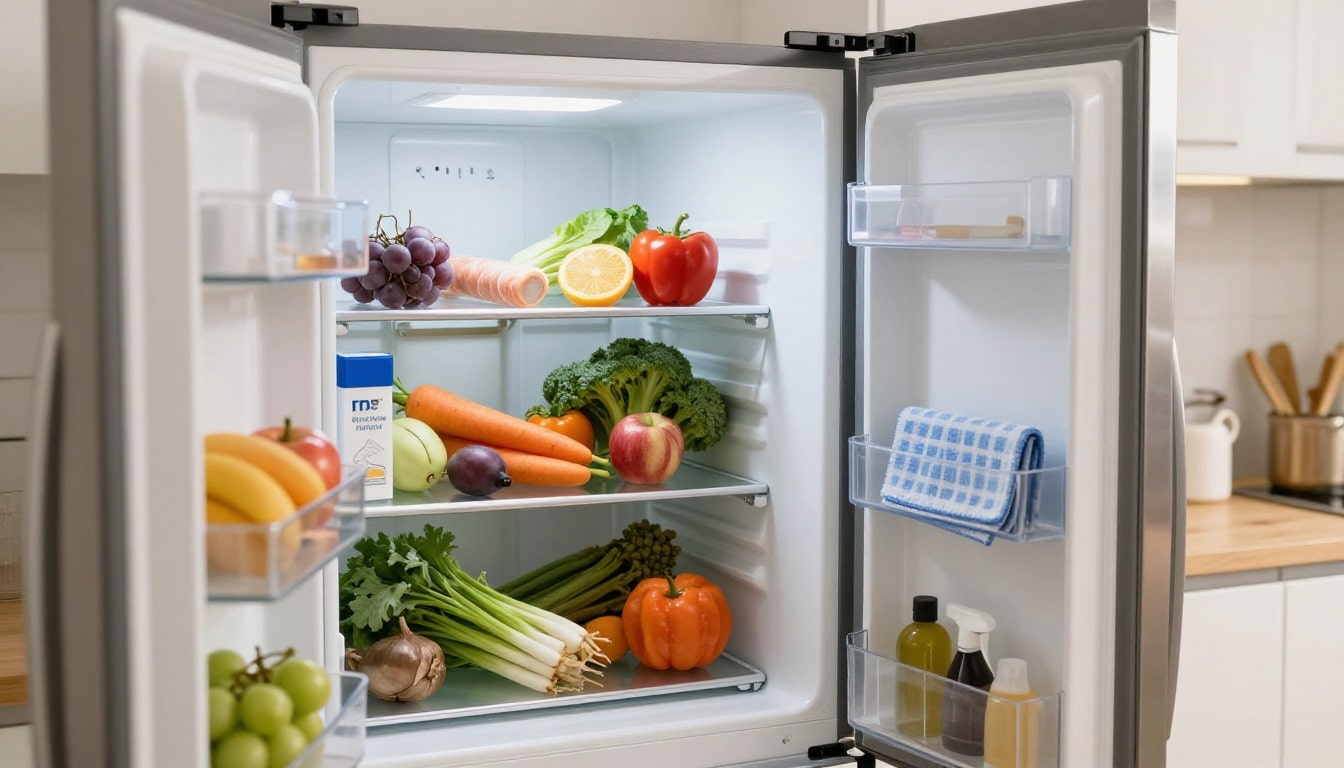
A refrigerator should smell like almost nothing. When it smells odd, every snack run feels a little suspicious. The good news is that most refrigerator smells come from a few familiar places, and most of them can be fixed in one solid cleaning session.
Still, covering the odor with baking soda alone is like spraying air freshener in a gym bag. It helps a bit, but it doesn’t solve the real problem. You need to find the source, clean the spots that trap smell, and set up a small routine that keeps the stink from coming back.
Find the source of weird refrigerator smells first
Most bad odors start with old food, but they rarely stay there. A leaky container can creep under a drawer. A forgotten cucumber can turn the crisper into a swamp. Even a clean-looking shelf may hold dried drips that smell worse each day.
Start by taking everything out. Yes, everything. Check leftovers, deli meat, soft fruit, old sauces, and anything in the back row that has become part of the scenery. If a container makes you lean back before you open it, you’ve found a suspect.
Then look beyond the obvious. Pull out the produce drawers and inspect underneath them. Wipe the grooves where the drawers slide. Smell the door bins, because condiment drips love to hide there. Also check the rubber gasket around the door. Crumbs and sticky liquid often collect in its folds.
If the smell hits the moment the door opens, assume there’s a hidden spill somewhere, not just “old fridge smell.”
Some odors come from parts people forget. The drain hole can clog. The drip pan under some refrigerators can collect grime. Ice bins, water dispensers, and older water filters can also add a stale smell. If you want a quick summary of the most common odor causes, this guide on why a fridge stinks lines up with what homeowners usually find.
If the smell began after a long power outage, be more careful. Spoiled food can leave a deep odor in plastic liners and insulation. In that case, USDA guidance on removing odors from refrigerators and freezers is worth reading before you restock the fridge.
Clean the fridge in a way that actually removes odor
Once you’ve found the likely cause, give the fridge a real reset. Move food to a cooler first, especially milk, meat, and anything else that needs to stay cold. Then remove shelves, bins, and drawers so you can clean every surface instead of working around them.
Warm water and a small amount of dish soap work well for most messes. For stubborn smells, a mix of water and white vinegar can help cut through old residue. Wipe the walls, shelf supports, ceiling, floor, and the back interior panel. Go slowly around corners and seams, because that’s where dried spills like to camp out.

Photo by Erik Mclean
Pay extra attention to removable parts. Wash bins and drawers in the sink, dry them fully, and don’t rush them back in. Moisture trapped under a shelf or in a drawer track can keep the smell alive. The same goes for the gasket. Wipe inside each fold, then dry it with a clean cloth.
Harsh cleaners aren’t always the best move here. Strong fragrance can cling to food, and bleach isn’t needed for routine odor removal. A thorough scrub matters more than a stronger smell. If you want a useful walkthrough, this deep-cleaning guide for refrigerators covers the process in a practical way.
After cleaning, let the refrigerator air out for a bit if you can. Then place an open box of baking soda or a small odor absorber inside. Baking soda helps after the cleaning, but it shouldn’t replace it. Think of it as the backup singer, not the lead.
If the odor still hangs around after a deep clean, check the drip pan under the unit and the drain area in back. Those spots often explain the weird smell that won’t quit.
Prevent refrigerator smells from coming back
Once the odor is gone, the real win is keeping it gone. That takes a small habit, not a heroic one. A two-minute check once or twice a week does more than a deep clean every six months.
Start with leftovers. Label them, keep them in sealed containers, and stop treating the back shelf like a retirement village for soup. Also wipe spills right away, especially milk, meat juice, and sauce. Fresh spills clean up in seconds. Old ones turn into science projects.
Storage matters too. Keep raw meat on a tray or in a pan on the lower shelf so leaks don’t drip downward. Cover strong foods well. Blue cheese, chopped onions, and leftover fish can perfume the whole fridge if they sit uncovered. Meanwhile, don’t overpack the shelves. Cold air needs room to move, and trapped moisture makes smells linger.
A fridge can also smell bad because it isn’t cooling well. If food spoils too fast, if water pools under drawers, or if the door doesn’t seal tightly, the issue may be mechanical. In that case, cleaning helps, but only for a while. You may need to replace a filter, clear a drain, or get the appliance checked.
A good fridge doesn’t need to smell like lemons or pine. It should smell clean, plain, and forgettable. That’s the goal.
Conclusion
If your fridge smells weird, don’t mask it, track it down. Most odors come from hidden spills, old food, or moisture trapped in the wrong place. A careful clean, plus a short weekly reset, usually solves the problem and keeps it solved. Open the door tomorrow, and the best smell should be no smell at all.


