
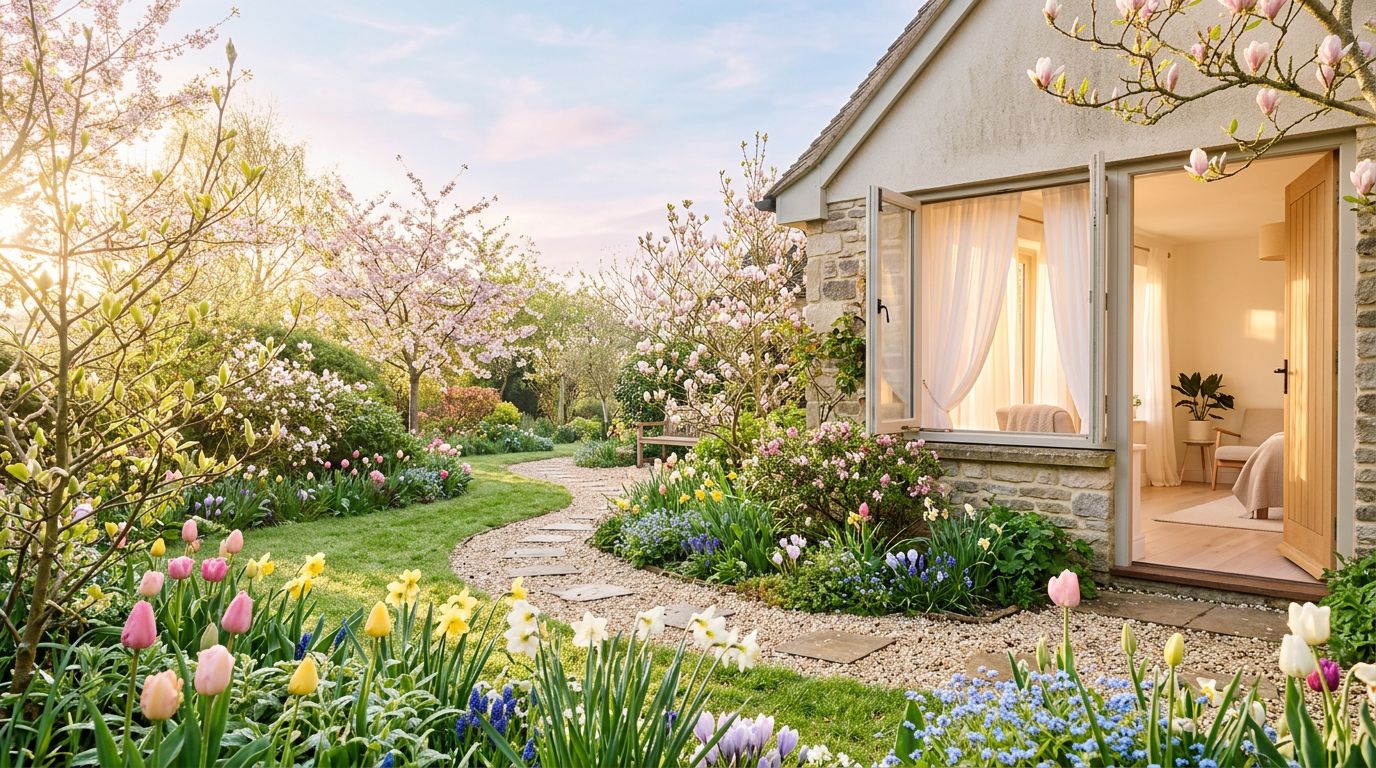
Spring rarely asks for attention. It steals it with longer evenings, damp soil, and the first tree that blooms before you expected it. After months of cold habits, the spring season can feel like someone opened a window in your head.
That shift is pleasant, but it can also create pressure. You may want to clean everything, plant everything, walk everywhere, and become a new person by Saturday. A better plan is smaller and kinder. Spring works best as a gentle reset, so start with what changes first.
Why spring feels different so quickly
The change in light is a big part of it. Mornings brighten earlier, and evenings stop ending at what feels like lunchtime. Because your body notices light before your brain forms an opinion, your sleep, mood, and appetite may shift without much warning.
As a result, many people feel a sudden urge to move things around. First, you open a window. Then the blanket that carried you through January goes into the wash. Soon, food with color sounds good again. None of that is silly. It is your routine adjusting to a season that asks for more air and less hibernation.
Still, spring doesn’t require a grand reinvention. If winter is a heavy coat, spring is the moment you hang it by the door and forget it for a while. That is enough. Begin with one small change, such as eating breakfast near daylight, taking a short walk after dinner, or clearing the chair that has become a part-time closet. Small acts fit the season better than dramatic promises.
Use the spring season to freshen your home without turning it into a project
Open a closet in March and it often looks like winter rented the place. Thick sweaters slump forward, scarves tangle, and one lonely glove waits for a partner that isn’t coming back. That mess can make a bright day feel oddly dull.
Start with the spaces you touch every day. Wash your sheets. Shake out entry mats. Clean a window that catches the afternoon sun. Because these spots shape your mood more than a storage bin in the attic, they give a quick lift without stealing the whole weekend.

Plants can help here, even if you don’t have a yard. A pot of herbs near the kitchen sink changes more than the counter. It changes the room’s mood. If you do have outdoor space, keep the first step modest. Pull weeds from one bed. Add fresh soil. Plant flowers or greens that suit your local weather, then watch what happens before you buy half the garden center.
Spring cleaning sounds noble, but it can turn bossy fast. Focus on a home that feels lighter, brighter, and easier to enjoy. Dust will survive either way.
Get outside while the weather is still kind
Spring is generous because the weather often asks less from you. The air is cool enough for a walk and warm enough to tempt you out the door. That short window is worth using, especially if winter kept you indoors more than you meant to be.

You don’t need a heroic plan. A twenty-minute walk after lunch counts. So does sitting on a bench with coffee, taking the longer route to the store, or meeting a friend in a park instead of a cafe. When trees leaf out and birds get louder, even familiar streets feel a bit less worn.
You may also feel a mental shift when you spend time outside in spring. You notice progress without forcing it. Buds open. Lawns turn green. Rain passes, and the air smells clean again. That steady change can be comforting when the rest of life feels messy. If allergies bother you, keep tissues handy, rinse off pollen when you get home, and don’t let one sneeze ruin the whole season.
The best spring moments are often the least planned
Big seasonal goals have their place, yet spring is often sweetest in ordinary scenes. A cracked window at night feels good again. Strawberries finally taste like something. Shoes pile by the door because you kept stepping out for ten minutes and staying thirty. These are small pleasures, but they shape memory.
The best part of spring is that it rewards attention more than effort.
That idea matters because many people treat the spring season like a self-improvement deadline. They schedule too much, buy too much, and miss the quiet fun of the season itself. Leave room for weather changes and surprise invitations. Notice the first day your coat stays on the hook for a week.
If you want one habit to carry through spring, make it a noticing habit. Pay attention to the tree outside your window. Notice how your energy shifts on brighter days. Keep a simple meal, walk, or evening routine that matches the lighter air. When you do that, spring stops being a backdrop and becomes part of how you live.
Spring steals attention because it changes ordinary life first. Light lands in the kitchen differently, the street sounds fuller, and home asks for a little less heaviness. That is the real gift of the spring season.
That open-window feeling doesn’t need a grand plan. Make space for a few small resets, and spring usually does the rest.


