
Imagine watching a porch light across the street and trying to tell whether a moth has flown in front of it. Now move the light several trillion miles away. That’s roughly the challenge behind planet hunting around other stars.
If you’re wondering how to find exoplanets, or extrasolar planets, the answer is usually to watch the star, not the planet. A planet can dim its star’s light, tug it back and forth, or leave another small clue. The trick is knowing which clues are convincing.
This post may contain affiliate links. If you make a purchase through these links, I may earn a small commission at no extra cost to you.
First, look for what the planet does to its star
Most exoplanets are too faint and too close to their stars in the sky for a telescope to separate them. Even a planet much larger than Earth can disappear in its parent star’s glare. Astronomers therefore measure the star repeatedly and look for a pattern that fits an orbit.
That might mean recording its brightness each night. It might mean spreading its light into a spectrum to measure motion. A promising pattern is a candidate, not a confirmed planet: stellar activity, other stars, or instruments can sometimes create misleading signals called false positives. Follow-up observations help sort them out.
The scale of that work is striking. The NASA Exoplanet Archive listed 6,366 confirmed planets on September 11, 2026. Their worlds weren’t all found in the same way. Each detection method asks a slightly different question of the light reaching Earth.
How to find exoplanets by watching starlight
A star may look steady to your eyes, but a telescope can measure tiny changes in its brightness. The most productive way to use those changes is the transit method.

The small dip that gives a planet away
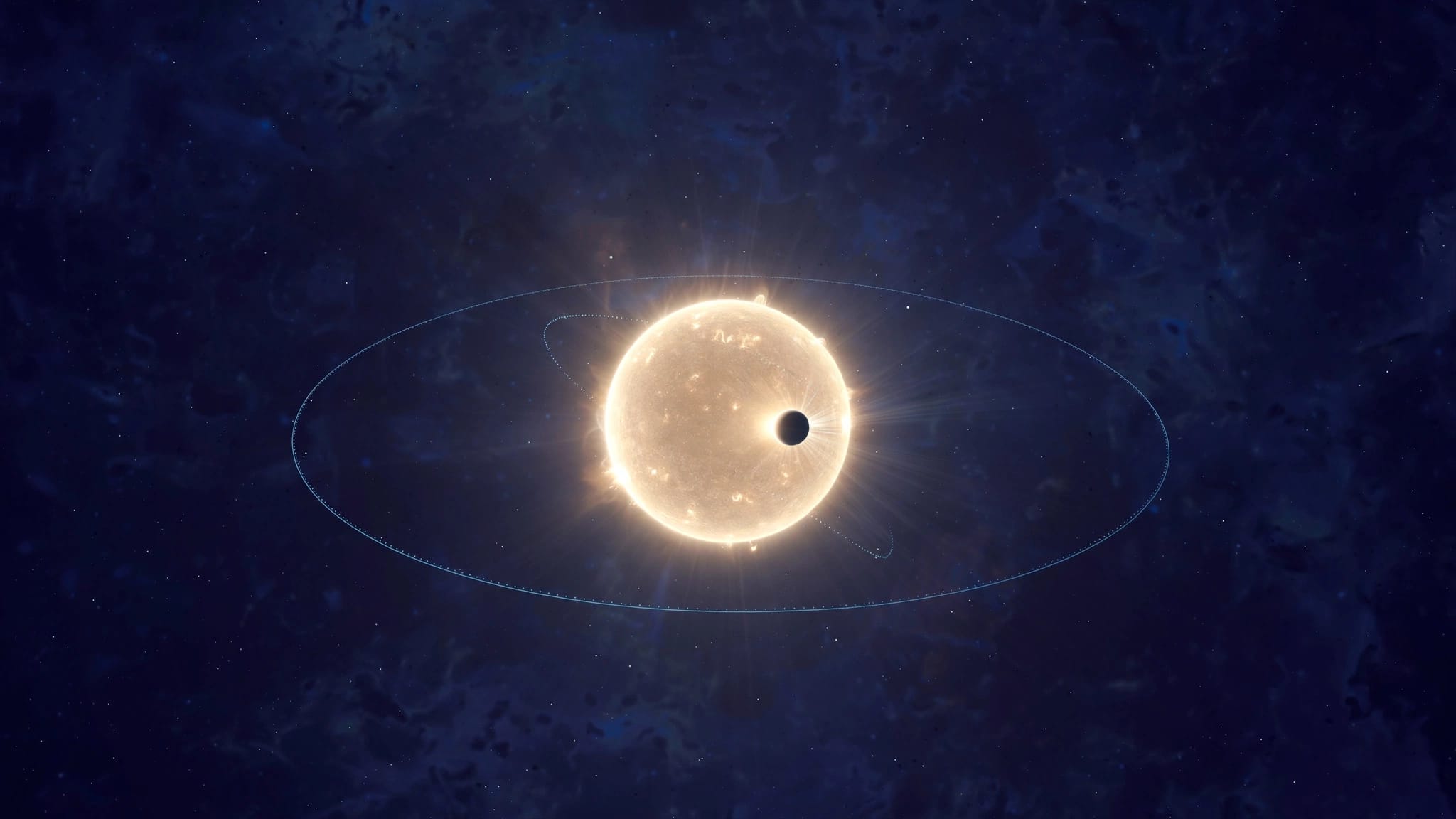
When a planet passes between us and its star, it blocks a little starlight. A graph of brightness over time, called a light curve, shows a dip. If the dips return at regular intervals, astronomers can estimate the planet’s orbital period.
The depth offers a clue to size. A large planet covers more of the star’s face than a small one. Against a Sun-sized star, a Jupiter-sized planet can block about one percent of the light. An Earth-sized planet blocks less than one hundredth of one percent. That’s why patient measurements matter.
Why one dip isn’t enough
A transit works only if the orbit lines up with our view. Many real planets never cross their stars as seen from Earth. A single dip could also be a false positive caused by an eclipsing binary or another look-alike.
Stellar activity can also change a star’s brightness, though its pattern may differ from a transit. Astronomers check for repeated events, compare the light curve’s shape, and examine whether light from a nearby star has mixed into the measurement. NASA’s explanation of exoplanet detection methods shows why different observations often work together. A regular dip makes an excellent lead, but the investigation doesn’t stop there.
How a planet makes its star wobble
It sounds unfair to ask a planet to move a star. Yet gravity pulls both ways. As a planet orbits, the star makes a much smaller movement around their shared center of mass. Picture two dancers turning together, with the heavier dancer taking smaller steps.
Astronomers measure part of that movement through radial velocity, the star’s motion toward or away from Earth. They split its light into a spectrum and watch familiar patterns called spectral lines. Those lines shift slightly toward blue when the star approaches and toward red when it recedes. This is the Doppler effect, the light-based cousin of a siren changing pitch as it passes.
A repeating shift can reveal an orbital period and help estimate the planet’s mass. That estimate depends on stellar mass and the observed motion. On its own, radial velocity usually gives a minimum mass because the orbit’s tilt may be unknown. If the planet also transits its parent star, the two measurements together provide a better mass estimate and a size. Astronomers can then work out density, a useful clue to whether the world is mostly gas or likely to contain substantial rock.
Stellar activity complicates the picture. Dark spots on a rotating star can affect measurements, so researchers examine the pattern carefully. NASA’s radial velocity illustration offers a helpful view of that small stellar movement.
What if there is no transit or measurable wobble?
Some exoplanets reveal themselves through rarer alignments or through light that can be separated from their stars. These methods matter because a single technique won’t find every kind of world.
Gravitational microlensing catches a chance alignment
Suppose one star passes almost directly in front of another, farther-away star. Gravity from the nearer star bends and magnifies the background star’s light. If the nearer star has a planet, that planet can add a brief feature to the brightening.
This is gravitational microlensing. It can reveal planets at large distances and planets orbiting far from their stars. Its drawback is timing: the alignment generally doesn’t repeat, so observers must gather good data while the event is happening.
Astrometry measures a star’s position
Radial velocity detects a star’s movement toward and away from us. Astrometry looks for its tiny movement across the sky instead, measured against other stars. The planet is still pulling on its host star; we’re viewing a different part of the motion.
Those positional shifts are difficult to measure, especially for distant systems. Yet they can help establish an orbit and a planet’s mass. The European Space Agency’s guide to finding exoplanets explains how the different methods pick up different effects of the same gravitational partnership.
Direct imaging tackles the glare
With direct imaging, astronomers can sometimes detect light from the planet itself. The difficulty is rather like spotting a firefly beside a floodlight. An instrument called a coronagraph blocks much of the star’s light so the faint nearby planet has a better chance of appearing.

Direct imaging works best when a planet is large, young, and far enough from its star to appear separately. Those young worlds can still give off considerable heat. A picture of an exoplanet is exciting, but it’s usually a small point of light, not a photograph of clouds and continents.
What do Kepler, TESS, Webb, and Roman each do?
The Kepler Space Telescope spent years watching stars for transit dips. Its work showed that planets are common and helped researchers study systems unlike our own, including those with hot Jupiters. Kepler’s mission has ended, but scientists still study the data it collected.
NASA’s Transiting Exoplanet Survey Satellite, or TESS, searches bright, relatively nearby stars for transits. Bright targets are useful because other telescopes can follow up. The James Webb Space Telescope generally plays a different role, studying selected planets in greater detail, particularly their light and possible atmospheres. The Hubble Space Telescope has also contributed atmospheric observations.
The Nancy Grace Roman Space Telescope launched on August 30, 2026. As of September 2026, it was travelling toward its observing location, with science observations still ahead. Its planned microlensing survey will help researchers find planets that transit surveys are less likely to catch. Planet hunting benefits from telescopes designed for different tasks, so no single telescope gets the whole picture.
How do astronomers learn what a planet is like?
Finding a planet and describing it are separate tasks. A transit can suggest size; stellar motion can help establish mass. Atmospheric questions require much more delicate work with light.
A little filtered starlight can reveal gases
During a transit, some starlight passes through the planet’s atmosphere before reaching us. Different gases absorb different wavelengths, leaving patterns in a spectrum. This is transmission spectroscopy, a form of spectroscopy that uses those patterns to identify gases.
Astronomers can also examine light associated with the planet when it isn’t in front of the star, including heat emitted by the planet. By comparing measurements at different points in its orbit, they can look for atmospheric information in emitted or reflected light. These are demanding observations: the planet’s contribution is tiny, and clouds can hide features. Hubble observations, for example, have found evidence of water vapor and helium in some exoplanet atmospheres.
The habitable zone is a starting clue
A planet’s orbital period and its star’s properties help estimate how much energy it receives. That helps astronomers determine whether it lies in a habitable zone, where conditions could allow liquid water on a suitable planet’s surface.
There’s a large “could” in that sentence. An atmosphere, a planet’s composition, and stellar activity all shape those conditions. Being in the habitable zone doesn’t establish that a planet has water, much less life. If you’re curious about the star’s side of the relationship, how the Sun works makes a useful point of comparison: its light and gravity shape the conditions throughout our own solar system.
Can you help look for an exoplanet yourself?
You don’t need a space telescope to take part. NASA’s Exoplanet Watch program invites volunteers to analyze observations of exoplanets and, for those with suitable equipment, contribute telescope data. Much of the useful work happens after the light has already been collected.
Begin with an existing light curve
Start with an observed transit rather than trying to discover a new planet in your backyard. A light curve lets you compare the star’s brightness before, during, and after the expected crossing. The questions are concrete: Is there a dip? When does it reach its lowest point? Does the timing match the prediction?
Measurements need care. Clouds, changes in Earth’s atmosphere, and ordinary fluctuations in the star can all confuse the result. Comparing brightness measurements in a light curve with nearby stars helps identify changes that affected the whole observation.
Follow a project before submitting data
If you have a telescope and camera, choose a target and observing window through an established program. You’ll need enough observing time on both sides of the expected transit, not merely a glimpse of the dip. Then process the images into brightness measurements and check the result.
NASA’s Exoplanet Watch contribution instructions explain the current submission process, including registration for an AAVSO Observer Code. A volunteer light curve can help refine a known planet’s transit timing. A new dip, however tempting, still needs careful follow-up before anyone calls it a discovery.
Key takeaways
Astronomers usually find exoplanets by measuring their effect on a star. The transit method reveals dips in light; radial velocity and astrometry reveal motion. Microlensing catches a fortunate alignment, while direct imaging sometimes separates a planet’s light from stellar glare. Combining methods tells us far more than any single observation can.
Common questions about finding distant planets
Can an ordinary telescope see exoplanets?
Usually, no. The planet is faint and appears extremely close to its bright star. Even professional direct images generally show a point of light. Amateur observers can still make useful measurements of some known transits with suitable equipment, careful timing, and a great deal of attention to the weather.
Does finding an atmosphere mean finding life?
No. A spectrum may show evidence of gases, but interpreting that evidence takes more observations and context. Even a planet in the habitable zone might lack the conditions for life. An atmosphere is a fascinating thing to measure without asking it to answer every question at once.
A planet leaves more than one kind of clue
That distant star in the opening may never show us its planet directly. Yet a slight dimming, a repeated shift in its light, or a tiny change in position can give the planet away.
The strongest discoveries come from treating each clue with care. Astronomers find exoplanets by noticing what they do, then checking whether the evidence holds up.


