
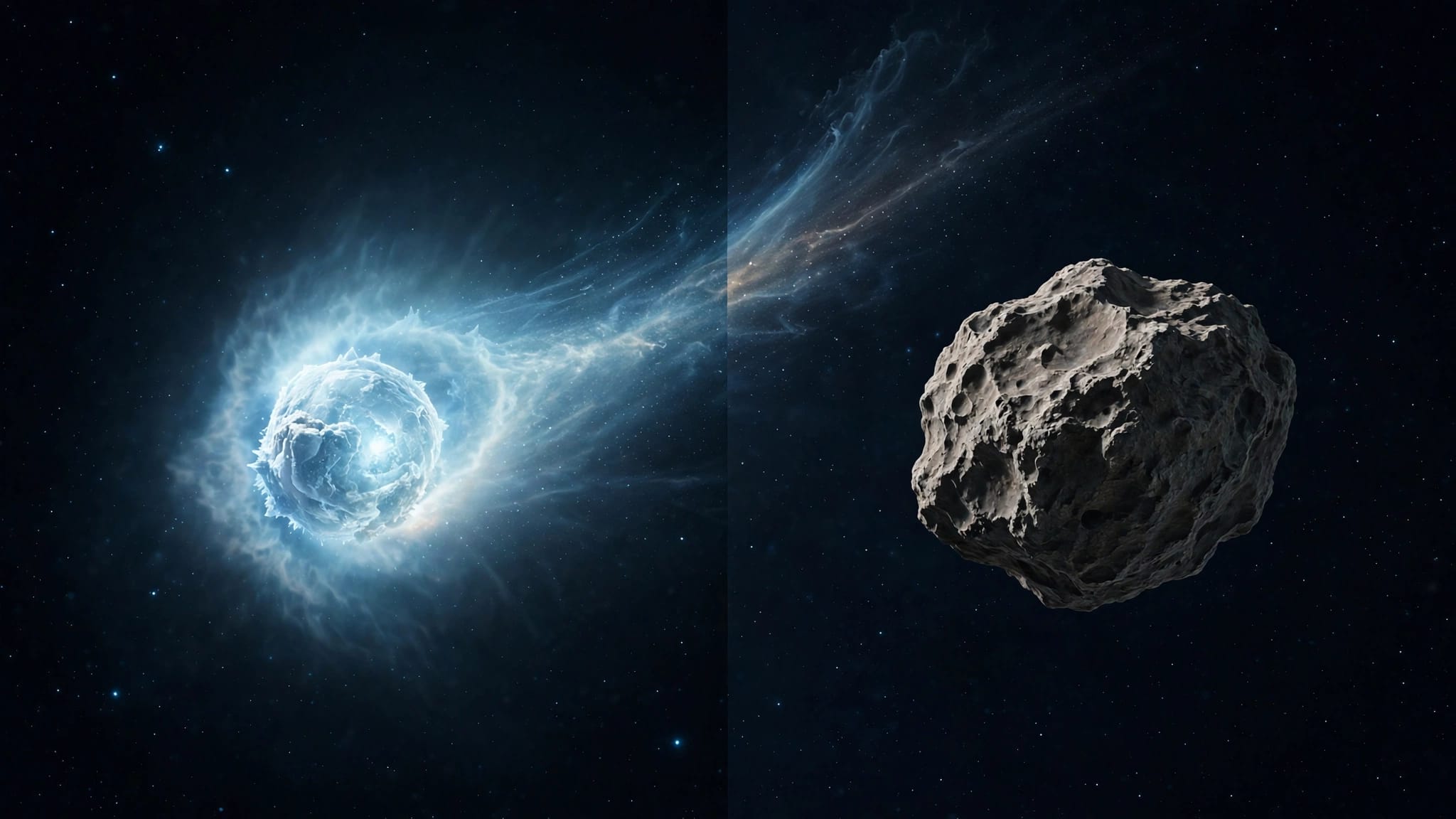
Comets contain rock too, so the simplest way to distinguish one from an asteroid is to consider its ingredients and activity. Comets contain frozen gases mixed with dust and rock, while asteroids are generally rocky or metallic.
A comet’s tail is a useful clue, but no single photograph guarantees an identification. Start with the broad difference, then look at what the other clues reveal.
This post may contain affiliate links. If you make a purchase through these links, I may earn a small commission at no extra cost to you.
The Quick Comet vs Asteroid Distinction
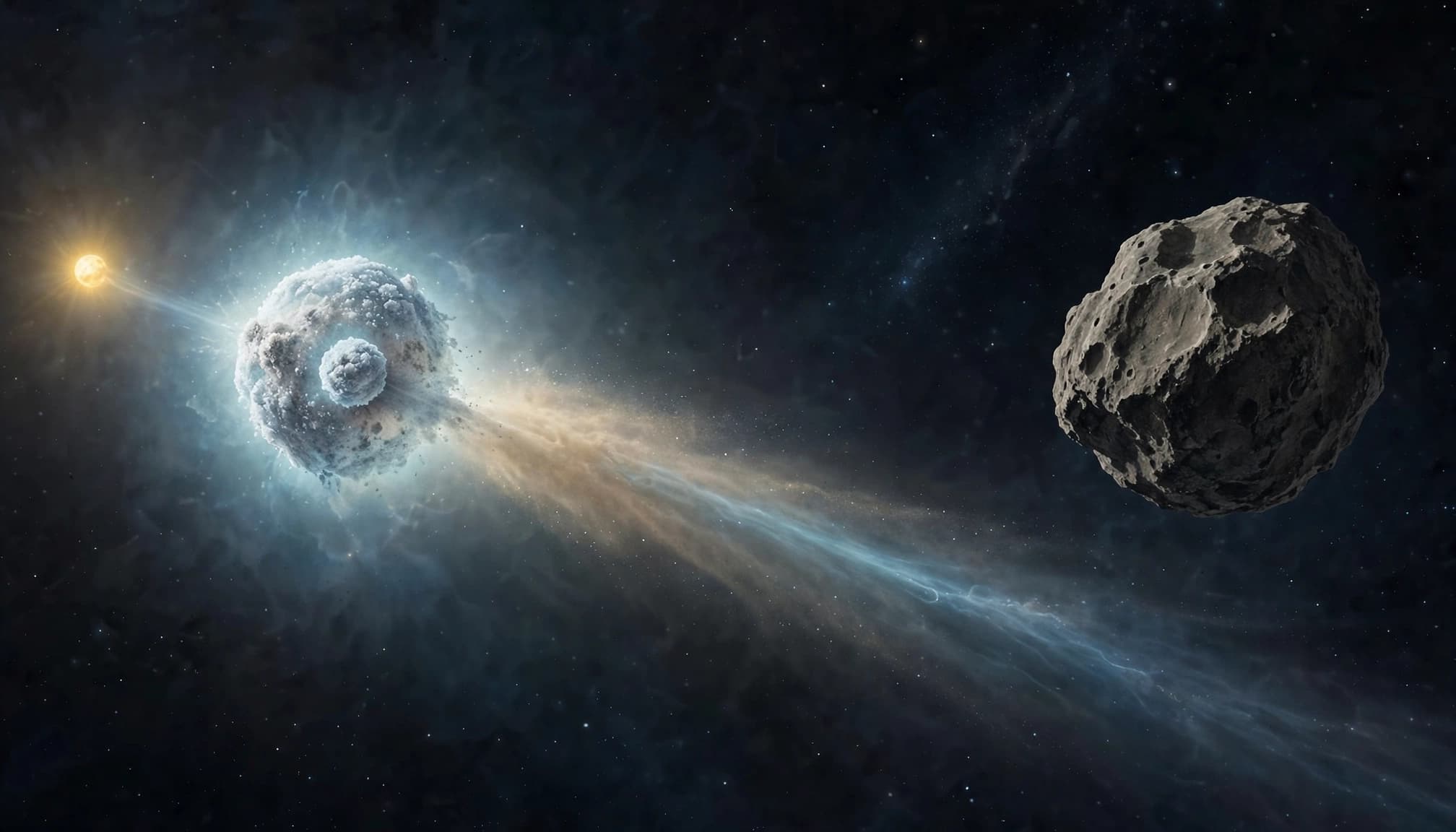
An active comet has a cloud of gas and dust around its solid center. This cloud is called a coma, while the central body is called the nucleus. A tail can extend away from it.
NASA’s explanation of comets describes these objects as mixtures of frozen gases, rock, and dust. Their tails stretch away from the Sun, a useful detail that illustrations sometimes get wrong.
An asteroid is generally an inactive body without that surrounding cloud. Think of a bare, irregular lump rather than a rocky object wearing a dramatic scarf. That comparison helps with the basic picture, although appearance alone doesn’t settle every case.
What Their Ingredients Reveal
Comets contain more than ice
Calling a comet a “dirty snowball” gives you a useful starting point. However, it can suggest something softer and simpler than the real object. A comet also contains dust and rocky material, so finding rock doesn’t automatically make an object an asteroid.
The distinction depends on the combination of materials and the object’s behavior. That helps explain why a tidy classroom comparison needs a little flexibility. Nature hasn’t organized everything into separate drawers for our convenience.
Asteroids aren’t all made of the same rock
Asteroids also have varied recipes. NASA’s asteroid composition guide describes bodies containing clay and silicate rocks, while stony S-type asteroids contain silicate materials and nickel-iron. Silicates are a large mineral family that also makes up much of Earth’s rocky crust.
Metal adds another interesting possibility. Some early small bodies became hot enough for metal to separate from rock and gather toward their centers. Iron meteorites provide evidence of those metallic regions.
A chunk of space metal can therefore tell a story about the interior of an ancient body. It doesn’t have to resemble the gray boulder we tend to picture.
Why Astronomers Use More Than Appearance
Light can reveal hidden ingredients
A photograph shows shape and brightness, but astronomers can also examine an object’s spectrum. This means separating its light into different wavelengths and studying the resulting pattern.
Different materials absorb or emit light in characteristic ways. These patterns provide evidence about composition, including gases associated with cometary activity.
You can think of this as examining the ingredients rather than judging the packaging. A useful classification combines several observations instead of depending on whether an object looks sufficiently comet-like in one image.
Location provides context, not a complete answer
Most asteroids orbit within the main asteroid belt. That makes location a helpful clue, although “most” leaves room for plenty of asteroids elsewhere.
Both comets and asteroids orbit the Sun. Simply knowing that an object travels through the solar system won’t distinguish them.
Observations of its movement help establish where it is and how it travels. Astronomers consider that information alongside composition and activity. Each clue answers a different part of the identification question, rather than replacing all the others.
Where Meteors and Meteorites Fit In
The terminology becomes easier once you separate an object in space from what happens during atmospheric entry.
A meteoroid is a small natural object traveling through space. A meteor is the light produced during its passage through an atmosphere, the familiar “shooting star.” A surviving piece that reaches the ground is a meteorite.
These terms describe different things, which is why a meteor isn’t another name for a comet’s tail.
Meteorites also vary in composition. They include stony, iron, and stony-iron varieties; many genuine specimens look much less metallic than people expect. Weathering can change their appearance further.
If your curiosity extends to something found on the ground, our guide to recognizing meteorites among ordinary rocks explains why several features matter more than one promising surface.
Frequently Asked Questions
What do comets and asteroids have in common?
Both preserve material left over from the solar system’s formation about 4.6 billion years ago. NASA’s guide to small solar-system bodies places comets, asteroids, and meteoroids within that shared history.
Their different ingredients provide evidence about the material available during that early period. They’re interesting partly because they retain clues to events that happened long before Earth had oceans or living things.
Does every meteorite make a crater?
No. Small fragments can slow substantially during atmospheric entry and reach the ground without leaving a conspicuous crater.
Large impacts produce the dramatic scenes we remember, but they aren’t a useful model for every meteorite landing. A genuine meteorite can be sitting on the surface without an impressive hole beside it. As with comets and asteroids, the most familiar picture doesn’t cover every case.
Key Takeaways: Read the Clues Together
The useful starting point is composition plus activity. Comets contain frozen gases, dust, and rock; asteroids are generally rocky or metallic and inactive.
A tail provides a strong visual clue, while chemistry and movement add evidence that a photograph can’t supply. Once you separate those clues from the terminology of meteors and meteorites, the names become easier to understand.
Space doesn’t provide labels, but it does provide evidence.


