
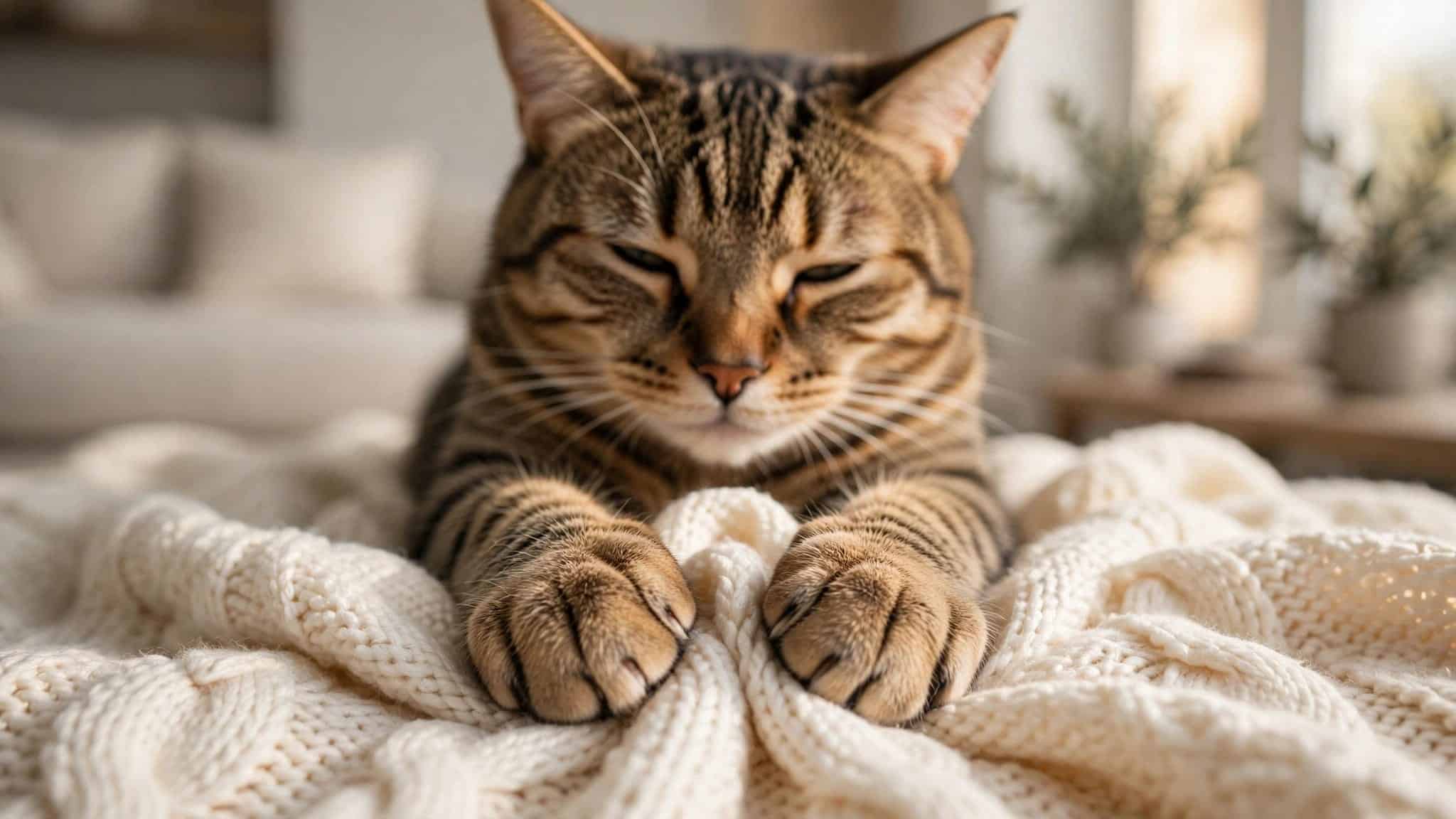
A cat can turn soft bedding into an imaginary bakery without ever learning what bread is. Cats kneading blankets usually repeat a comforting kittenhood instinct connected with nursing and milk production. Scent marking and settling into a resting place may also play a part.
For most cats, “making biscuits” is normal behavior, even when the claws make your lap feel less comfortable. Understanding the movement helps explain why soft blankets attract it, when to leave it alone, and when a change deserves attention.
This post may contain affiliate links. If you make a purchase through these links, I may earn a small commission at no extra cost to you.
Key Takeaways
Kneading usually combines a familiar kittenhood movement with adult comfort. A relaxed cat pressing its paws into a surface generally doesn’t need to be stopped.
The useful distinction is between an established habit and a change in behavior. Protect your skin, reward a suitable kneading spot, and speak with your veterinarian if the behavior increases or accompanies signs of discomfort.
What Happens When a Cat “Makes Biscuits”?
This instinctive movement alternates pressure from a cat’s front paws on a surface. It resembles someone making biscuits from bread dough, which explains the nickname without explaining why the baker needs sixteen naps.
During a typical kneading stroke, the toes spread and the claws may extend. As one paw lifts, its toes close while the opposite paw presses down. The motion can also let a cat stretch its forelegs. Alternating strokes can occur roughly every one or two seconds, although individual rhythms vary.

A soft surface gives beneath those movements. Blankets, cushions, beds, and laps are familiar targets. On a hard surface, some cats perform a similar marching motion instead.
Claws alone don’t tell you whether your cat is content or upset. Look at the rest of the body and what happens before and afterward.
Why Cats Knead Blankets After Kittenhood
Nursing creates an early connection with comfort
Kittens press their paws against their mother’s mammary area while nursing. That pressure helps stimulate milk flow and milk production, linking the movement with feeding, warmth, and close contact.
Many cats retain it after they no longer need milk. As PetMD’s explanation of kneading describes, adult cats may repeat the behavior to feel calm and relaxed.
This doesn’t mean your cat expects the fabric to produce dinner. An early behavior can remain comforting after its original purpose has passed.

Nest-making and scent add other possible explanations
Wild cats tread down grass or foliage before resting. Domestic cats show a similar pattern when they press and turn on bedding to prepare a nest before settling down. This is a plausible explanation for the behavior, rather than proof of what every cat intends.
Cats also have scent glands between their paw pads. Pressing their paws against a surface can leave pheromones, chemical signals that help make an area smell familiar.
A favorite fabric can therefore offer physical comfort and carry the cat’s scent. Several explanations may apply during the same session. We don’t need to choose one reason for every paw movement.
What a Blanket Offers That Your Lap Doesn’t
A comfortable surface without the startled human
A soft surface gives your cat something yielding to press against. It can also become part of a predictable routine, especially when it stays in a familiar resting place, like a nest.
Your lap offers warmth and company, but claws change the experience for the person underneath. Your cat may stretch before settling in. Kneading you can be part of affectionate behavior, as PetMD explains in its guide to signs of feline affection.
That doesn’t mean you must tolerate painful contact. You can welcome the closeness while putting a thick layer of fabric between your cat’s paws and your skin. Affection doesn’t require puncture wounds.
Suckling can accompany the same comforting routine
Some cats purr, knead, and suckle a blanket together. It becomes something like a security object, with several familiar behaviors gathered into one ritual.
Early separation from the mother may contribute in some cats. However, kneading or suckling alone doesn’t establish a cat’s history or prove it sees you as a replacement mother.
Watch what happens to the fabric. Gentle suckling differs from chewing off and swallowing pieces. Remove damaged material if ingestion is possible, and discuss persistent fabric eating with your veterinarian.
When Kneading Deserves a Closer Look
Notice changes rather than counting every paw press
A familiar bedtime routine is different from kneading that suddenly becomes more frequent or difficult to interrupt. Because cats can knead to soothe themselves, the behavior doesn’t always mean uncomplicated happiness.
PetMD describes kneading as releasing dopamine, a brain chemical involved in reward and motivation. That dopamine explanation doesn’t make the movement a reliable test of your cat’s emotional state.
Increased kneading can accompany anxiety, discomfort, arthritis pain, or a compulsive disorder. Arrange a veterinary appointment if the habit changes, particularly alongside reduced jumping, stiffness, hiding, appetite changes, or unusual sensitivity to touch.
A short video and notes about when the behavior occurs can help your veterinarian understand the change.
Give your cat more choice and less pressure
A calm environment helps make rest easier. Provide an undisturbed sleeping place and let your cat leave social activity without being followed or picked up.
If kneading increases around visitors or household noise, offer a retreat rather than more attention. A cardboard box or sheltered bed may be more welcome than another enthusiastic introduction.
Build play around your cat’s usual active periods, then allow time to settle. Don’t wake or restrain a resting cat to involve it in play or cuddling.
These adjustments support comfort, but they don’t replace an examination when pain or illness may be involved.
How to Redirect Kneading Without Upsetting Your Cat
Do: make the preferred blanket easy to choose
Choose a thick, washable cover and fold it over the couch beside you. Place it where your cat already likes to settle, rather than expecting an unfamiliar corner to become irresistible. This gives your cat an approved kneading spot instead of an unsuitable place on the furniture.
Introduce it before the usual kneading session. Let your cat approach, sniff, and leave freely. You can place a treat on it to encourage exploration without holding the cat there.
When kneading begins on the cover, offer gentle praise and a small reward. Repeat this consistently so the approved surface becomes associated with pleasant attention.
If your cat starts on bare skin, pause petting and calmly reposition yourself. Make it available for the next attempt. Offering a nearby resting place is also useful when a cat occupies your keyboard: sometimes your company is part of the attraction.
Don’t: punish the behavior you’re trying to redirect
Yelling, hitting, or spraying water can create fear and anxiety. Your cat is performing an instinctive behavior, so punishment can make an otherwise comfortable interaction stressful.
Avoid forcing its paws onto the surface or holding it in place. The aim is to encourage a choice your cat will repeat voluntarily.
If the cat walks away, let the interaction end. Try again during another relaxed moment. Consistency is more useful than turning surface placement into a disagreement neither of you enjoys.
Protect Your Skin Without Taking Away the Habit
A thick blanket over your legs and stomach creates a barrier between claws and skin. Fold it more heavily where your cat usually presses, and replace it if it develops loose threads or damaged areas.
Keep the claws appropriately trimmed without cutting into the sensitive quick. Introduce nail handling gradually, ideally early in life. A high-value treat such as Churu can help make brief trimming sessions positive. If handling causes distress, ask a veterinary professional for help.
Declawing isn’t an appropriate solution to kneading. It removes the last bone of each affected toe, rather than simply removing a nail. Complications can include lameness, lasting pain, and permanent nerve damage.
The American Veterinary Medical Association strongly discourages elective declawing and supports nonsurgical alternatives. A fabric barrier, careful nail care, and reward-based redirection address the problem without that surgery.
Questions Cat Owners Often Ask
Should I let my cat knead my blanket?
Yes, if your cat appears comfortable and the blanket remains intact. Kneading a suitable surface usually doesn’t require intervention.
Pay closer attention if suckling becomes fabric eating, claws become caught, or the session appears agitated rather than restful. Choose a safe resting surface and give your cat room to stop or move away.
You don’t need to buy a special “kneading blanket.” A suitable one already in your home can become the designated spot, provided it’s thick enough to protect you and doesn’t have loose material your cat might swallow.
Is kneading every night before sleep normal?
Yes, a stable nightly ritual can be normal. Some cats knead before nearly every comfortable nap, while others rarely show the behavior. Neither pattern alone measures how affectionate or happy a cat is.
Consider your own cat’s usual routine. Settling afterward, resting comfortably, and behaving normally at other times are reassuring signs.
Seek veterinary advice when the pattern changes or comes with other symptoms. Nightly repetition by itself is less concerning than a new behavior combined with signs that your cat isn’t comfortable.
Let the Comfort Stay, and Redirect the Claws
Cats may keep kneading because an early nursing movement can remain comforting throughout life. Familiar scent and resting-place preparation may help explain why a particular blanket earns such devoted attention.
For a relaxed cat with an established routine, gentle accommodation is usually enough. Offer a suitable blanket, protect your skin, and notice meaningful changes.
The blanket can remain an imaginary bakery. Your lap doesn’t have to remain the work surface.


