

A soap bubble lasts longer when you protect the water in its skin. To keep soap bubbles from popping, slow evaporation with glycerol or corn syrup, choose damp, calm weather, and keep anything touching the bubble wet.
The interesting part is that holding onto moisture and making a giant bubble strong enough to stretch are different problems. Start by noticing when the bubble breaks, because that tells you more than another generous squirt of dish soap.
This post may contain affiliate links. If you make a purchase through these links, I may earn a small commission at no extra cost to you.
Why soap bubbles burst and change color
A bubble looks almost weightless, but its survival depends on a thin layer of water staying intact.
The water layer gradually becomes thinner
A soap bubble consists of water sandwiched between two layers of soap molecules. Soap lowers water’s surface tension and helps the liquid spread into a flexible film around the trapped air.
Gravity draws water toward the bottom, while evaporation removes water across the surface. As parts of the film become thinner, they become more vulnerable. A dry object, dust particle, or sudden stretch can then create a hole. Once that hole opens, the film pulls apart rapidly.
The rainbow reveals changes in thickness

Those moving colors aren’t dyes in the soap. Light reflects from the outer and inner surfaces of the film. The reflected waves reinforce or cancel one another, depending on the film’s thickness.
This effect is called thin-film interference. As water drains and evaporates, the thickness changes, so the colors shift. You’re watching the bubble’s structure change, even before it pops.
Keep soap bubbles from popping: fix the surroundings
Before changing your recipe, look at the air and whatever the bubbles touch.
If bubbles burst in midair, move somewhere calmer
Hot sunshine, dry air, and strong wind are difficult conditions for bubbles. Heat encourages evaporation. Dry air allows water to evaporate faster, while wind both speeds drying and stretches the film unevenly.
Choose a mild, damp, nearly still day. Right after rain is often a good opportunity because the surrounding air is humid. Wait until the shower and any storm have passed.
On a breezy day, move behind a hedge or wall. A little gentle airflow can carry bubbles away, but gusts can tear them apart before they close.
If bubbles burst on contact, wet the surface
Dry hands, dry wands, and dry objects can disrupt the water film immediately. A bubble that travels happily across the garden but bursts against your finger probably doesn’t need a new recipe.
Dip the wand completely before each attempt. If you want to touch a bubble, coat your hand with bubble solution first. Wetting reduces the disturbance at the contact point, although it doesn’t guarantee success.
A damp surface gives the bubble a better chance. Your finger still isn’t an especially welcoming landing pad.
If bubbles won’t form, adjust handling first
A mixture that leaves no lasting film across the wand needs a different approach from one that produces bubbles which burst later.
Begin with a clean wand and a clean container. Grease and debris can interfere with the film. Lift the wand slowly, then blow gently rather than delivering a sudden puff. With larger string wands, use a smooth movement instead of jerking your arms apart.
Next, look for foam. Vigorous stirring traps air throughout the mixture. Froth can cling to the wand, weigh down the developing film, and produce dull, short-lived bubbles.
Stir slowly and allow existing foam to settle before trying again. More froth doesn’t mean more bubble-making power, even if it looks impressively soapy.
If a foam-free mixture still won’t hold across a clean, wet wand, move on to the water, temperature, and recipe. Change one thing at a time so you can tell what helped.
A homemade bubble solution with glycerin or corn syrup
For ordinary handheld wands, a straightforward soap mixture is a useful starting point. Giant bubbles need a separate approach.
Mix gently and measure the ingredients
Combine 4 cups of water, 1 cup of liquid dish soap, and 5 tablespoons of glycerin or light corn syrup. Use either ingredient, rather than adding both.
Put the water into a clean container first. Slowly stir in the dish soap, then the glycerol or syrup. Keep the spoon below the surface where possible to avoid whipping air into the mixture.
Cover the container when you’re finished. Let any foam settle before dipping your wand. This recipe gives you measured proportions, so you can repeat the mixture instead of trying to remember what “a good squeeze” meant.
Choose dish soap rather than a different cleaner
Dawn is a widely recommended choice for homemade bubbles. Fairy Liquid is a common UK choice, although its formulations aren’t identical to Dawn’s. Joy is another established option.
Use liquid hand-dishwashing soap, not automatic dishwasher detergent or a spray cleaner. Products sold under the same brand can have different ingredients, so changing product types can also change performance.
The same basic balance matters in bubble solution for a homemade bubble machine, where steady airflow replaces your breath.
Give your water and solution temperature a fair chance
Distilled water is the most predictable choice because it contains very little dissolved mineral material. Tap water can work, but its mineral content varies between households.
Filtered or bottled water may help if your tap water produces disappointing results. Neither is automatically low in minerals, though. Many ordinary filters leave dissolved minerals behind, and some bottled waters contain plenty.
Boiling can reduce certain kinds of temporary hardness, but it doesn’t remove all dissolved minerals. If you use boiled water, let it cool before mixing.
Temperature matters too. A very cold batch can perform poorly. Bring it back to room temperature, then try the same wand again before altering the ingredients.
There’s no need to heat the mixture on the stove. Ordinary room warmth is enough, and heating an uncovered batch also encourages water loss.
Why giant bubbles need a different recipe
A small bubble and a person-sized bubble place very different demands on their films.
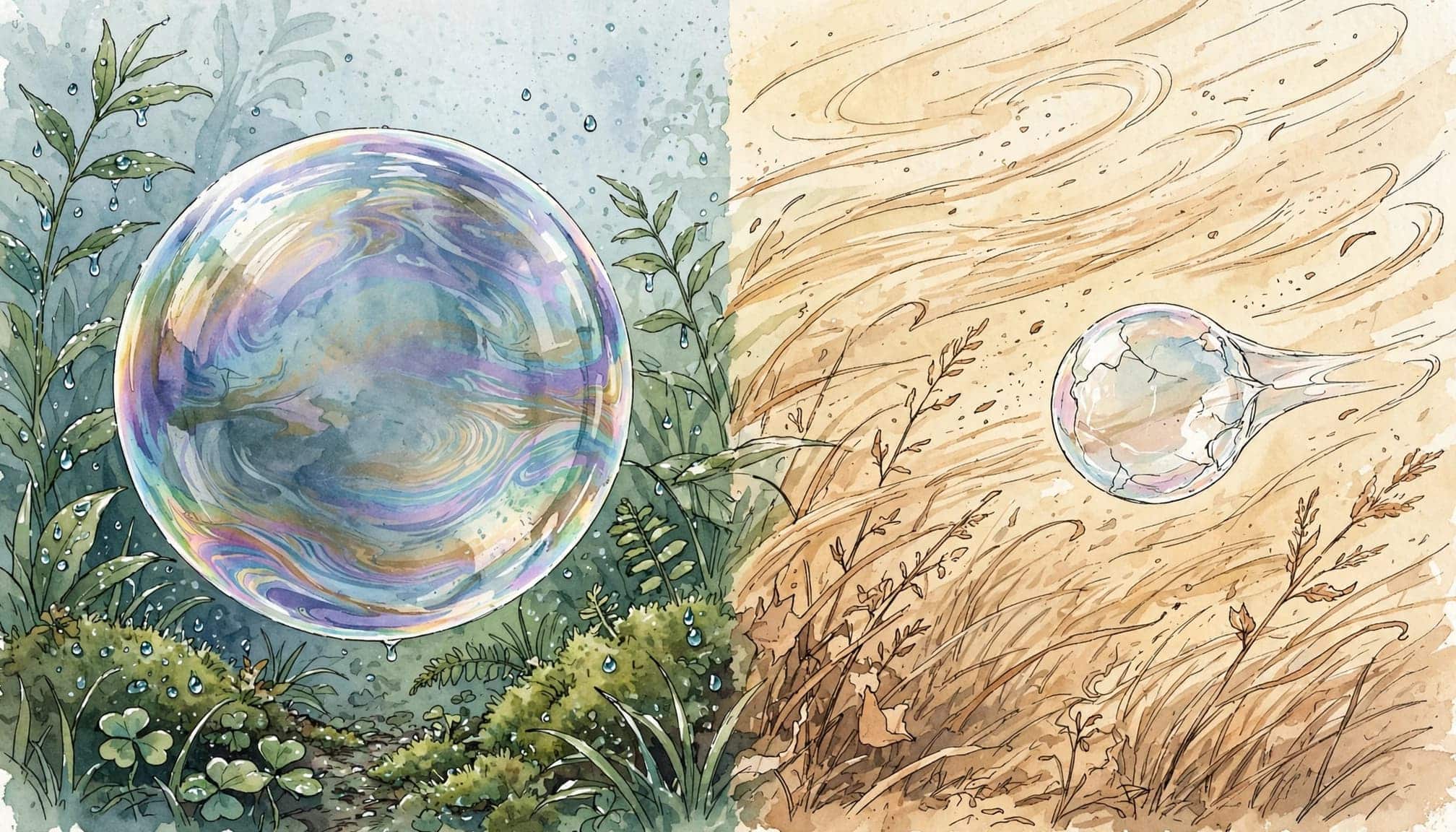
Glycerin helps retain water, but polymers help stretching
Glycerol attracts and holds moisture. Corn syrup contains sugars that also help slow water loss. These ingredients can improve the durability of ordinary bubbles by helping their films stay wet.
However, adding more glycerol or sugar doesn’t provide all the strength a giant bubble needs. Large films must stretch across a much greater area without developing a weak spot.
Research reported by Emory University identifies long-chain molecules called polymers as important ingredients for giant bubbles. They help the liquid resist the stretching that would otherwise tear the film.
Guar gum and J-Lube require different recipes
Guar gum is a thickening polymer used in some giant-bubble mixtures. Polyethylene oxide, usually shortened to PEO, is another option. J-Lube contains a water-soluble polymer and is also used in giant-bubble recipes.
These ingredients aren’t interchangeable spoon for spoon. They behave differently in water, and their concentrations matter. A little polymer can make a substantial difference; an improvised handful can leave an unhelpfully thick mixture.
Freshness matters as well. Guar-based solutions and other polymer mixtures can lose effectiveness with age. If a previously successful giant-bubble recipe stops working, old ingredients or an aged batch deserve attention before you increase the soap.
Test the mixture before changing everything
Use a small, clean wand in a sheltered spot. Dip it completely, lift it slowly, and make several gentle attempts.
Notice whether the film survives across the opening, whether the bubble closes, and when it breaks. These are different stages, and each points toward a different difficulty.
If small bubbles form reliably but a giant film tears, investigate this specialized mixture and stretching technique before adding more glycerol.
When comparing changes, keep the wand, location, and movement the same. Try a small portion of the batch rather than altering the entire container.
This approach saves ingredients and frustration. Otherwise, you might add soap just as the wind drops, then credit the soap for an improvement the weather provided.
Common questions about longer-lasting bubbles
How long can an ordinary soap bubble last?
There’s no dependable lifespan for every homemade bubble. Its size, film thickness, surroundings, and contact with objects all affect the result.
A better measure of progress is whether the same mixture lasts longer under comparable conditions. A single lucky bubble doesn’t tell you as much as several consistent attempts with the same wand.
Can leftover bubble solution be reused?
Yes. Keep ordinary bubble solution in a clean, covered container so evaporation and debris don’t change it between sessions. Label it clearly and keep it away from food and drinks.
These specialized mixtures need more attention because their performance can decline during storage. If an old batch no longer forms films well under suitable conditions, replacing it is more useful than repeatedly adding ingredients.
Key takeaways: protect the water and the film
To keep soap bubbles from popping too quickly, begin with damp air, wet tools, and gentle movement. Use a measured mixture with glycerol or corn syrup, and reserve these specialized recipes for giant bubbles.
Every bubble will eventually break. The satisfying part is learning how much longer that thin skin of water can survive when you give it the right conditions.


