
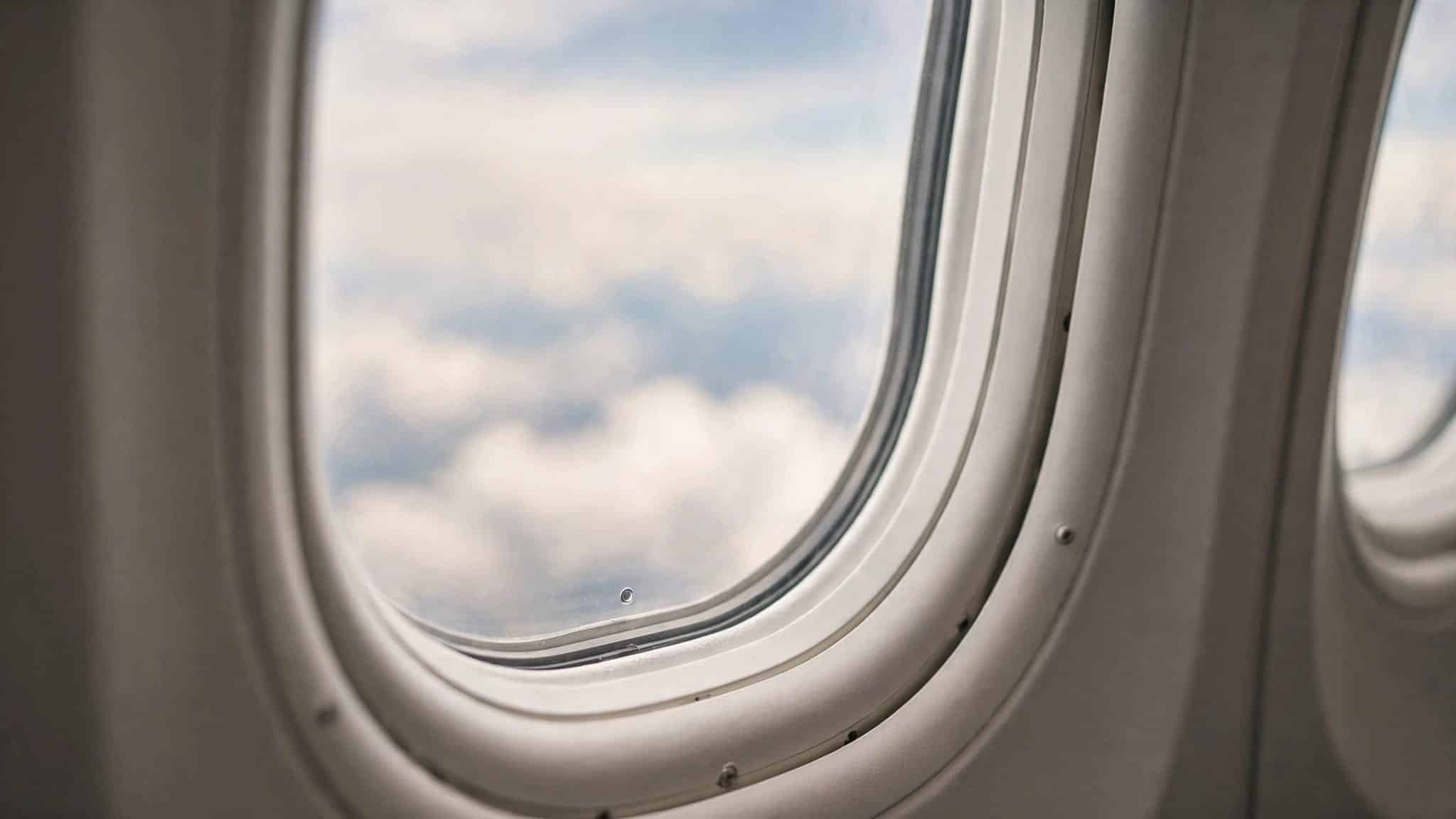
A tiny airplane window hole can look worrying, but it’s part of the window’s design. The bleed hole, also called a breather hole, sits in the middle pane of the three layers. It connects the cabin-side pane with the gap between the structural panes, not the airplane’s outer wall.
If you’ve spotted one near the bottom of your window, it also helps reduce fogging. The window’s layered construction separates your seat from the air outside.
This post may contain affiliate links. If you make a purchase through these links, I may earn a small commission at no extra cost to you.
Where the Airplane Window Hole Sits
Most conventional airliner passenger windows have three panes. They share a view, but they don’t share the same job.

The outer and middle structural panes
The outer pane is the primary structural layer. During normal flight, it carries most of the pressure difference between the cabin and the atmosphere outside.
The middle pane is a secondary structural layer, with the little hole near its bottom. As Aerospace Global News explains, that opening helps manage pressure differences within the window assembly. It also provides backup protection if the outer layer fails.
The scratch pane
The inner pane, closest to your seat, is non-structural, so keeping the cabin pressurized isn’t its job.
Instead, it protects the structural panes from scratches, fingerprints, dirt, and passenger damage. Think of it as the layer that deals with curious fingers so the pressure-bearing panes don’t have to.
How the Hole Manages Pressure
At cruising altitude, around 35,000 feet, outside air pressure is roughly 3.5 psi. According to AeroSavvy’s cabin pressurization guide, cabin pressure is typically around 11 to 12 psi at cruise.
The sometimes-repeated figures of 8 psi inside and 1.5 psi outside don’t describe typical conditions at that altitude. Around 8 psi more usefully describes the pressure difference across the aircraft’s skin.
Giving cabin air a controlled pathway
The bleed hole allows controlled airflow from the cabin side of the window assembly into the air gap between the middle and outer panes. This limited pressure equalization keeps the gap close to cabin pressure.
With similar pressure on both sides of the middle pane, the outer pane carries most of the load.
Reader’s Digest describes the distinction as managing the rate of pressure loading on the panes. The aircraft’s pressurization system controls pressure in the cabin; the small opening manages pressure within the window assembly.
Keeping a backup available
If the outer layer fails, the remaining pane is designed to withstand the pressure difference. The small opening doesn’t cancel that backup function, although some air can escape through it.
During descent or an emergency, the opening also lets pressure in the gap adjust. That reduces unwanted pressure differences across the layers. It supports the window’s protective design without guaranteeing that a window can withstand every possible failure.
Why the Gap Needs to Breathe
Pressure explains the main job, but moisture explains another useful detail. Warm cabin air contains water vapor. When it meets a cold surface, water can condense, much as it does on a bathroom mirror.
At cruising altitude, outside air can approach -50°C to -60°C, chilling the outer pane. Water vapor trapped between panes could become fog or frost.
The bleed hole lets damp air move through the gap, helping it dry instead of trapping moisture indefinitely. This can reduce fogging and frost, but it doesn’t guarantee perfectly clear panes in every condition.
Clear windows also matter during emergencies. Flight attendants and first responders may need to see conditions outside or inside during an evacuation.
Older, low-flying unpressurized aircraft didn’t need this particular pressure-balancing arrangement. Natural air exchange handled pressure changes and helped damp air escape, though their windows could still fog.
Why Airplane Windows Are Rounded
The hole and the window’s rounded shape address different parts of the same problem: pressure repeatedly pushes against the aircraft’s structure.
Sharp corners concentrate stress, while round windows distribute it more evenly. This reduces the chance of cracks as the cabin is pressurized and depressurized over many flights.
The de Havilland Comet accidents in the 1950s brought metal fatigue to the forefront of jet design. The FAA’s Comet accident review describes fatigue cracking around openings and the lessons drawn from testing.
Square passenger windows alone didn’t cause the failures. Opening shapes, manufacturing details, and repeated pressure cycles all played a part. Modern rounded windows reflect a broader understanding of those stresses, rather than a single change that solved every problem.
What Should You Do About the Hole?
A neat, small opening in the middle pane is normal. It isn’t a drain or a hole through the outer pane or airplane wall, so don’t touch, plug, or cover it. You generally won’t see it from outside the aircraft.
If bright light is bothering you, use the shade or an eye mask instead. An eye mask can also help you sleep on a long-haul flight without touching the window assembly.
If you notice a crack, loose panel, or other apparent damage, tell a flight attendant. Don’t try to judge its seriousness yourself. Aircraft maintenance inspections assess window condition.
Frequently Asked Questions
What is the tiny hole in an airplane window?
It’s a small opening in the middle pane, called a bleed hole or breather hole. It connects the cabin-side part of the window assembly with the gap between the structural panes, not with the outside of the aircraft.
Why does an airplane window have a tiny hole?
The hole lets cabin air move into the gap between the panes and helps equalize pressure within the window assembly. This lets the outer pane carry most of the normal pressure load.
Does the hole keep the window from fogging?
It lets damp air move through the gap, which can reduce fogging and frost. It doesn’t guarantee that the panes will stay clear in every condition.
Should I touch or cover the hole?
No, don’t touch, plug, or cover it. If you notice a crack, loose panel, or other apparent damage, tell a flight attendant.
A Small Opening With a Clear Purpose
The tiny hole helps balance pressure across the window, so the outer pane carries the normal pressure load and the middle pane remains a backup.
It also gives moisture a way to escape as the gap dries. This small opening is part of a carefully planned window assembly built for conditions different from those beside your seat.


