
Baseboards have a talent for looking harmless until sunlight hits them. Then every line of dust, pet hair, and scuff marks seems to wave at you.
If you want to clean baseboards fast, the old kneel-and-scrub method is the slowest route. It strains your back, annoys your knees, and turns a small chore into a floor-level marathon.
The better move is to stay standing, use longer tools, and clean in the right order. That matters even more when time is short, or your joints are already filing complaints.
Start with the fastest standing method
The quickest method is also the least dramatic. Don’t begin with a wet rag and sore knees. Start with a long-handled microfiber duster or flat mop, because dry dust comes off faster than sticky grime.
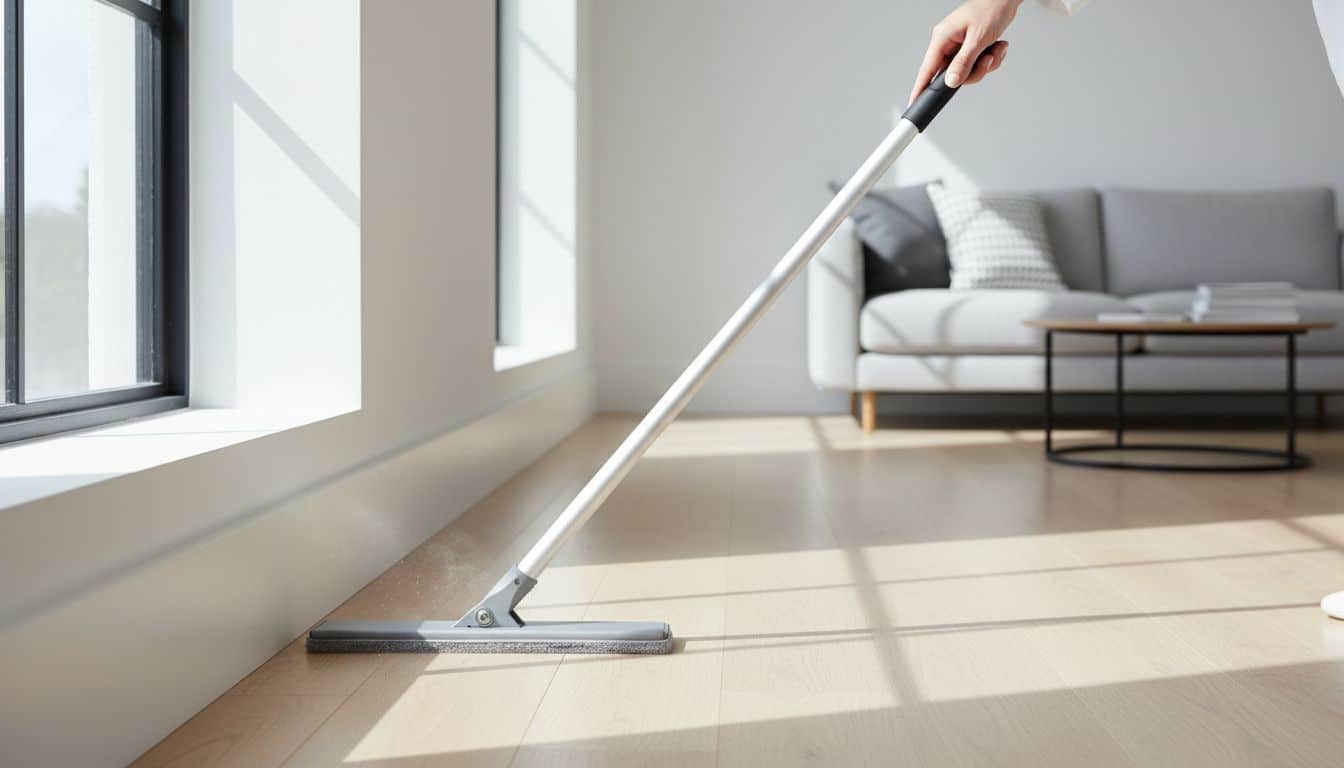
A long-handled mop or duster lets you clean low trim while staying on your feet.
Walk the room once with a vacuum and brush attachment. That first pass matters, because baseboards collect loose dust, hair, and crumbs before they collect stains. Once that layer is gone, your mop or duster can touch the surface instead of pushing dirt around.
Next, wrap a slightly damp microfiber cloth over a flat mop head, or use a washable pad that fits your tool. Water should never drip. A lightly damp cloth lifts the gray film quickly, while a soaked one can streak paint and swell MDF trim.
Move in one direction, doorway to doorway. Keep the mop head tilted so the edge reaches the trim line. In corners, slow down for a second, then use the tool’s tip to catch the dust pile. That small pause beats kneeling every few feet.
For most rooms, this takes minutes, not an hour. A bedroom or hallway often needs one dry pass and one damp pass. Think of it like brushing crumbs off a table before wiping it. The same logic saves time at floor level.
If your baseboards are high-gloss or dark colored, use a clean pad for the final pass. Those finishes show lint faster. Still, the job stays quick when you let the tool do the bending instead of your body.
Tackle grime and scuffs without hand-scrubbing every inch
Some baseboards aren’t dusty, they’re sticky. Kitchens catch grease. Bathrooms hold hairspray and damp lint. Entryways collect shoe marks, stroller bumps, and mystery streaks that seem to appear overnight.
This is where people lose time. They see one dark mark and drop to the floor. Instead, keep standing and spot-clean only the areas that need extra work. Spray a little warm water with a drop of dish soap onto your cloth, not onto the wall, then glide it over the mark with light pressure.
Dry first, damp second. If you skip the dry pass, dust turns into paste.
When soap doesn’t cut it, use a melamine sponge with a gentle hand. It works well on scuffs, but it can dull some paint finishes if you scrub hard. Test a hidden spot first, especially on older trim or glossy paint.
For grooves or detailed trim, let the tool do the reach work. A microfiber duster with a flexible head can press into the shape better than a flat cloth. If the dirt sits in a tight seam, wrap the cloth around the end of a ruler or paint stir stick, then swipe the line from a standing or seated position.
Try not to treat every smudge like a full cleaning project. Clean the long runs quickly, then stop only where the wall tells you to stop. That’s how you clean baseboards fast without turning the task into an all-day crouch.
When you hit stubborn buildup near a kitchen stove or mudroom wall, give the damp cloth a few extra seconds on the spot before wiping. That short wait softens the grime. In other words, let moisture loosen the mess so your arms don’t have to.
Keep baseboards cleaner so the job stays short
Speed doesn’t come from scrubbing harder. It comes from not letting dirt settle for months. When dust stays light and loose, it wipes off in seconds. Once it mixes with cooking film, pet dander, or shoe scuffs, the job drags.
A simple rhythm helps more than a heroic deep clean. When you vacuum or sweep, run the brush attachment along visible baseboards in the same room. That takes a minute or two, and it stops buildup before it turns stubborn. Then, every few weeks, do a damp pass with your long-handled tool.
This helps busy homes the most. Kids brush walls with backpacks. Dogs leave hair in corners like little signatures. Meanwhile, heat vents blow dust straight onto trim. Small, regular passes keep those marks from stacking up.
Keep your tools easy to grab. If the mop pad lives in the back of a packed closet, you won’t use it. A flat mop, two washable microfiber cloths, and a small spray bottle are enough for most homes. Store them together, and the job becomes a five-minute reset instead of a Saturday project.
You also don’t need perfection. Focus on the runs you see most, hallway trim, living room walls, and the kitchen edge near the floor. That alone makes the room look cleaner, because baseboards frame the space like a border around a picture.
A faster way to stop dreading baseboards
The best way to handle baseboards without kneeling for an hour is to stay upright, go dry first, and use moisture lightly. Most of the time, the right tool matters more than elbow grease.
Pick one room today and try the standing method. Once you see how easy it is to clean baseboards fast with a microfiber tool and a quick routine, the chore stops feeling like punishment.


