
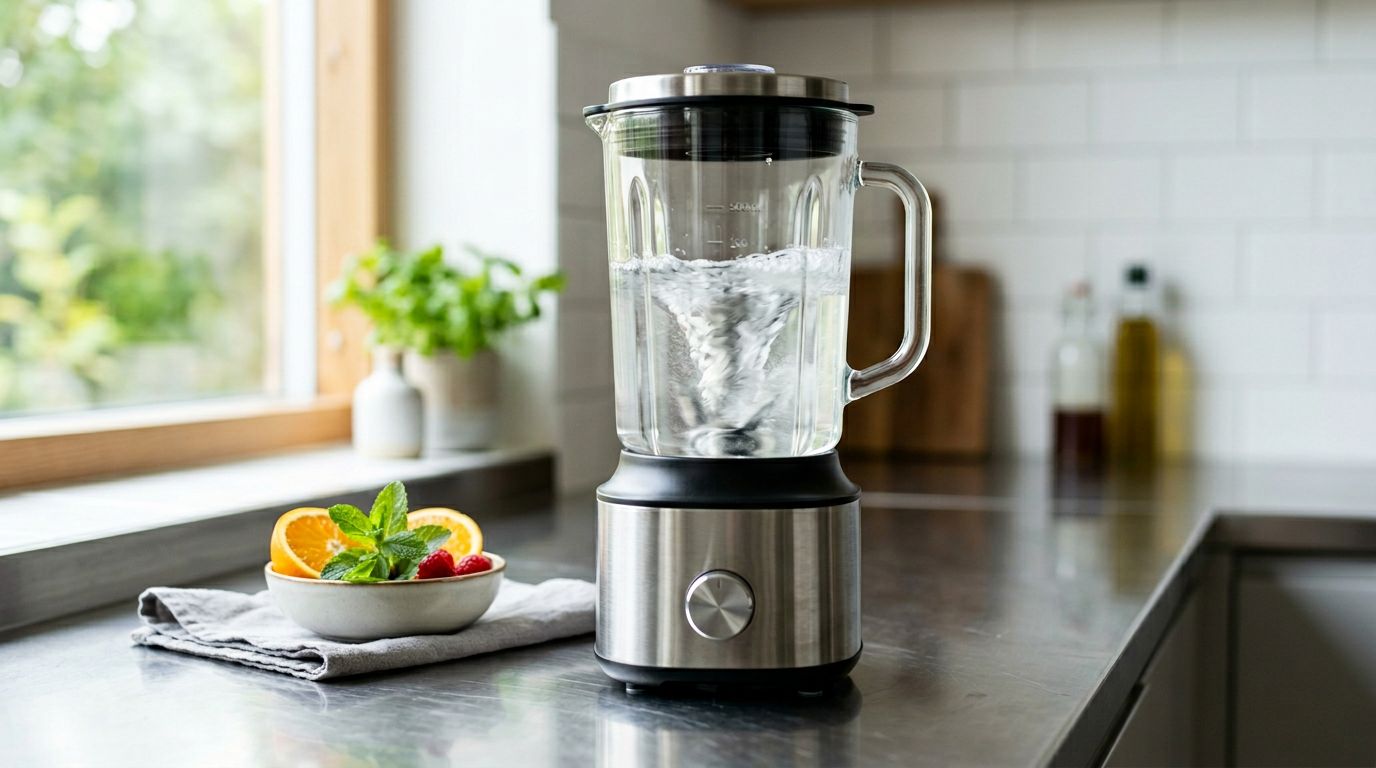
Blenders make breakfast easy and cleanup annoying. The good news is that you usually don’t need to unscrew anything. If you want to clean blender fast, let the blender wash itself with warm water and a drop of dish soap right after you pour. That quick spin cuts through fresh smoothie, soup, or shake residue without taking it apart.
Ever come back an hour later and found a green ring hardening around the blades? That’s the moment most people think the jar needs a full teardown. It usually doesn’t.
This quick method works for home cooks in a hurry, sleepy students, and parents cleaning up between tasks. It also skips the worst part, which is poking a sponge around sharp metal and hoping for the best.
To clean a blender fast, let it do the scrubbing
The fastest method feels almost too simple, which is why people ignore it. Pour out your drink or sauce, then fill the jar about one-third full with warm water. Add one small drop of dish soap. Put the lid on, hold it down, and blend for 10 to 20 seconds.
You don’t need a sink full of suds. The spinning water hits the sides, slips under the blades, and lifts off soft residue. When the jar looks clean, pour it out and rinse with fresh water. If you still see streaks, run one more short cycle.
If you’ve just made hot soup, let the jar cool a bit first. Sudden heat, soap, and a sealed lid can create a messy surprise. Warm water helps because it loosens oils, but boiling water is more trouble than help.
Many cooks use this same trick. The Kitchn’s 30-second method and CNET’s no-scrub blender hack both come back to the same idea, use the machine’s own power before the mess dries.

A quick self-clean works best while the jar is still wet.
Fresh residue is easy. Dried residue is a small concrete project.
If your blender has a vented lid cap, keep it in place unless the maker says otherwise. Then dry the jar, the outside bottom, and the lid before setting it back on the base. A clean jar is nice, but a dry bottom matters too.
When a quick wash isn’t enough
Some blends fight back. Peanut butter, protein powder, hummus, pesto, and frozen banana leave a clingy ring that one quick spin may miss. In that case, don’t reach in with your hand first. Give the jar a short soak with warm water and a drop of soap for five minutes, then blend again.
That second round usually loosens what the first round left behind. Allrecipes’ guide to cleaning a blender points to the same self-clean approach, because it gets around the blades without awkward scrubbing. Serious Eats also highlights the quick blender hack for busy mornings, when nobody wants another dish to wrestle with.
For dried protein shakes, let the soapy water sit long enough to soften the paste near the blade hub. For oily dressings, two light washes beat one long, bubbly one. A short repeat cycle often does more than hard scrubbing.
Smells need a slightly different touch. After the soap-and-water cycle, rinse well and leave the jar open to air-dry. A closed, damp blender jar can trap odors even when it looks clean. If a smoothie smell hangs on, repeat the wash cycle and give the lid extra attention. The rubber seal and the underside of the cap often hold onto scent.
Cloudiness is another common complaint. Sometimes it’s leftover film, and sometimes it’s wear from hard water or repeated use. If the jar feels slick, wash it again. If it feels clean but still looks dull, the problem may be mineral haze rather than food.
The goal here isn’t showroom perfection after every smoothie. It’s a clean, safe blender you can use again tonight without wondering what yesterday’s spinach is doing under the blades.
Small habits that keep blender cleanup fast
Speed mostly comes from timing. When residue sits for an hour, sugars dry, starch sticks, and oils cling to the jar. When you rinse right away, the whole job stays easy. It’s like wiping a spill before it becomes a stain.
A few habits make a big difference. Pour a splash of warm water into the empty jar as soon as you’ve served the drink. Even if you can’t wash it at once, that tiny rinse buys you time. Also, don’t overdo the soap. Too much creates foam, and foam hides the spots you’re trying to check.
Clean the lid every time. People often focus on the blades, yet the lid collects smoothie spray, soup droplets, and fine grit from powders. Meanwhile, dry the outside base of the jar before setting it back on the motor. A wet bottom can drip onto the base, and nobody wants moisture near an appliance cord.
This routine also helps in shared kitchens. Roommates, kids, and tired evening cooks are far more likely to wash a blender when the job takes 30 seconds instead of 10 minutes. That’s the quiet magic of a small habit, it removes the argument before it starts.
You’ll still want a full deep clean now and then, especially after oily sauces or heavy daily use. But for normal day-to-day blending, the self-clean method keeps the jar fresh without taking anything apart. That’s why it works so well for busy kitchens. It turns cleanup from a chore into a short closing move.
Cleanups always feel longer than they are, especially before coffee. Still, the fastest answer is plain: warm water, a drop of dish soap, a short blend, and a quick rinse. If you want to clean blender fast every day, act before residue dries and let the machine handle most of the work. Then leave the jar open to dry, and your next smoothie won’t start with yesterday’s mess.


