
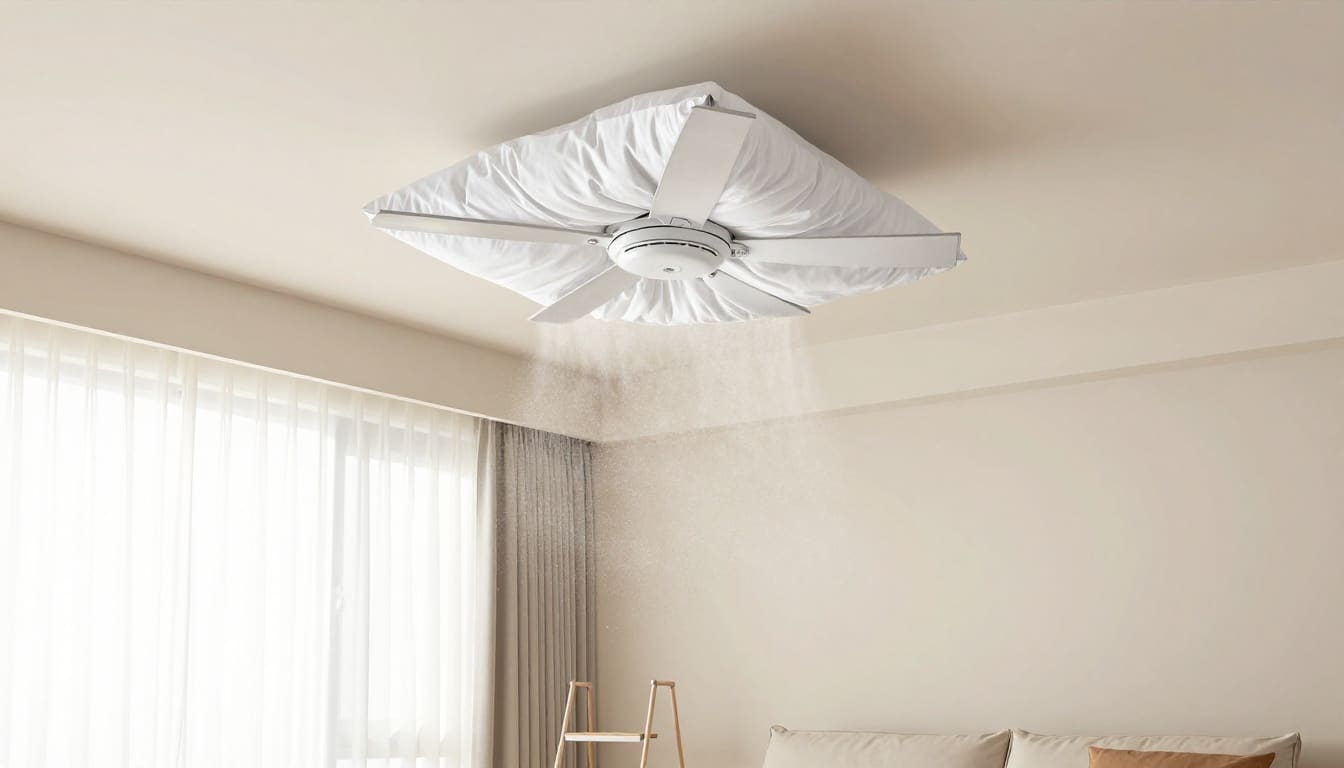
A ceiling fan can turn a calm room into a tiny dust storm in one careless swipe. The good news is that you don’t need fancy gear or a deep-cleaning marathon. To clean a ceiling fan without dust everywhere, trap the dust first, then wipe away what stays behind.
This works for renters, homeowners, and anyone who wants a quick win. With a pillowcase, a cloth, and a steady stool, the whole job usually takes less than 15 minutes.
Before You Clean a Ceiling Fan, Set Up for a Low-Mess Job
Most of the mess happens before the first blade gets wiped. If the fan is running, or if you start with a loose duster, dust drops like dry flour. So begin by turning the fan off and waiting for the blades to stop fully. If the light was on, let it cool first.
Next, give yourself a stable setup. Use a step stool or short ladder that lets you reach the blades without stretching. Keep one hand free when you climb. Also, turn off strong air flow in the room, because open windows or HVAC can blow dust right back at you.
A few simple tools make this easier:
- Pillowcase: It traps loose dust inside the fabric instead of dropping it.
- Microfiber cloth: It grabs fine dust better than paper towels.
- Vacuum brush attachment: It helps with thick buildup on top of the blades.
- Light spray bottle: Plain water or mild soapy water is enough for most fans.
- Step stool: A steady base keeps the job safe and quick.

If the fan hasn’t been touched in months, vacuum the blade tops lightly first. That cuts down the bulk before you wipe. However, don’t press hard, because some blades bend more easily than they look.
Spray the cloth, not the fan.
That little rule saves a lot of trouble. Direct spray can push grime into the motor housing, the light kit, or the ceiling.
The Pillowcase Method Keeps Dust Off the Floor
The cleanest trick is also the simplest. Take a thin pillowcase and slide it over one blade until the blade sits deep inside. Then pinch the case around the blade with one hand and pull it back slowly with the other. As the fabric slides off, it scrapes dust into the case instead of letting it float around the room.

Work one blade at a time, and turn the fan by hand as you go. Keep the motion slow. Fast pulls shake dust loose, while a steady pull keeps it trapped. If the pillowcase starts to look full, fold the open end inward before you carry it down.
After that first pass, use a microfiber cloth that is only slightly damp. Wipe the top, bottom, and edges of each blade. For normal dust, plain water works well. If the fan is in a kitchen, add one small drop of dish soap to warm water. Greasy dust sticks like old syrup, so it needs a bit more help.
Don’t soak the cloth. Moisture and fan motors aren’t friends, and wet blades can leave streaks. Once you’ve wiped each blade, go back with a dry part of the cloth. That last pass picks up any lingering fuzz and leaves the finish cleaner.
Then wipe the blade arms, pull chains, and motor housing. These spots often hold a gray ring of dust that people miss. It’s a bit like washing a window and forgetting the frame, the room still notices.
Finish the Fan Properly So It Stays Cleaner Longer
A fan can look clean from below and still hide dirt on top. That is why the final check matters. Stand back, look across the blade tops, and catch any dull patches you missed. Dust tends to gather near the blade brackets and close to the motor, where airflow is weaker.
If your fan has a light kit, clean that too once the bulbs and glass are cool. Wipe the outside first. If the glass shades are very dusty, remove them carefully and wash them in warm water. Dry them fully before putting them back.
This is also a good time to notice small problems. If a blade looks crooked, or the fan wobbles when it runs, check the screws with a gentle hand. A loose blade can collect dust unevenly and make the whole fan shake. However, if the fan is very high, unstable, or wired oddly, stop there and get help.
To keep dust from piling up again, clean the fan on a simple schedule. Once a month is enough for most bedrooms and living rooms. In kitchens, or in homes with pets, every two to three weeks works better. Short, regular cleaning beats a giant dust fight every season.
When you’re done, take the pillowcase outside before emptying it or toss it straight into the wash. Wash the cloth, vacuum the area under the fan, and put the stool away. That last minute of cleanup keeps the room from feeling half-finished.
Cleaning a fan shouldn’t create more work than it solves. If you trap the dust first, wipe with a lightly damp cloth, and clean it on a simple schedule, the mess stays small and the room stays calmer. Make that your routine, and the fan stops being a dust bomb hanging from the ceiling.


