
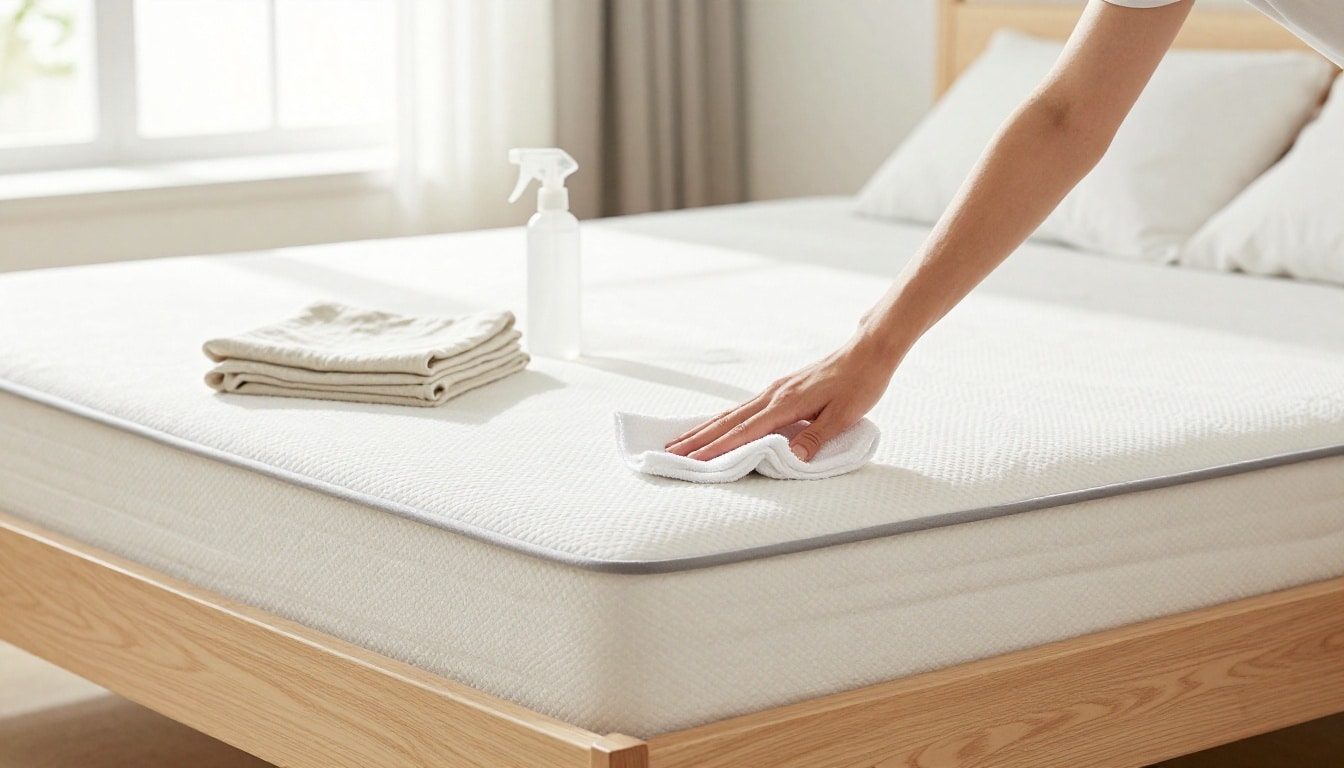
A wet mattress is a slow-motion mess. Moisture hides in the padding, hangs around for hours, and can leave you with odors you didn’t have before.
The safer move is a clean mattress routine that stays light and controlled. With the right tools and a calm hand, you can lift dust, freshen fabric, and treat small stains without turning the bed into a sponge. Start by sizing up the problem.
Read the mess before you touch the mattress
Every mattress mess looks personal, but most fall into three camps, surface dust, odor, or stain. Each needs a different touch. If you attack all of them with a wet rag, the mattress wins.
Begin by stripping the bed and washing the sheets, pillowcases, and protector. That step matters because stale smells often live in the bedding, not deep in the mattress. Then inspect the surface in daylight. A yellow ring, a dull gray patch, and a fresh spill don’t behave the same way.
Next, check the care label or the maker’s site if you still have it. Foam and pillow-top models hold moisture longer than they look like they should. Think of them like thick winter coats. The fabric may feel dry first, while the inside stays damp.
Now vacuum the full surface with an upholstery tool. Go slowly, especially along seams, piping, and the edge where dust likes to hide. This dry pass removes hair, skin flakes, crumbs, and loose grit. It also keeps you from rubbing dirt into the fabric later.
If the stain is fresh, blot it with a dry white cloth. Press, lift, and move to a clean part of the cloth. Don’t scrub. Scrubbing spreads the mark and can drive liquid deeper.
For old stains, patience works better than force. You want to loosen the top layer, not flood the padding below it. That low-moisture mindset is what helps you clean mattress fabric without creating a second problem.
Clean mattress spots with a light hand
The rule is simple, damp cloth, not wet mattress. Pouring cleaner straight onto the bed is like watering a houseplant made of foam. It soaks up more than you meant.
If a spot feels cool and wet when you press it, you’ve used too much liquid.
For many everyday stains, mix a few drops of mild dish soap into a bowl of warm water, then dip a cloth into the suds, not the whole bowl. Wring it well. Blot the stain from the outside in. After that, use a second cloth barely dampened with plain water to lift soap residue. Finish with a dry towel and firm pressure.
Pet accidents and urine need a different cleaner because the smell comes from proteins, not only the color you see. Use an enzyme cleaner labeled for upholstery, but apply it sparingly. A light mist or a damp cloth is enough for a small spot. Let it sit as directed, then blot again. If the odor lingers, repeat once instead of soaking the same area.
Blood needs cold water, not warm, because heat can set it. If cold water alone doesn’t help, a small amount of hydrogen peroxide can lift the stain on some light fabrics. Test first, though, because it can fade color. Heat can set other fabric stains just as easily, which is why removing sunscreen stains from white shirts also starts with a cool wash.
When the main stain is gone and the mattress smells tired, bring in a dry helper. Baking soda doesn’t wash the fabric, but it does absorb odor and body oils from the surface.

Sprinkle a light, even layer over the mattress and let it sit for several hours. If you can leave it until midafternoon, even better. Then vacuum slowly and thoroughly. This step won’t erase a deep stain, but it can make the whole bed feel less stale and more like a place meant for sleep.
Dry the mattress fast and keep it that way
Once you’ve treated the spot, drying matters as much as cleaning. Airflow is your best friend here. Open windows if the air is dry, turn on a ceiling fan, and point a portable fan across the bed, not straight down into one wet patch. Moving air helps the whole surface dry evenly.
If the mattress sits on a platform or solid base, prop it up for a short time so air can reach underneath. A dehumidifier also helps, especially in apartments or humid climates where fabrics seem to stay damp forever. The goal is simple, no trapped moisture, no musty comeback.
Resist the urge to make the bed too soon. Even if the cover feels dry, give it extra time before putting on a protector and sheets. That small wait can spare you the sour smell that shows up later. Your nose is useful here. If the spot still smells even a little damp, keep the air moving.
Routine care makes the next clean mattress session much easier. Vacuum every month or so, rotate the mattress if the maker allows it, and use a washable protector. For allergy-prone sleepers, that barrier does quiet work. It catches sweat, skin flakes, and small spills before they settle into the fabric.
A mattress doesn’t need spa treatment. It needs restraint. Keep water low, blot instead of scrub, and let air do the hard part. That’s how you freshen the bed without inviting mold to move in like an unwanted roommate.
The safest clean is the driest one
When you clean mattress stains with a light touch, you avoid the bigger mess of long drying times, mildew, and trapped odors. The trick isn’t a harsh cleaner. It’s using less liquid than your instincts might suggest.
Start dry, blot small, and give the bed plenty of air. If you remember that one rule, clean mattress care gets simpler, cheaper, and far less stressful.


