
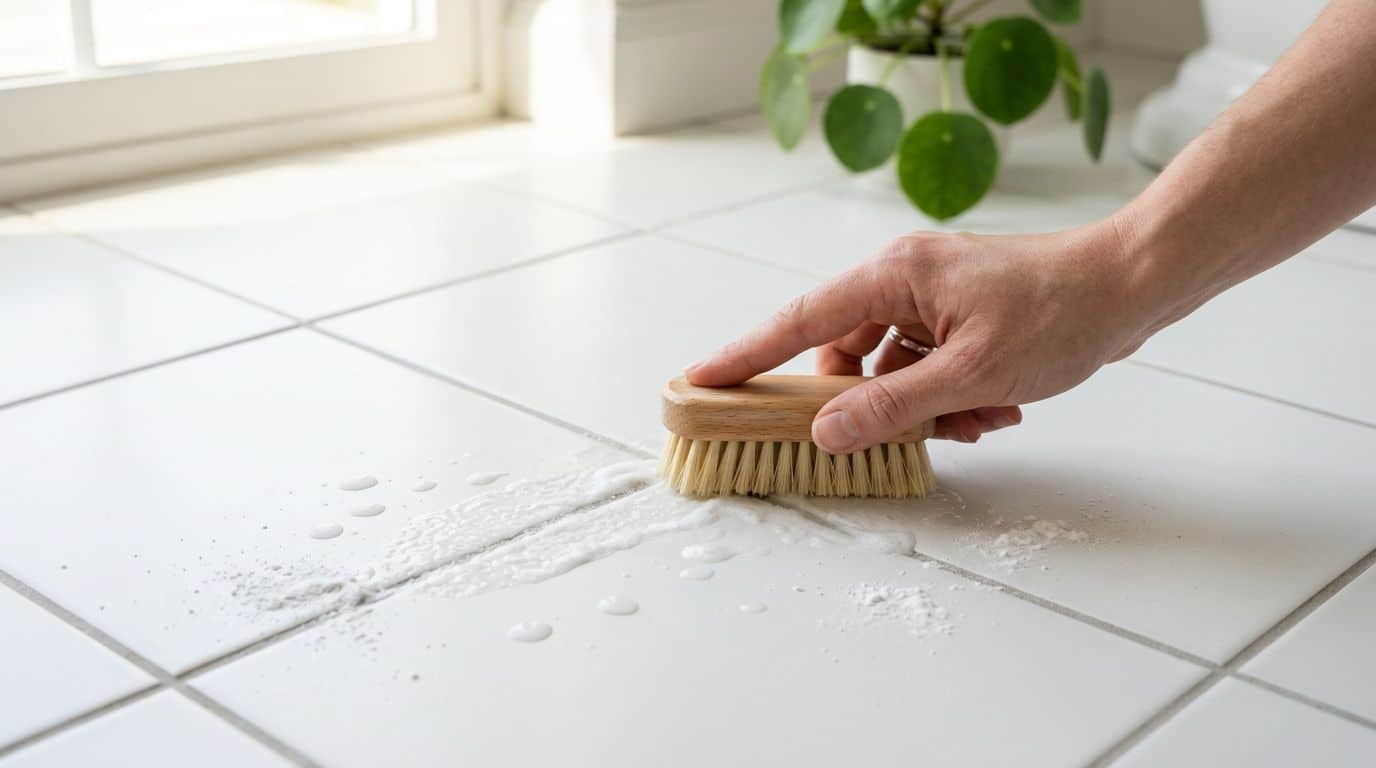
If bleach makes your bathroom smell like a public pool, you don’t have to live with grimy grout. You can clean tile grout with milder ingredients and still get a bright result.
That matters in small bathrooms, homes with kids or pets, and rentals with weak ventilation. Grout is stubborn, but it isn’t magic. It responds best to moisture, gentle grit, and a bit of patience.
Start with the dirt itself, then the fix gets much simpler.
Why grout gets dirty so fast, and why bleach isn’t required
Grout looks solid, yet it acts more like a sponge in the cracks between tile. It grabs soap scum, cooking splatter, mop residue, and plain old dust. Because those lines sit lower than the tile, grime settles there and stays put.
Think of grout as the hem of a pair of pants. It collects the mess the rest of the room sheds.
Bleach can lighten some stains, but it often comes with sharp fumes and short-lived results. In many cases, it whitens the surface while leftover soil stays trapped below. That’s why a low-fume scrub can work better, especially when the grout is dull rather than deeply stained.
Before you start, clear away loose grit. Vacuum the floor or wipe wall tile with a dry cloth first. Then open a window, switch on the fan, and grab a soft brush, a bowl, and a microfiber cloth. A toothbrush works fine, although a small grout brush is easier on your wrist.
If your tile is marble, limestone, or another natural stone, stay away from acidic cleaners until you check the care guide. The tile matters as much as the grout. A mild paste and a soft brush are the safest place to begin.
Writers at Apartment Therapy tested several DIY grout cleaners, and the lesson was plain, stronger smell doesn’t always mean better cleaning. Once you see the problem clearly, the fix feels less mysterious.
A low-fume way to clean tile grout on most surfaces
For most ceramic and porcelain tile, baking soda and hydrogen peroxide make a good team. The baking soda gives you gentle scrub power. The peroxide helps loosen dark residue and has far less odor than bleach.
Mix baking soda with enough 3 percent hydrogen peroxide to form a paste, about as thick as toothpaste. If you’re cleaning greasy kitchen grout, add one small drop of dish soap. Spread the paste along the grout lines, then let it sit for 10 to 15 minutes so it can soften the grime.

Then scrub in small circles with a soft brush. You don’t need to bear down like you’re sanding a deck. Steady pressure works better, and it keeps the grout from wearing out. Wipe away the paste with a damp cloth, rinse with warm water, and check the color once the area dries.
If the lines still look patchy, repeat the process instead of reaching for harsher spray. Two calm passes beat one angry one. Real Simple’s natural grout method follows the same basic idea, because contact time matters almost as much as scrubbing.
Don’t mix vinegar and hydrogen peroxide in the same bottle. Use one method at a time, and rinse between products.
Plain baking soda and water can handle light dirt if you want the mildest option. Still, peroxide usually gives better lift on bathroom grout. Save vinegar for soap film on tile, and skip it on stone unless the maker says it’s safe.
When stains keep coming back, and how to break the cycle
Some grout stains aren’t dirt alone. In damp showers, mildew can leave gray or pink marks that return fast. After the first scrub, you can dab straight 3 percent hydrogen peroxide on those spots, wait a few minutes, and brush again.
If the problem sits in caulk rather than grout, cleaning may only buy time. Caulk with deep mold often needs replacement, because growth can live below the surface. That’s annoying, but it’s also a relief, since you can stop scrubbing the same line every weekend.
Once the grout looks better, small habits keep it that way. Run the bathroom fan after showers, dry the corners that stay wet, and wipe kitchen splatter before it hardens. If your grout is unsealed or older, sealing it after a deep clean can make future wipe-downs much easier.
Fresh grout changes the whole room. The tile hasn’t changed, yet the seams stop shouting. If you want a quick picture of the payoff, Martha Stewart’s two-staple grout method shows why mild cleaners are often enough.
That is good news for renters and anyone with a small bath, because harsh fumes can linger long after the mess is gone. A soft routine beats a dramatic rescue job. Clean once, dry often, and the grout won’t ask for heroics next month.
You don’t need a bathroom that smells like a pool to get grout looking better. The best results usually come from a simple paste, a soft brush, and enough time to let the cleaner work.
Start with one small section tonight. If the paste lifts the dirt there, the rest of the room will follow, and your lungs won’t file a complaint.


