
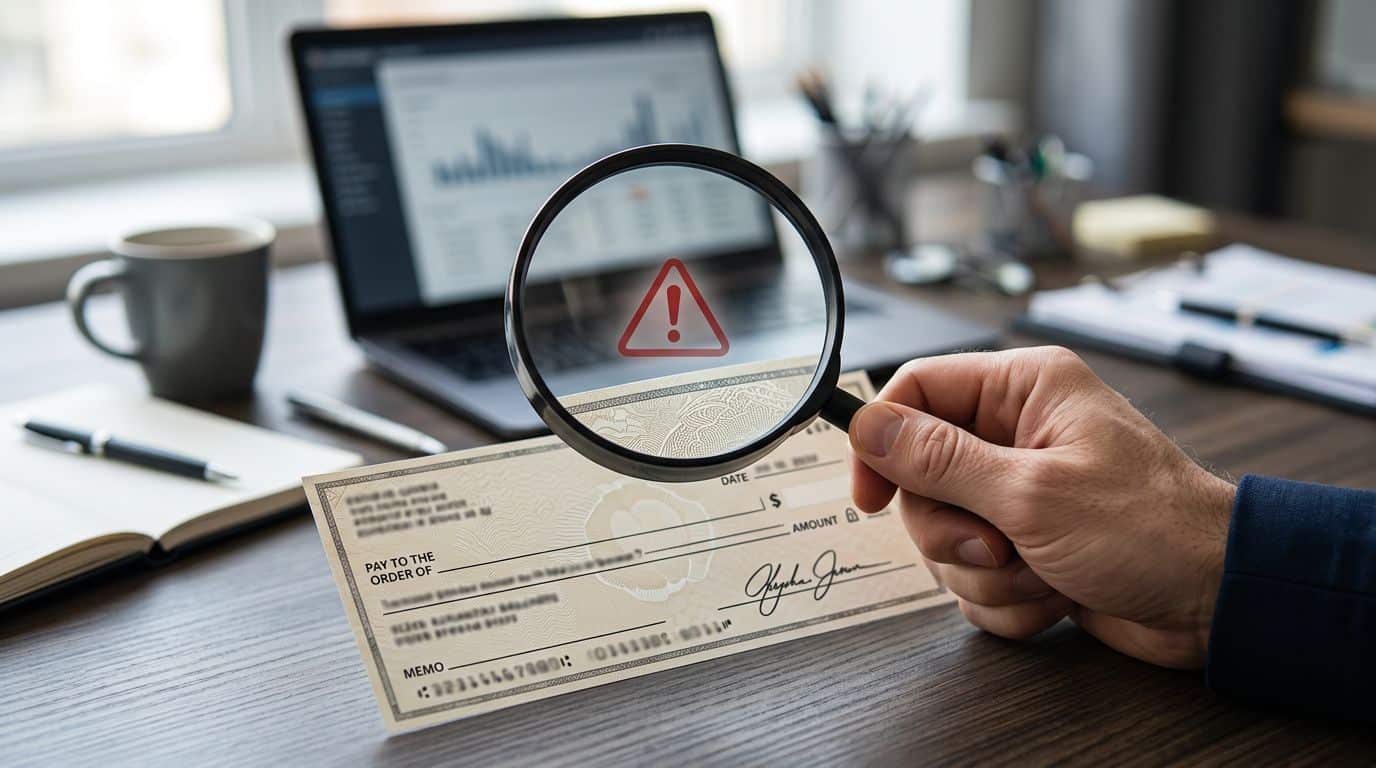
A fake check can look boring, official, even comforting. That’s why the scam works.
If you’ve received a check from a buyer, a new employer, a renter, or a stranger with a too-neat explanation, pause before you deposit it. The paper may be fake, but the money you send back afterward would be painfully real. That’s the part people remember too late.
Why fake checks fool smart people
A fake check scam doesn’t work because people are careless. It works because the setup feels familiar. Someone buys your sofa online, sends a check, and “accidentally” overpays. A new job mails you a check for equipment. A renter wants to secure the place fast. The details change, but the rhythm is the same.
The check is meant to calm you down. Paper still has a strange aura of legitimacy. A cashier’s check looks serious. A business check looks tidy. Even a check sent by email can seem official if the story around it is polished enough. The FTC’s fake check scam warning points out that counterfeit checks can look like personal checks, business checks, cashier’s checks, money orders, or even electronic images.
Scammers also count on a common misunderstanding. Many people think that if a bank accepts the deposit, the check must be real. That isn’t how it works. Banks often make money available before a check is fully verified. The FDIC warning about fake checks says the same thing in plain language: the funds may show up first, and the fraud may surface later.
That’s the ugly little trick. The check is not the payment. It’s bait.
Red flags show up in the story before they show up on the paper
Start with the situation, not the ink. If the story feels rushed, oddly generous, or slightly crooked, the check deserves suspicion before you hold it under a lamp.
One classic warning sign is overpayment. If someone owes you $300 and sends $1,900, that is not a bookkeeping hiccup. It is the scam. The sender will usually act embarrassed, then helpful, then urgent. They might ask you to return the extra money by Zelle, wire transfer, gift cards, crypto, or money order. That request matters more than anything printed on the check.

An unexpected check is another warning. If you didn’t win a prize, didn’t apply for that exact job, didn’t sign that refund agreement, and didn’t know the sender well, skepticism is healthy. Scammers love surprise because surprise short-circuits judgment. You spend the first minute wondering if the money is yours instead of asking why it arrived.
Pressure is the next giveaway. The sender needs you to act fast. Deposit today. Buy the supplies now. Pay the movers tonight. Forward the difference before the weekend. Honest people can be in a hurry, sure, but fraud has a special kind of impatience. It hates verification.
Then there is the too-good-to-be-true quality. Mystery shopper jobs still circulate. So do fake assistant roles, “remote personal assistant” offers, and cheerful marketplace buyers who don’t need to see the item. In rental scams, someone may send a deposit or ask you to handle money for a third party. In small business scams, a fake client may overpay an invoice and ask for a partial refund. Different costume, same play.
If you hear, “Deposit it first, then send part back,” stop there.
If the sender wants money back before the check is fully verified, you are not being paid. You are being positioned to lose money.
The paper can look wrong, but not always
Some fake checks practically wave a red flag. Others look clean enough to pass a quick glance. That is why you shouldn’t rely on appearance alone, but appearance still matters.
A suspicious check may have smudged print, uneven text, spelling errors, low-quality paper, or edges that feel wrong. The bank logo may look faint or oddly placed. The numbers along the bottom may not match the named bank. The phone number on the check may lead to a scammer or a fake voicemail system dressed up as a bank department.
Sometimes the check looks fine until you read the details slowly. Does the payer name match the story you were given? Does the memo line make sense? Is the amount strangely round? Was the check emailed to you as a file to print at home? The FTC notes that fake checks can be delivered electronically, and that alone should make you cautious.
This is where people get tripped up by professionalism. A neat check is still capable of being fake. A real routing number can appear on a fraudulent check. A genuine company’s name can be copied. A decent printer can do a lot of damage.
So don’t ask only, “Does this look real?” Ask, “Does every part of this make sense?” That question is harder for a scammer to survive.
For a simple set of screening questions, Wells Fargo’s fake check scam checklist is useful because it starts with the same basics: Was the check unexpected, for too much money, or tied to pressure?
Why “the money showed up” can still be bad news
This is the part that feels unfair, because it is unfair.
You deposit the check. Your bank account shows the money, or part of it. You assume the system has done its job. Then days later, sometimes longer, the check bounces or is found to be counterfeit. The deposit is reversed. If you already spent any of that money, or sent some back to the scammer, you may be responsible for the loss.
People often say, “But it cleared.” What they usually mean is that the bank made funds available. That is not the same thing as final verification. Banks move on timeframes that can be faster than fraud detection, and scammers know it. They live inside that gap.
This is why fake check scams often come with a second instruction. Return the extra money. Buy gift cards. Pay a vendor. Send a wire. Use a payment app. Once you send your own money out, it is far harder to recover. The check may be false, but the transfer you made was real and voluntary.
That time gap is the whole con. Without it, fake check scams would collapse in a weekend.
What to do before you deposit any suspicious check
Slow the scene down. That alone ruins a lot of scams.
First, do not send money, buy anything, or forward any part of the amount. Do not “hold” the check as proof of good faith. Do not let the sender keep you on a timer with follow-up messages and little bursts of fake urgency. A real payer can survive a day of verification.
Next, verify the bank independently. Look up the bank’s official website yourself and call the number listed there, not the number printed on the check. Ask whether the account and check details can be confirmed. Some banks will give limited information, but even a basic conversation can expose obvious problems.
Then call your own bank or visit a branch. Tell them why the check concerns you. Banks see these patterns every day. They may not be able to certify every check on the spot, but they can help you avoid turning suspicion into a deposit mistake.
Keep the envelope, email, text messages, and job or sale posting if there was one. If the whole thing proves fraudulent, that record helps with reporting. The FTC’s reporting guidance is a good place to start if you need to document what happened.
If the sender pushes back when you ask questions, that tells you plenty. Honest people get annoyed sometimes. Scammers get slippery.
Where fake check scams usually show up
These scams love moments when money feels slightly awkward. That is why they appear in places where trust is thin and people are moving fast.
Job seekers get hit with fake hiring checks for office equipment, software, or training. Online sellers get fake payments from buyers who overpay and ask for a refund. Renters and landlords see them in deposit scams and “out-of-town” arrangements. Small business owners may get counterfeit checks tied to invoices, vendor payments, or mystery clients.
The pattern matters more than the setting. Someone you don’t fully know sends a check. The amount is wrong, the timing is tight, and some piece of the money needs to go somewhere else. Once you see that pattern, the story around it starts to sound less like business and more like theater.
Scammers don’t send checks because they love stationery. They send checks because a piece of paper still buys them a little time, and sometimes that little time is enough.
Conclusion
The safest way to treat an unexpected check is simple: assume nothing until it has been independently verified. A polished story, a good-looking check, and money showing up in your account are not proof.
The strongest warning sign is still the oldest one. If anyone asks you to send money back before the check is confirmed, stop. That is usually the moment the fake check scam stops looking confusing and starts looking exactly like what it is.


