
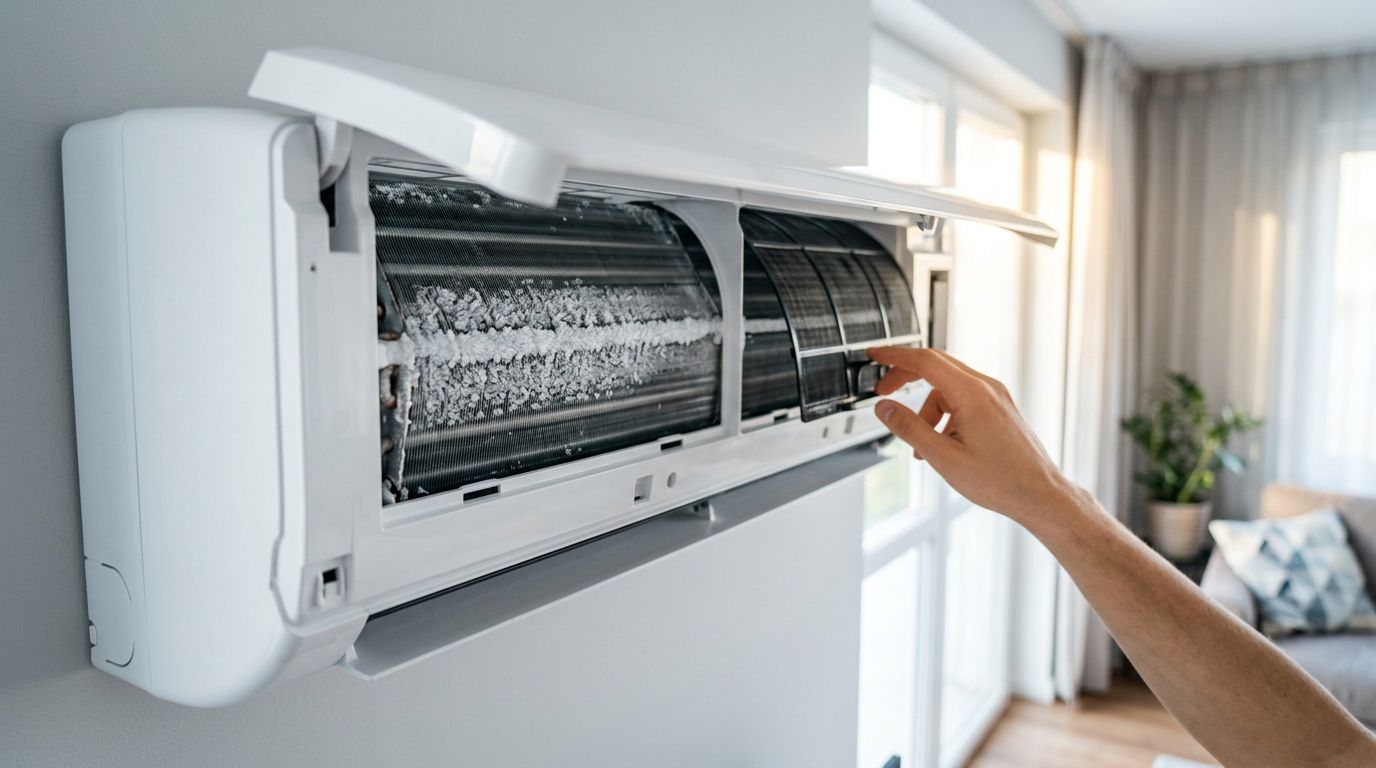
A frozen air conditioner during a heatwave feels backward. The house is hot, the thermostat is pleading for cool air, and yet the indoor unit is turning itself into a small glacier.
When an air conditioner freezes up, it is not working harder than usual. It is often struggling because it cannot move enough warm air across the evaporator coil, or it has a refrigerant problem that needs professional attention. The ice is a symptom of the mechanical failure rather than the root problem itself.
The good news is that the first steps are straightforward, and a little patience can prevent an expensive repair from becoming worse.
Key Takeaways
- Restricted airflow caused by a dirty filter, blocked vents, or a failing blower is a common reason the indoor coil freezes.
- Low refrigerant levels can also cause ice to form, but since refrigerant does not get used up, this usually indicates a leak that requires professional attention.
- Always turn your cooling system off before attempting to diagnose the unit, as running the system while frozen can cause permanent damage to the compressor.
- Never scrape ice directly from the coil or attempt to add refrigerant on your own; these tasks should always be handled by a licensed HVAC technician.
- If your system continues to freeze after you have allowed it to thaw and performed basic checks, it is time to schedule a professional repair visit.
What Actually Freezes Inside an Air Conditioner?
The ice usually forms on the evaporator coil, which sits inside your home near the furnace or air handler. This evaporator coil holds cold refrigerant. As warm indoor air moves across it, the refrigerant absorbs heat, and the cooled air travels through your vents.
That process only works when there is a steady supply of warm air passing over the coil. If airflow drops too low, the coil temperature falls below freezing. Moisture in the air then freezes onto it, leading to significant ice buildup. The ice grows layer by layer until the system can barely cool your home at all.
You might first notice weak airflow, a musty smell, or air that feels less cool than normal. In some cases, water drips around the indoor unit after the ice melts. The outdoor unit may continue running, which makes the situation more frustrating. It sounds busy, but the part that cools your home is locked in frozen coils.
A thermostat set too low can add stress during a brutal summer afternoon, but it usually is not the lone cause. A healthy central air system should run for long stretches when outdoor temperatures climb. Freezing points to an airflow, refrigerant, or mechanical issue that disrupts the cooling cycle.
Ice on an air-conditioning coil is never a sign that the system is cooling especially well. It is a sign that the cooling cycle has gone out of balance.
Restricted Airflow Is the Usual Culprit
Start with the least dramatic possibility: the air filter. A dirty air filter covered in dust, pet hair, or construction debris can choke the system. The blower fan still tries to pull air through it, but too little reaches the evaporator coil.
Remove the air filter and hold it toward a light. If light barely passes through, replace it. Disposable filters usually need changing every one to three months, though a home with shedding pets, smoke, or nearby construction may need more frequent changes. Check the arrow on the filter frame before installing the new one. It should point toward the air handler to ensure proper airflow.
A high-MERV filter can also be a problem in an older system not designed for it. Better filtration sounds sensible, but an overly restrictive filter can starve the equipment of airflow. If you are unsure which filter rating suits your unit, use the manufacturer’s recommendation or ask an HVAC technician.
Walk through the home next. Open all supply registers and check that return vents are clear. Furniture, curtains, laundry baskets, and rugs have a way of drifting in front of them. Closing off unused rooms may seem like a smart way to save money, but central systems are built around a certain amount of circulation. Too many shut vents can create the same trouble as a clogged filter.
The blower fan itself may be at fault. A weak motor, a damaged belt in an older unit, a dirty blower wheel, or a faulty capacitor can reduce performance without making an obvious noise. If the filter is clean and your vents are open, but air barely comes from the registers, the blower deserves a professional inspection from a qualified HVAC technician.

Photo by José Andrés Pacheco Cortes
Low Refrigerant Can Turn the Coil Into a Block of Ice
Refrigerant moves heat from inside your home to the outdoor unit. It operates in a sealed loop. Unlike gasoline in a car, it should not slowly disappear through normal use.
If you have low refrigerant in your system, the internal system pressure drops significantly, which causes the evaporator coil to become much colder than intended. This temperature imbalance makes condensation freeze on the metal fins, and eventually, this ice spreads along the refrigerant lines. You may notice frost or ice buildup on the large insulated copper pipe near the outdoor unit as a primary indicator.
A refrigerant leak may leave an oily spot near a line connection, though many leaks are too small to spot with the naked eye. Hissing sounds can happen, but they are not a dependable clue. Performance is usually the first warning sign. The house takes longer to cool, the unit runs constantly, and humidity starts to feel sticky indoors.
Do not buy a can of refrigerant and attempt a top-up. The wrong refrigerant, an overcharge, or refrigerant released into the air can damage the equipment and create a safety problem. In the United States, refrigerant work is regulated under the EPA’s Section 608 program, and handling it belongs to a properly certified technician.
A competent technician will look for the leak rather than treating refrigerant as a temporary refill. They may check fittings, the evaporator coil, and accessible line sets, then test pressures once the system has fully thawed. A simple leak repair may be worthwhile. A badly corroded indoor coil in an aging system can lead to a bigger conversation about repair costs.
Dirt, Drainage, and Heat Can Add to the Problem
The indoor coil can collect dust even with a decent filter. Over time, that layer acts like a wool blanket around the coil. Air cannot make proper contact with the cold metal, so the coil gets colder and icing begins. Investing in routine maintenance is the best way to keep these internal components clean and operational.
Coil cleaning is not always a casual weekend job. Access panels can be awkward, fins bend easily, and wiring sits close by. A technician can clean the coil, blower compartment, and drain pan without turning a small mess into a larger one.
Drainage trouble does not usually cause the first freeze, but it can make the aftermath unpleasant. As the ice melts, a clogged condensate drain can overflow. Look for standing water near the indoor unit, a full drain pan, or a float switch that has shut the system down. Persistent moisture can also encourage mold around the air handler.
The outdoor condenser unit needs breathing room, too. Leaves, grass clippings, and cottonwood fluff can clog its fins. Keep plants trimmed back by at least two feet, and gently rinse loose debris away with a garden hose after turning the power off. Do not use a pressure washer, as those thin metal fins fold over easily.
Extreme heat exposes weaknesses that went unnoticed in May. A marginal capacitor, dirty coil, or low refrigerant charge may limp along on a mild day. Once temperatures remain above 90 degrees, the system has nowhere to hide. Keep in mind that a heat pump utilizes similar technology, and owners of these systems should remain just as vigilant against icing issues during periods of intense weather.
What to Do When You Find Ice
Turn the thermostat from Cool to Off. If your thermostat settings allow it, set the fan to On rather than Auto. The moving indoor air helps to thaw the evaporator coil more efficiently. If airflow is weak or absent, leave the entire system off instead.
Thawing can take several hours, and a heavily frozen unit may require a full day to melt completely. Place towels around the indoor unit if water could reach your flooring, and check the drain pan while you wait. Never attempt to remove the ice with a screwdriver, knife, or hair dryer. The coil fins puncture easily, and a damaged refrigerant line is a significant repair.
Once the system has melted, install a clean air filter and ensure every return grille and supply vent is open. After restarting the system, monitor the performance carefully. Strong, steady airflow and cold air are positive signs. If ice returns within a few hours, the underlying issue persists.
Do not keep restarting a frozen system in hopes that it will resolve itself. Constant cycling forces the compressor to operate under extreme stress, and replacing a failed compressor is far more expensive than addressing a simple filter, blower, or leak issue.
When a Service Call Is the Sensible Choice
Schedule a maintenance visit with a qualified HVAC technician if ice returns after you replace the filter and open the vents. You should also call for professional help if you see ice on the refrigerant line, hear unusual buzzing, find water around the furnace or air handler, or feel very little air coming from the registers.
Renters should report the issue to the landlord or property manager promptly. Take a clear photo of the ice and any water near the unit for documentation. Avoid removing access panels or handling electrical parts in a rental, even if the problem looks simple.
A professional will perform a thorough diagnostic process to restore your cooling. They can measure airflow to identify blockages, inspect electrical components, test the refrigerant system for leaks, and check whether the evaporator coil is dirty or damaged. These expert checks are what separate a quick maintenance fix from a complex repair that requires replacement parts.
Frequently Asked Questions
Why does my air conditioner turn into a block of ice instead of cooling my home?
An air conditioner freezes because the refrigerant inside the evaporator coil is not absorbing enough heat to prevent moisture in the air from turning into ice. This is almost always caused by restricted airflow, such as a clogged filter or blocked vents, or an underlying mechanical issue like a refrigerant leak.
Is it safe to try and scrape the ice off the coils myself?
No, you should never attempt to scrape ice off the coil with tools like knives or screwdrivers. The metal fins on the coil are extremely delicate and puncture easily, which can lead to expensive refrigerant leaks and permanent damage to your unit.
Can I just add more refrigerant to fix a frozen air conditioner?
Refrigerant is contained in a sealed loop and does not deplete through normal use. If your levels are low, it indicates a leak that must be identified and repaired by a licensed HVAC technician, and attempting to top it off yourself can violate environmental regulations and damage your equipment.
Should I keep my air conditioner running to help it thaw out faster?
You should turn your cooling system to the off position immediately if you notice ice buildup. Running the system while it is frozen forces the compressor to work under extreme stress, which can lead to a catastrophic mechanical failure that is much costlier to repair than the initial issue.
Keep the Cool Air Moving
There are several reasons why your air conditioner freezes up, but most of them point to a need for better maintenance, refrigerant repair, or improved system airflow. It is never a good idea to force the unit to work harder by lowering the thermostat setting, as this will only worsen the situation.
Change your air filters on a regular schedule, ensure all indoor vents and outdoor equipment remain clear of obstructions, and shut the system down at the first sign of ice. A calm, proactive response protects your unit from permanent damage and gives you the best chance to identify and resolve the underlying mechanical problem.
This post may contain affiliate links. If you make a purchase through these links, I may earn a small commission at no extra cost to you.


